For readers new to Venezuela’s political landscape, the removal of Venezuelan President Nicolás Maduro by U.S. forces last month may feel like an out-of-nowhere turning point. But in an email exchange with seasoned Venezuelan journalist Tony Frangie Mawad, he put it more bluntly: Maduro is out, Madurismo remains.
“The removal of Nicolás Maduro is… not a regime collapse,” he said. “The ruling coalition still controls the armed forces, the security services, the courts, the legislature, and the state-owned oil company. That… is what ultimately matters.”
He should know. In 2022, as much of the international press packed up and shifted its focus to other global flashpoints — Ukraine foremost among them — Frangie Mawad returned to his hometown of Caracas after years studying and reporting on Venezuela from the United States.
“I wanted to cover Venezuela… because it was a very particular moment: international interest had clearly declined,” he says. At the time, the interim government strategy under then-acting President Juan Guaidó had failed, the Maduro government had pushed through economic reforms that eased the crisis and brought relative stability, but global attention had shifted elsewhere.
That helps explain Frangie Mawad’s reaction to Maduro’s removal. He cautions against confusing spectacle for structural change, pointing instead to “the governing architecture of Chavismo, built over more than two decades” remaining firmly intact.
Learn from top longform journalists and find the best in-depth reporting. Subscribe to Depth Perception:
Chavismo, which spawned when Hugo Chávez first came to power in 1998 and was inherited by Maduro, began as a democratic socialist experiment, quickly snarled into authoritarianism, and has reached what experts call a “gangster state” end stage. This enduring legacy could explain why Trump has so far supported Venezuela’s transition to the “terrific” Maduro loyalist Delcy Rodríguez, snubbing Nobel Laureate and opposition leader María Corina Machado, who maintains her party won 70% of the popular vote in the country’s July 2024 presidential election.
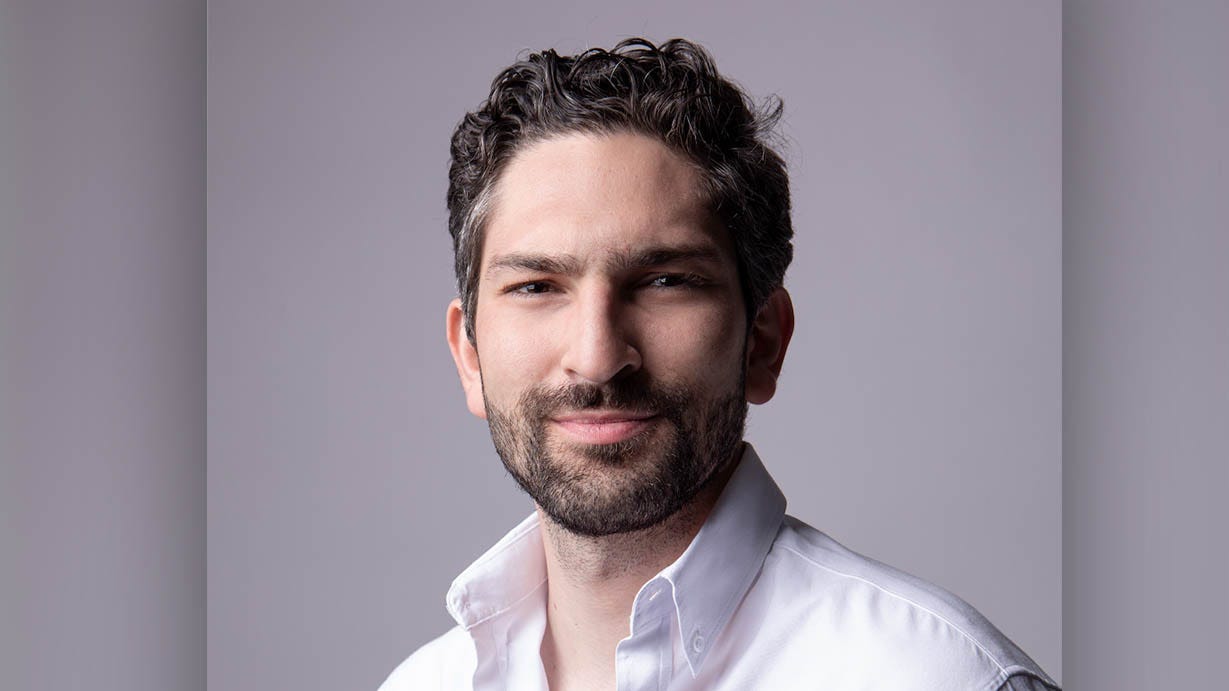
Frangie Mawad came up “in a world without an ozone layer and with a lot of cyberspace,” his portfolio says. His journalism proliferated after founding his newsletter, Venezuela Weekly, covering everything from tech to climate to culture while contributing hard-hitting analysis and reporting at Politico, Bloomberg, Foreign Policy, and others. In this edition of Depth Perception, he imparts decades of lived experience reporting from within and outside the belly of Venezuela’s political machine. — Kelly Kimball
For readers new to Venezuela’s political landscape, how should we see what’s happening in Venezuela right now?
The key point is that this moment is both significant and limited. Significant because it reopens channels — diplomatic, economic, and political — that were frozen. Limited because the same entrenched forces that sustained [Venezuela’s political] system before are still in place, shaping the pace, depth, and direction of any change.
Venezuela now faces a forked path. One route leads towards a “Saudi Arabia of the Caribbean,” an authoritarian but economically functional system, less ideological, energy-aligned with the United States, internationally tolerated, and politically closed at its core. The other points to a Spanish-style transition, like the one that followed the death of General Francisco Franco: slow, negotiated, elite-driven, anchored in gradual liberalization and reforms from within the system for an institutional rebuilding and an eventual democratic horizon.
With the U.S. government now moving to control and sell Venezuelan oil while reportedly planning to exert “maximum leverage” over interim authorities, how do you navigate this terrain in your reporting without amplifying great-power narratives? And while still helping readers understand the impact inside Venezuela and on ordinary people’s lives?
The challenge is to treat U.S. policy neither as omnipotent nor as irrelevant. The fact the [U.S. Department of Justice] is using the opposition’s calls to legitimize their operation in Maduro’s indictment should be proof that Venezuelans not only have agency but that their agency and own constitutional landscape play a major role in the current outcome. Washington’s strategy operates within constraints imposed by Venezuelan institutions and domestic power dynamics.
In reporting, that means grounding geopolitics in observable mechanisms: Who controls production? Who controls cash flow? What conditions are attached to oil sales, and how those decisions translate into real effects like fuel availability, public spending, electricity, wages? It also means resisting simplified frames of “liberation” or “occupation.”
At the end of the day, many foreigners don’t know that throughout much of the 20th century, Venezuela was not only the richest and one of the most democratic countries in the region, but also a long-standing U.S. ally, a relationship that dates back to its independence in the early 19th century. Recent polling cited by local analysts suggests that most Venezuelans support the operation’s outcome and feel more optimistic about the country’s immediate future, despite distrusting the interim leaders. Local economists argue that if Trump succeeds in normalizing the economy, Venezuela could see a surge of foreign currency inflows and growth in the range of 10% to 15%, with spillovers from oil into other sectors and a moderation of rapid currency depreciation and inflation. It was a high-risk bet for the United States, but it seems it will evolve into a rare win-win situation: both for Washington and for Venezuelans.
“It was hailing gas canisters that night.”
Less-lethal munitions come in all shapes and sizes and can leave behind devastating wounds. Often, victims of kinetic-impact projectiles (KIPs) don’t even know what hit them, unless — like Andre Miller of Portland, Oregon — there’s shrapnel left behind.
After being struck in the head by a tear-gas canister launched by federal law enforcement while protesting in 2020, Miller was, in a perverse sense, lucky to have suffered “only” a traumatic brain injury. “They were firing canisters at us indiscriminately,” he says. “It was hailing gas canisters that night.”
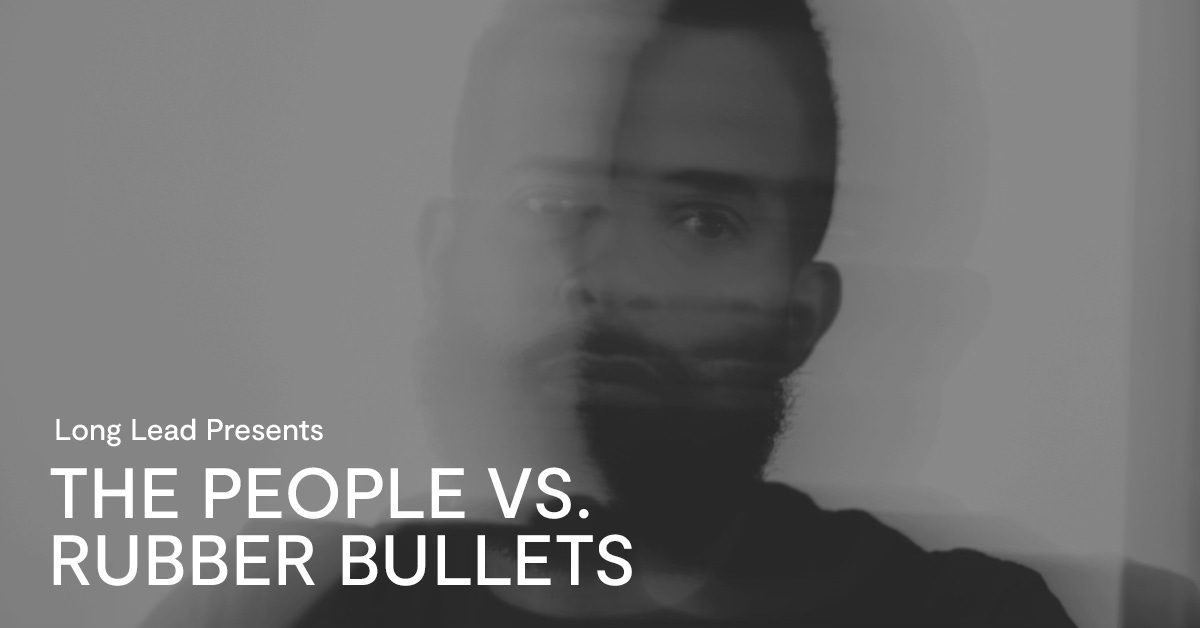
The People vs. Rubber Bulletsis an award-winning multimedia feature that outlines how U.S. law enforcement has improperly used kinetic impact projectiles for more than 50 years. Despite promoting these policing tools as life-saving alternatives to deadly force, the munitions carry a legacy of traumatic brain injuries, blindings, PTSD, and even deaths.
What drove you to start a weekly substack newsletter about Venezuela back in Sept. 2022? You intentionally publish both English and Spanish editions, an editorial choice that would seem obvious, but it’s not something many journalists are doing. What can you tell us about that process and those audiences?
I moved back to Venezuela in June of 2022. [By that time] … global attention had shifted elsewhere — especially after Russia’s invasion of Ukraine. Many foreign bureaus and correspondents had left Caracas too. So I took advantage of that window and started freelancing for international outlets. What I began to notice was that foreign media were only picking up a very narrow set of Venezuelan stories, mostly those linked to sanctions and energy relations with the U.S. Meanwhile, the local dynamics, which were being reported in rich detail by Venezuelan media, were almost completely ignored abroad.
In 2022 and 2023, for instance, we had several waves of labor protests by public sector workers. That story took forever to trickle out internationally, and when it did, it only appeared in a handful of outlets. Even the opposition primaries didn’t get the attention they deserved. For anyone on the ground, it was obvious that the María Corina Machado phenomenon was taking shape, but that process was kind of underestimated from the outside.
With all that in mind, I launched the Weekly to tell the outside world everything that wasn’t being told and, above all, to translate and build a bridge between that dense, rich, complex local coverage and international audiences.
Then I realized something else: in a context like Venezuela’s — with massive disinformation and censorship, TV channels, and radio stations that say nothing, blocked websites, and a whole ecosystem of pundits trapped in polarization, yellow journalism, and political propaganda — there was a real hunger for good, reliable information through non-blocked channels. And that’s how the Spanish version followed. Venezuela Weekly actually started as a thread in English on Twitter to update people abroad who followed me. It got traction and that’s how it evolved into something more structured.
“I launched the Weekly to tell the outside world everything that wasn’t being told and, above all, to translate and build a bridge between that dense, rich, complex local coverage and international audiences.” —Tony Frangie Mawad
Nobel Laureate María Corina Machado met with Trump at the White House on Jan 14. How are you thinking about and conveying how Venezuelans themselves feel about Machado right now?
Venezuelans are largely waiting to see the outcome of the meeting, which is widely viewed as consequential. Machado continues to retain sympathy from more than half of the population, according to recent polls. For many local observers, Machado is a charismatic, emotionally driven leader who connects with people in a similar way that Hugo Chávez, her original archnemesis, once did. While much of the discussion abroad has focused on her relationship with figures such as Trump — or, especially in the past, Israel — inside Venezuela she is largely respected for having revitalized a demoralized opposition [and clinched] a landslide victory at the 2023 opposition primaries.
So why is Machado close to figures with disputable democratic records? The current context, and the limited agency available to the opposition and civil society inside Venezuela, have pushed Machado toward uncomfortable and highly pragmatic alliances as a way to achieve a transition and oust the regime. Political transitions often involve such trade-offs. Nelson Mandela, for instance, also received support from regimes with poor human rights records, including the Soviet Union and Cuba, without that diminishing either his leadership or the legitimacy of the Nobel Prize he later received. Machado’s position today is comparable.
She is likely to continue playing a significant role in the current process, because she remains the symbol of a democratic outcome. Her meeting with Trump, and her bipartisan backing — particularly among Republicans and figures such as Marco Rubio — are likely to reinforce that role.
Fantastic piece here. The distiction between removing a leader vs dismantiling the architecture is crucial but gets lost in most coverage. I was covering similar dynamics in the Balkans years back and saw how regimes outlive their figureheads when instituional control remains intact. The 'Saudi Arabia of the Caribbean' framing is particularly sharp, kinda cuts through the democracy vs dictatorship binary that dominates Western analysis.



Fantastic piece here. The distiction between removing a leader vs dismantiling the architecture is crucial but gets lost in most coverage. I was covering similar dynamics in the Balkans years back and saw how regimes outlive their figureheads when instituional control remains intact. The 'Saudi Arabia of the Caribbean' framing is particularly sharp, kinda cuts through the democracy vs dictatorship binary that dominates Western analysis.