"I’ve never had a master plan." Tom Junod on publishing his first book at age 67
In his memoir, the celebrated magazine writer wrestles with the sins of his father. In this era of journalism, he's reckoning with the loss of language.
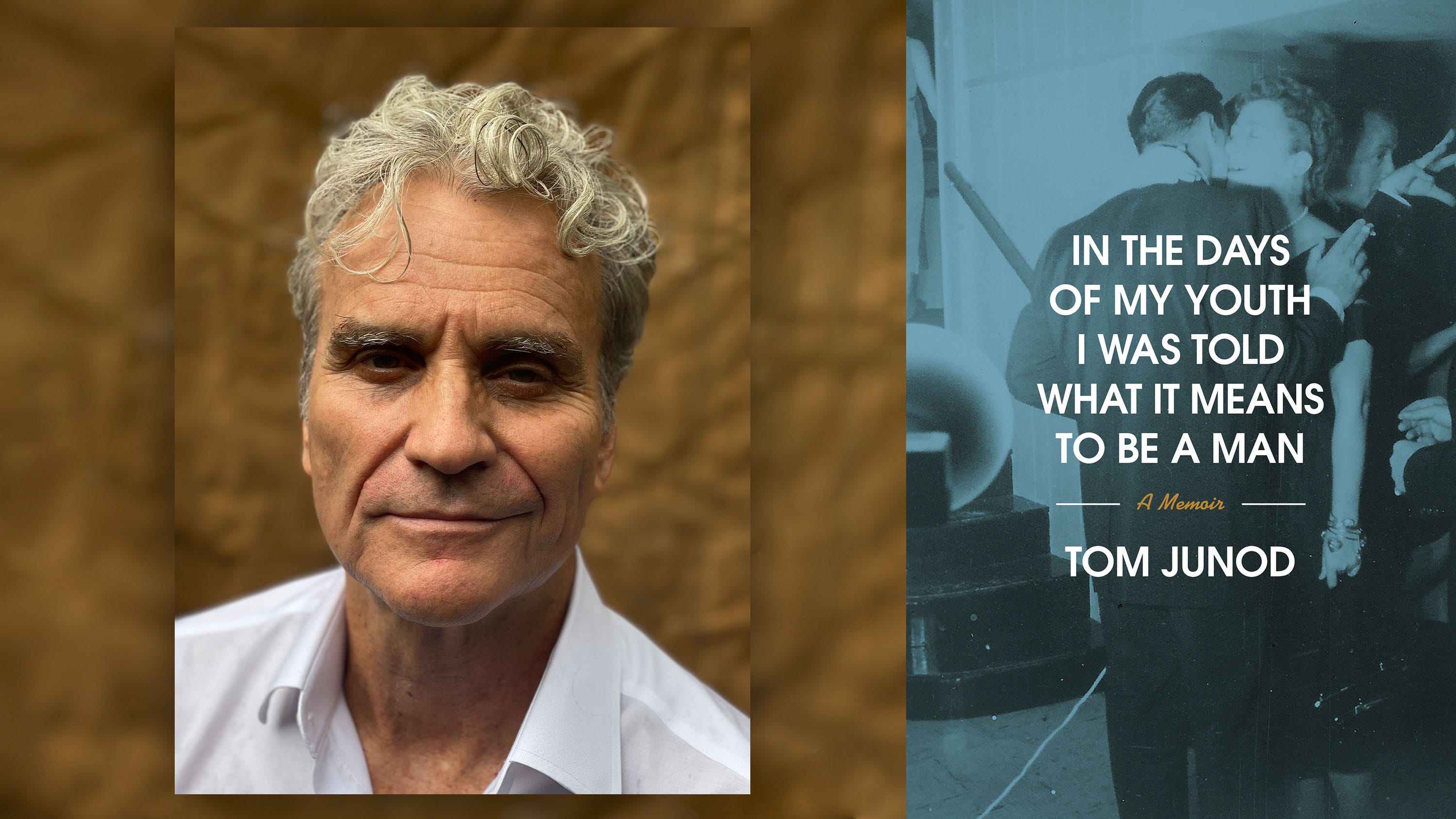
Photo credit: Lee Crum, book cover courtesy of Doubleday
Two-time National Magazine Award winner Tom Junod begins his father-son memoir at his father’s memorial service 20 years ago. He confesses that the primary motivation for his celebrated journalism career was, in fact, the same motivation he felt when delivering his eulogy for his father: having the last word.
Looking at the urn holding his father’s ashes, Junod writes he was “stunned into silence by the spectacle of the genie squeezed back into the bottle.” Junod spent 10 years forensically investigating his father’s life. “Big Lou” Junod returned to Wantagh, Long Island after serving in World War II. He dreamed of becoming Frank Sinatra. While failing to make it as a crooner, Lou became a highly successful traveling women’s handbag salesman. He poured his energy into molding his role in the world after Sinatra, living his life as ifa big time celebrity.
The memoir uncovers endless extramarital affairs, a secret second family, a hidden half-sister, a father with double — and even triple — lives. Junod excavates a cemetery’s worth of skeletons in his father’s closet. In the process, he learned that this project consumed his entire life, long before his publishing career began. The memoir also deals with Junod wrestling with his father’s conception of masculinity and his struggles to both live up to it and unlearn it.
Learn from top longform journalists and find the best in-depth reporting. Subscribe to Depth Perception:
Junod is the only writer to win the National Magazine Award for feature writing in back-to-back years. Both profiles were written for GQ: the first dealt with an abortion doctor, the second profiled a rapist. “Can You Say… Hero?,” his exploration of Fred Rogers written for Esquire, stands as one of the finest profiles ever written and was adapted into the 2019 film “A Beautiful Day in the Neighborhood” starring Tom Hanks.
As one of the highest decorated journalists to write for Esquire or GQ — among a class of greats like James Baldwin, Nora Ephron, Richard Ben Cramer, Joan Didion, and F. Scott Fitzgerald — the one thing differentiating him was that he’d never written a book.
He wrote about his father 30 years ago for GQ in “My Father’s Fashion Tips.” The adoring portrait belied both who his father was and Junod’s true feelings for him. After reading the article, Junod’s mother cooly remarked, “Don’t forget who raised you, kid.” His new book is both a reckoning and mea culpa to Junod’s mother’s rebuke of that article. “There were always secrets,” Junod wrote of dad in that article, 30 years before publishing the memoir. “But I loved you,” he writes near the end of the book, “in order to survive you.”
Depth Perception speaks with Tom Junod about the struggle to learn the true story of his complicated father and what it’s felt like to share it with the world. —Brin-Jonathan Butler
You begin this book at your father’s funeral service. You tell us that the driving reason you became a writer was to have the last word. Was that instinct and motivation always in relation to your own father? Wrestling control of a narrative?
I think that you’re right about that.
At the heart of your father’s identity is a lifetime’s worth of holding endless secrets. Most writers are detectives in otherpeople’s lives. How was the process different applying all of your skills and craft to uncovering so many of your father’s darkest secrets?
I’ve been doing that with my family and family history ever since I was a child. I think there’s a good argument to be made that all my work prefigures this book. I was obsessed as a child with my dad’s secrets. I didn’t feel that I had the power to share his secrets, even when part of me thought that I should. I’ve written a bunch of magazine stories that search for the language in which to express secrets. The tone of the book is different from anything I’ve ever written. It’s a reckoning, but it’s also a conversation with my dad. At the end of the book I write him a letter. I show my cards. It’s different from anything I’ve ever done. I’m a highly motivated actor in this book. Franz Kafka’s letter to his father was one of the things that got me started on this book. I wanted to write an answer to Kafka as well as my dad.
When you begin talking about how powerful having the last word was for you in becoming a writer, I thought a bit about Nora Ephron. Her family talked about how when she wrote about them, she believed that nothing else was really worth saying. Why do you think having the last word was such an animating force for you in writing?
Because I was silenced. I took it upon myself to investigate my dad, not just as a veteran magazine writer writing a book, [but because] I’d been wanting to tell that story forever. I’ve already told it a bunch of different ways as a magazine writer. The dynamic of wanting to tell the truth about someone but feeling, at the same time, the impediments of that. I’ve done that as a writer from the very start and it comes from listening to my dad. He could tell me what to say but not what to think.
Uncovering Sports Illustrated’s forgotten pioneer
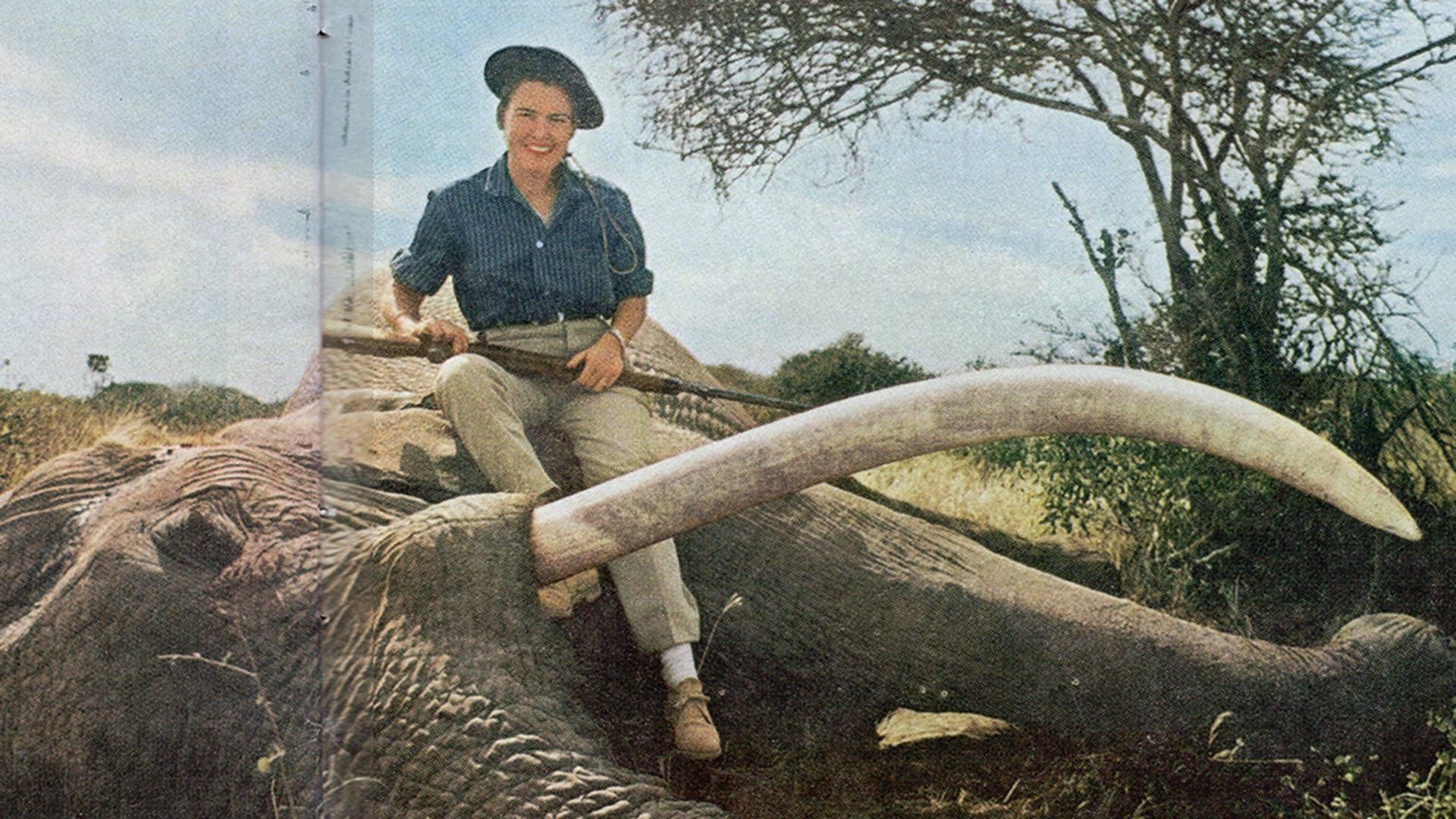
Virginia Kraft sits atop an African elephant, minutes after shooting it with a Winchester .458, in Kenya, 1957. Photo by Robert Dean Grimm via Tana Aurland
Virginia Kraft was among the most important sports journalists of her time. A pioneering adventure writer who was deadly with a rifle, she chiseled early cracks into publishing’s male-dominated world. She was also a competitive skier who raced sailboats and hot-air balloons, hunted with kings, and drank with Hemingway. So why hasn’t anyone heard of her?
In The Catch, globetrotting adventure and environmental journalist Emily Sohn tells a complicated story of a woman who did not fit into simple boxes. A multimedia profile published by Long Lead, the piece was named “Best Individual Editorial Feature” by the Webby Awards, won the 2024 Newhouse Mirror Award for Best Profile, and was included in Triumph Books’s The Year’s Best Sports Writing 2024. Read The Catch today.
Is it fair to say your dad’s dream in life was to become something like Frank Sinatra? Some version of that as a crooner or to be recognized in the culture like Sinatra?
Sure. Of course. Without a doubt.
And he never realized that dream. How many people who dreamed it did? But it made me think about your relationship to ambition as a response to his. How much of your dad not attaining his dream informed or offered fuel for you to get where you did with your dream?
I really don’t know. I think it possibly requires a level of self understanding that surpasses my own. My ambition snuck up on me. I first wanted to be a writer that wanted to make a living out of being a writer. I wanted to be a writer who raised the bar to a certain level. Then I wanted to write a memoir that would stand up with any memoir. And all of those things seem so hard — hard even in retrospect. I didn’t have it in me to voice any sort of great ambition. How could I say I wanted to be one of the greatest writers or journalists ever when I was a handbag salesman. I had never taken a journalism course. I didn’t even get a job writing stories until I was almost 30 years old.
The ambition has always come to me, story by story. I’ve never had a master plan. But when I do things, I get pretty obsessed with them. It taps into something in myself. I would do anything for the story or this piece of writing to succeed. So maybe what I said sounds pretty ambitious. My dad wasn’t the next Sinatra. He tried to get on a talent show and choked. I think I saw a vulnerability in that. When I was a kid, my overpowering ambition was to be able to sit in a room with my dad and not cry. I became who I am in order to have a certain kind of bravery. That kind of bravery finds its way into the way I tell stories and the way I tell stories has led me to success. So, I think, both sorts of things feed off each other.
Truman Capote’s last book took its title from how answered prayers can inflict even more damage than unanswered prayers in some situations. Would there have been some kind of tragedy in your dad’s life if he had achieved becoming the next Sinatra? Or would it have become a kind of Peggy Lee “Is That All There Is?” tragedy to it?
He loved that song, by the way.
Donald Trump’s favorite also.
Wow. Well, if my dad had made it, I don’t think my family would have stayed together. In another way, I don’t know if our family life would have been that different than it already was. My dad lived like a celebrity. He bedded women like a celebrity. He turned peoples’ heads like a celebrity. I was quite aware of that all the time. So maybe it wouldn’t have changed anything. I don’t know.
I’ve seen a number of photographs of you promoting the book wearing a turtleneck. I’m not sure if that’s done ironically with a wink or not. But I think your dad said it’s the most elegant article of clothing a man can wear. Can you indulge me for just a second and clarify why you think this is? I’ve nursed a profound hatred of turtlenecks all my life.
Because they frame your face.
What if I don’t enjoy my face being framed?
It puts your face up on a little pedestal.
“The book really began when I decided to not judge him or even analyze him, but to recreate him on the page. Or try to recreate him on the page. And it feels so weird that I brought him back to some degree.” —Tom Junod
Maybe my aversion to turtlenecks is just down to you and your dad having superior bone structure to me. If you were starting out in journalism today, with the ecosystem so depleted compared to when you started your career, how would you approach it?
Number one, I was lucky. I came up at the right time for a certain kind of writing to be nourished and rewarded. That was a really lucky stroke. The media landscape now is in the podcast world. The social media world. It’s not conversation or discussion or even investigation. I miss the joy of people and myself finding the right language for experience. It’s not just that media has gone away, it’s language, and that is really hard to deal with.
Writing requires more attention than listening to podcasts. You can talk for three hours and not say the things that you could write in a paragraph. But talk has steadily moved to the forefront while writing recedes. I’d like to think that the young person I was starting out would’ve found a way to keep writing. But I really don’t know and I don’t know what would have happened to me. And I don’t know what would have happened to me if I didn’t write.
I felt like if I encountered your dad in the wild I would have really gotten a kick out of him. But in his role as your father and all the weight of his secrets and the damage he caused your family — what’s it like now that he’s been gone for 20 years? Do you miss him? Is there relief on any level with him gone?
You know, I still dream about him. I like those dreams. I like when he creeps behind the walls of sleep and announces himself. I guess I miss him. I guess there’s relief also. The book really began when I decided to not judge him or even analyze him, but to recreate him on the page. Or try to recreate him on the page. And it feels so weird that I brought him back to some degree. Because so much of my writing has been about trying to find my way, both away from him, and yet toward him.