

The inside story of one journalist's 7-year quest to crack Macy's secret Santa society
David Gauvey Herbert found a skeleton key to Santaland and unlocked the Christmas story that Macy’s didn’t want told.



When there’s a really good Santa at Macy’s, it’s easy to leave your own reality behind and disappear into the tinsel-heavy world of Santaland. The name of the guy portraying Kris Kringle? Does it matter?
Oddly enough, the same goes for a beautifully-crafted longform magazine story. If the writer does their job right, the reader gets to step into a different timeline and place. The name of the writer? You promise yourself you’ll remember it but the story — the story! — that’s what sticks once you’ve finished reading.
David Gauvey Herbert is the kind of writer who does that for his readers. He won’t even be offended if you remember his writing but not his name. But you’ll want to find out more about his work after reading his latest piece for Esquire, “Yes, Bob, There Is a Santa Clause.”
The article, about a man whose life was shaped by the time he spent as the lead member of Macy’s red-suited pack of “ho ho ho”-ers, is one of the most human pieces of journalism you’ve read in a long while. It’s exactly the piece you need when everything else seems — to put it mildly — pretty bleak.
And once you find out what else Herbert’s written, you probably won’t be surprised that some of your favorites are on the list. (Really. Check it twice.)
“One thing I have not done super well is cultivate any sort of name recognition, because I haven’t written a book yet,” Herbert says.
Depth Perception spoke to Herbert about his Santa story and why he was so devoted to this one man’s tale. Consider our conversation with him our gift to you. Happy holidays! — Jenna Schnuer
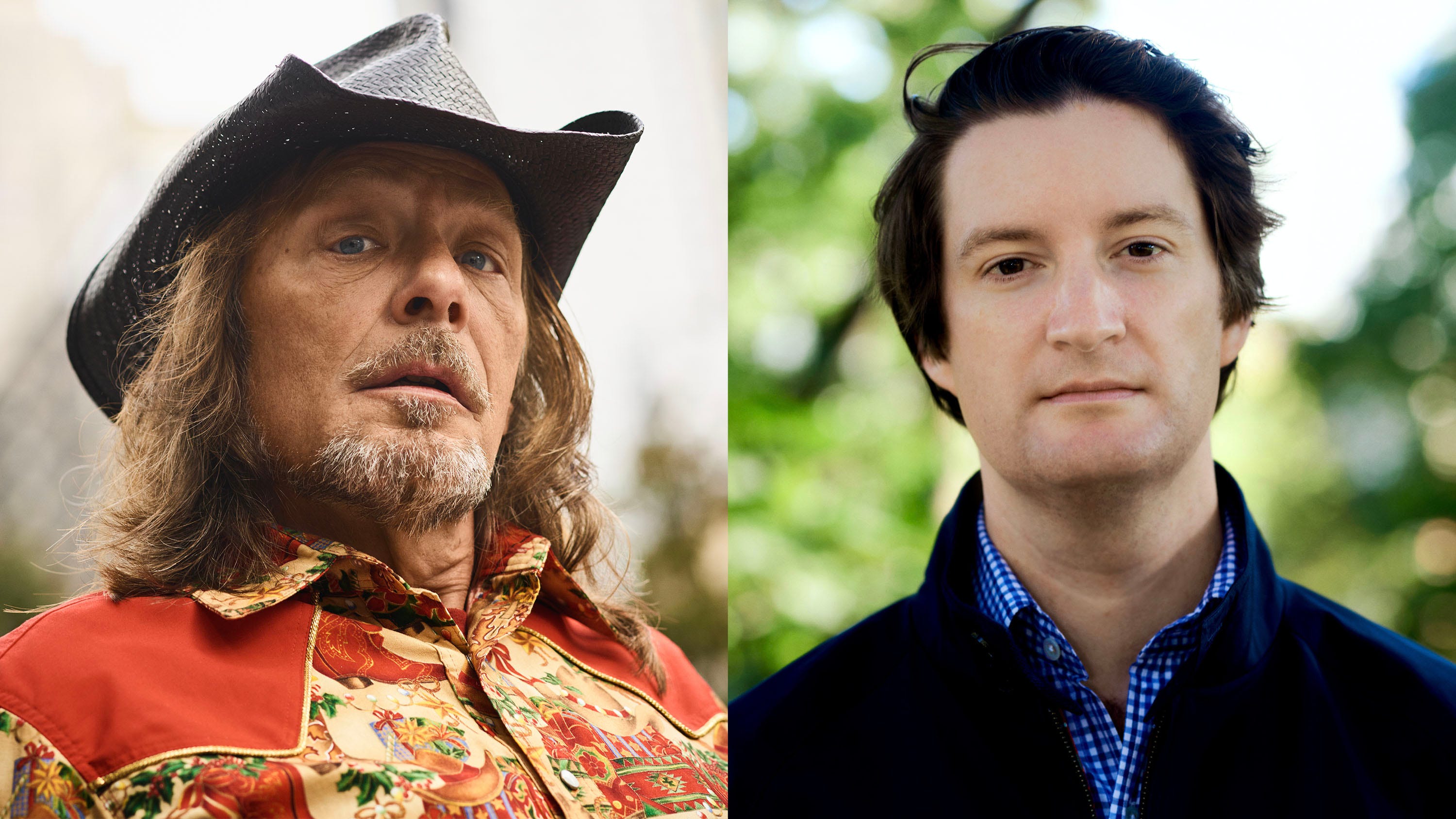
Macy’s is famously quiet about the men who play Santa in their stores and in the Macy’s Thanksgiving Day Parade. How did the Santa piece come about? How did you find your Santa?
About seven years ago, I was at a bar in Uptown Manhattan, and through a friend of mine, I met this guy who had been down and out, got divorced, lost touch with his kid. He got the idea to become a Macy’s Santa and this basically saved his life. Stepping into the red suit gives you this ability to kind of rehab your life. It’s this really unique opportunity for guys who [haven’t really been treated well by] life, to kind of come back to life in a new way.
I cast around the country. I talked to scores of Santas around the country, heard these incredible stories, but everything kept pointing back to Macy’s. And Macy’s is really where the real Santa lives. If you’ve watched Miracle on 34th Street, the lore — the Christmas canon — is at Macy’s. The Macy’s Santas wouldn’t talk. Most of them wouldn’t talk. Macy’s corporate wouldn’t talk. They didn’t want to be part of an article.
Then I was searching around on YouTube, and I found this super cheesy reality show from the 2000s where Macy’s briefly allowed camera crews to poke around Santaland. There was this one Macy’s executive, Bob Rutan, this tall, handsome guy, who was the star of that episode. And so I call him up to meet for lunch. He looks totally different. He’s gone from like a swish executive to that vagabond guy with a cowboy hat. And it turns out that he’d been fired by Macy’s after the show came out for different things, but he had the most incredible stories of Santaland. He himself had started out as a Santa. I [talked to] more Santas and more Santas, but I kept coming back to Bob. One story in particular that he told I could not shake. And so I knew that we had to build a story around him.
When did you start talking to him?
I think we met in the summer of 2023. It took me a while to decide to focus on him, and then once I did, basically from the summer until now, we’ve been spending time together.
What were his concerns about being featured in the story?
There really is a sense among these Macy’s Santas that you shouldn’t be talking about what goes on there. [That] they need to keep the curtain closed. I think he was worried about dredging up the past, just with his wife and with his friends. Because, you know, after he got fired [from Macy’s], there were some dark times. He did some stuff he wasn’t proud of [and] he was so brutally honest.
More from Depth Perception: An interview with the NY Times, Washington Post, and Publishers Weekly book of the year-winner
Caleb Gayle on taking an anthropological approach to writing untold stories
·Caleb Gayle isn’t interested in reporting stories featuring straightforward heroes and villains.

Once you decided you wanted to write about Rutan, how long did it take to sell the story to a magazine?
I pitched it to another magazine earlier in the summer, and they said, “We love the idea. It’s great, but not Bob, he’s not the right character.” Well, [I said] I disagree. So then I pitched it to Esquire. They had some questions. I said, “Trust me. Trust me, trust me.” Because really, the story is totally out of character with any other story I’ve written ever. Most of my stories are trying to make you question your faith in humanity, or they’re about rapscallions and we’re trying to humanize these people that have done odious things.
I think they were sort of confused why I was even writing this. I think the Esquire editors really thought this was going to be this big exposé, a David Herbert exposé of Santaland, and there’s going to be, like, violence and sex and drugs. But no, it’s just guys making it all work and putting it together in the red suit. And they went along with it, which I thank them for.
This is just a sweet, sweet story that makes you cry at the end and want to call your dad or something — that was the goal of the story. And I was very heartened in the comments and on Reddit and text messages from people saying that they were crying on the subway and on Amtrak.
What did it feel like to work on this piece? Has it changed the kind of work you want to do moving forward?
It seems like we live in this cultural moment where everything is just tearing down the past and tearing down the present, and opining about the future. I think about the movies I love and some of the books I love, and even some of the magazine articles I love, and they’re hopeful. Not to say life isn’t super complicated, but I think people have gotten away from even looking for these stories because they’re considered schmaltzy, small town profile stuff.
My former editor at Esquire would call them walking-the-dog stories: Stories that you read, and then a few days later you’re out walking the dog, you’re thinking about the story again, and you’re like, “Shit, I need to call my dad,” or “I need to call my daughter.”
It’s both cinematic, but also this human experience where you realize that you and the character maybe aren’t that different. And it could be inspiring, it could be terrifying, it could be reassuring. It could be worrying. It doesn’t actually have to be a happy ending, but it has to be an ending that is like finding the vein — that human vein that connects us all.
Further reading and viewing from David Gauvey Herbert:
“Bad Dojo: Tiger Schulmann Didn’t Get to Be America’s No. 1 Karate Kingpin Without Busting a Few Faces” (Esquire, Apr. 22, 2025)
“A Ninety-Nine-Year-Old Lawyer’s Final Case” (The New Yorker on YouTube, Nov. 26, 2024)
“How Cheerleading Became So Acrobatic, Dangerous and Popular” (The New York Times Magazine, Oct. 22, 2024)
“The Case of the Fake Sherlock” (New York Magazine, April 11, 2023)
“The Epic Family Feud Behind a Weight Loss Camp for Kids” (Bloomberg Businessweek, Aug. 26, 2021)
 | A guest post by
|