Sarah Rogers and Kate Bennis on twins, loneliness, and collaborative journalism
The photojournalist and documentary filmmaker discuss “Double Meaning,” their multimedia Long Lead feature exploring what the world's largest gathering of twins can teach us about human connection.
When Sarah Rogers pitched Long Lead a story about Twins Days, the world’s largest gathering of twins, she didn’t know exactly what shape it would take.
She knew she wanted to create a portrait series of twins — she’s a self-described fangirl of photographer Diane Arbus. She also had a personal connection to Twinsburg, Ohio, the town where Twin Days is hosted and where her maternal grandmother, herself a twin, was born. But the deeper story would reveal itself only once she and her longtime collaborator, Kate Bennis, arrived at the festival.
What emerged was “Double Meaning,” a multimedia feature combining Rogers’ intimate photography and reporting with Bennis’ documentary filmmaking. Published by Long Lead, the piece explores the 50th anniversary of Twins Days and the impact it’s had on the thousands of twins and multiples who attend every August. But it’s about more than matching outfits and genetic curiosities; it’s a meditation on human connection, community, and what twins might teach the rest of us about combating loneliness in an increasingly isolated world.
Learn from top longform journalists and find the best in-depth reporting. Subscribe to Depth Perception:
Rogers, aphotojournalist and Long Lead‘s creative director, and Bennis, a documentary filmmaker and video journalist who grew up in Ohio with Twins Days always on her radar, have been friends and creative collaborators for over a decade. They met working at a summer camp media team in New York’s West Village, lived together for years, and even played in a band together. Their partnership on “Double Meaning” reflects that history: working independently but in sync, creating complementary pieces that enhance rather than duplicate each other.
Their feature balances celebration with complexity, featuring voices ranging from 5-year-olds to 89-year-olds. It touches on everything from body dysmorphia to grief while maintaining an underlying sense of wonder at the profound bonds twins share. In this edition of Depth Perception, we speak with Rogers and Bennis about their collaborative process, the challenges of weaving together celebratory and difficult themes, and what they learned about their craft by spending a long weekend in Twinsburg. —Parker Molloy
How did you first learn about Twins Days? Kate, you said you grew up around it, you’ve been aware of Twins Days the whole time?
Kate Bennis: I’ve always wanted to go, but I don’t have a twin. It was weird because I didn’t know anyone from Ohio who went, or I thought I didn’t. It never came up. But every year I’d be like, “Oh, that’s such a cool event. I bet that’s really fun to see in person.”
Then when we started working on this, all of these people came out of the woodwork and they were like, “Oh yeah, we go every year.” Friends I didn’t even realize were twins were just like, “Yeah, it’s our thing.”
Attendees enjoying the Twins Days Festival in Twinsburg, Ohio in August 2025. Photos by Sarah Rogers
What made you think this needs to be a Long Lead story? Sarah, were you involved in that since you’re the creative director of Long Lead?
Rogers: My maternal grandmother is a twin and she was born in Twinsburg. That was kind of a weird way that I knew about it. Then also the weird Ohio connection that I have with Kate — my mom’s side of the family’s from Ohio, so I just find myself there a lot. I kind of just had this in my periphery forever and was interested in it.
My grandmother told me she went when she was a kid when it was really just a very small parade through town and not much else. It was almost like a cookout in the park. But I always thought it was really interesting and it would be an interesting photo essay. That’s kind of how I initially pitched it — just being a Diane Arbus fangirl and wanting to do a portrait series of twins. Then trying to make it a bigger story about what twins have in common and what we can learn from twins. Also more broadly, what they have not in common.
Obviously, with everything being so polarizing right now, I thought it would be an interesting lens to look at these people that are genetically the same but have differences too. I kind of went into it not knowing the framing exactly yet. When I pitched it to [Long Lead editor John Patrick Pullen] initially, I was like, “I don’t know what this will be until I’m there.”
Kate and I independently worked on our projects. We were obviously reporting and interviewing the same people, but then she worked on the documentary, I worked on the written part, and we didn’t really compare notes until we had solid drafts. Then we realized these complement each other actually pretty well. There’s some overlap, but it’s not exactly the same either.
The piece moves seamlessly between celebratory aspects of Twins Days and deeper themes like loneliness, body dysmorphia, and grief. How did you decide to balance these tones in your reporting and your writing?
Rogers: I wanted this to be as much of a comprehensive look at the relationship between twins as possible, and obviously there’s good and bad there. I didn’t want this to be a fluff piece of just “being a twin is great, you have a built-in best friend,” even though we heard that soundbite a thousand times when talking to them.
I thought that offering some insight to aspects of being a twin that aren’t so obvious — like the body dysmorphia and being constantly compared and grief when you lose a twin and someone that you’ve spent your entire life with — those are all things that I didn’t know about before. I wanted to bring that into the reporting because I thought that was honestly some of the most interesting things that we took away from it.
“I wanted to have the broader themes of community and friendship and companionship without it being a fluff piece. I wanted it to still have some weight to it.” — Sarah Rogers
You mention the U.S. Surgeon General’s advisory about loneliness. When did that connection to broader public health issues occur to you — during the reporting or in the writing phase?
Rogers: It kind of came together in the writing phase. When I was working with the editor about this, he was really pushing me to connect the dots and make this more accessible to audiences that aren’t twins. Like, what can people that aren’t twins learn from the extremely strong bond of twins? What can resonate with a broader audience?
I was mapping out the takeaways from each interview. I had a wall of Post-its when I was working on this — it’s very Charlie Day in It’s Always Sunny in Philadelphia with the red string. I was basically trying to find common denominators that were across these sets of twins and problems that were being solved. One of them was companionship, and I was like, OK, that’s the solution to loneliness. This connection is kind of the opposite of the divisiveness and the polarization of everyone right now.
I wanted to connect the dots there. It is grim — the emotional and physical side effects of loneliness are pretty devastating. While the solution and the takeaway here isn’t just “everyone should be a twin,” I think that just having human relationships and bonds is super important for health and society.
What was the most challenging aspect of reporting this story?
Bennis: When I went into it, at first I kept telling Sarah my goal with the piece was to make someone wish they were a twin. It was lighter at first. But then I knew I wanted to touch base on the fact that they have a specific setup for twinless twins to meet up. … I [didn’t] know how it was going to fit into the piece because it’s been parades and festivals and costumes the whole time. It felt very meant to be. When we went up, it was this singular guy with his younger brother underneath the pavilion. His story was really powerful about losing his twin and how they did everything together.
For me, the biggest challenge was making it fit appropriately into this without totally changing the tone, but also without forcing it. I wanted it to be very much like, “This is so important for him still.”
We talked about that a lot. It was a long weekend. We shot a lot. I made Sarah go back because we wanted to do the unsanctioned twins events, like bowling and prom, that aren’t part of the festival officially. We shot 14 hours on Sunday or something. But when we went to [the] bowling [event], everybody that we talked to was there, including him. It was just really special to see him at that table, showing strangers pictures of his brother. Every part of the weekend was so important to him. I thought that was really cool.
I really liked the wall of people leaving notes to twinless twins. Sarah, were there any challenges that you faced?
Rogers: Tonally, just kind of weaving it together. I wanted to have the broader themes of community and friendship and companionship without it being a fluff piece. I wanted it to still have some weight to it. I think we got there.
You quote Keri Reese saying, “What’s it like not being a twin?” That’s a very thoughtful reversal of the usual question. Did that moment change how you thought about the story?
Rogers: For sure. I asked that question to pretty much all the sets of twins and a lot of them answered with that — “Well, it’s what we know, what’s it like not being a twin?”
It was interesting to not be a twin at Twins Days. When Kate and I were walking around, literally everyone there [was] a twin or with a set of twins — maybe another sibling or a child or some family member that wanted to attend. But it was an interesting flip of the coin to be the odd man out at a festival like that. For that weekend, they were the majority and that was a special community and feeling for them. Whereas every other time in their life, it’s more of a novelty to be a twin.
Did you coordinate with the festival organizers ahead of time or did you just kind of go in there and start interviewing people?
Rogers: We worked with the Twins Days media folks about getting media passes and shooting on the park grounds. But we weren’t able to shoot the studio portraits on location. So we actually set up shop at a hotel that was down the street from the park, which actually worked out really nicely because most of the twins were staying there. They were walking down to the breakfast buffet and we rented out a ballroom to do photo shoots, and people were just stopping in and talking to us.
The Twins Days folks were happy to have us shoot there, but we were also trying to make it more broadly about twins in general. That’s why we were checking out the unsanctioned Twins Days prom and bowling night as well, because we wanted to see twins outside of the park itself.
Kate, the piece includes several sets of twins who directly challenge stereotypes, like the sisters who say they don’t read each other’s minds. Were you actively looking for those counterpoints or did they volunteer it on their own?
Bennis: They all volunteered that. There were a few people who did say that they experienced twin telepathy and things like that, too. But yeah, they all were very much like, “This is a misconception, we don’t have this.” But then other people were very adamant that they do have this. That was funny.
“For this one, the whole time I wanted it to feel like I’m letting someone in on a secret.” — Kate Bennis
You feature in this piece an age range from 5 years old to 89 years old. How did you approach interviewing subjects across such a wide age range differently?
Bennis: Once we set them up to take their photos, we got a feel of their energy and sort of went from there. We knew that with the wiggly twins, we weren’t going to get the deepest answers. As a 5-year-old, “What do you and your sister have in common?” As an 89-year-old, “What do you like about your sister still?” We tried to make it more relatable as we went through and tailored it.
There are several moments in the video where the twins finish each other’s sentences or speak in unison. Sarah, how did you decide how to show that in the text?
Rogers: It’s funny that you ask that because we just went through fact-checking and it was kind of a pain in the ass to figure out who said what because their voices are so similar. Thankfully, when Kate was shooting the video, we had lav mics on each twin. So we were literally going through the transcription and being like, “OK, based on the volume, I know this is this twin and this is this twin.”
There were still a couple of times that we had to go back to the video and ask Kate, “Can you please verify for the 30th time that this is this twin and this is this twin, because we want to get it right.” But yeah, it was tricky. Our managing editor found some elegant solutions to skirt the clunkiness of “this twin said this, then this twin interjected, then this twin said this.”
It’s charming in a video, but when you’re reading it, you’re like, “What is happening?” That was the most challenging thing in the fact-checking, copy editing stages of this piece.
Kate, what surprised you the most in the reporting that you didn’t expect going in?
Bennis: Overall, despite the ages of people and the different backgrounds and everything, obviously everyone was there because they wanted to be at the Twins Festival. But just the way that they all unanimously were like, “This is such a special connection that no one experiences with anyone else in their life.” I thought that was really interesting….
Just across the board, everyone was just like — I’m sure this isn’t obviously for everyone who’s a twin — “This is my soulmate. This is the person in my life who’s most important. Even if we get married, our relationship will never be as special as what I have with my sibling.”
I thought that was really wild. It didn’t matter: 76-year-old men or 10-year-olds or brothers in their thirties, every single one of them was like, “You’re the most important person in my life.” It was really special.
Sarah, was there anything in particular that surprised you?
Rogers: Yeah, I would say pretty much the same thing — that across demographics, it was very clear that that bond was unparalleled. To be fair, twins that don’t get along probably aren’t going to this festival together. But a lot of the twins that we talked to did spend a lot of time together, live together, whatever. Then some of them didn’t. Some of them lived in different towns and this was their weekend to connect. Those sets of twins had the same answers and the same closeness and the same speaking in unison as the twins that spent every waking hour together.
It was just a really beautiful community to see everybody finding comfort and knowing that everyone else there knows exactly the relationship that they have and they’re all on the same page. It was really special. It was very heartwarming. Kate and I choked up a couple of times when people were just talking about how much they love each other.
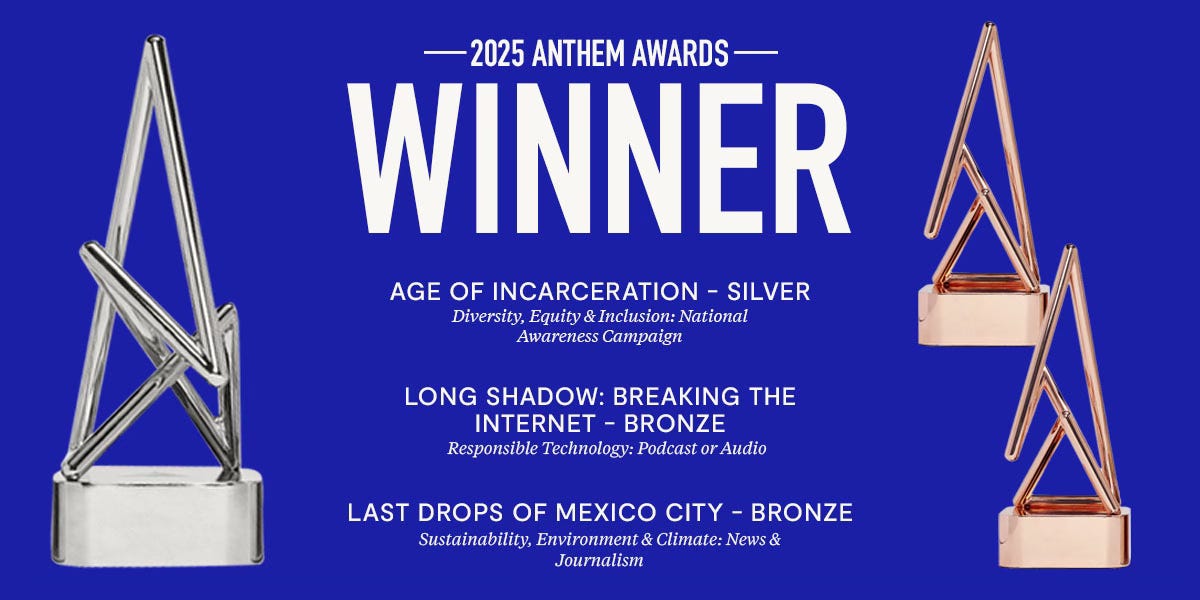
Three cheers! The Anthem Awards sing Long Lead’s praises
Long Lead is also excited to announce that our work has been honored with three 2025 Anthem Awards. The winning features are:
Now in its fifth year, the Anthem Awards honor the purpose and mission-driven work of people, companies, and organizations worldwide. The awards amplify voices that spark global change and are a benchmark for social impact work.
Our goal at Long Lead is to produce journalism that is equal parts art and impact. This is the second consecutive year our features have been celebrated by the Anthem Awards. Last year, Home of the Bravetook home two Anthem Awards and The Catchnetted one.
Help Long Lead in its mission to promote what we call “journalism without compromise” by sharing our features online and off, and by telling people what you like about them. We’re leading the future of news, and by spreading the word, you’re a vital part of it.
What did doing this story teach each of you about your own craft that you’ll carry forward to future projects?
Bennis: I think about my filmmaking heroes or documentary heroes and how they went into things. I try to keep those in mind a lot when I’m doing a new project. Maya Deren was always taking the familiar and making it strange. I like that philosophy. Mary Ellen Mark did something at Twins Days almost 25 years ago. It was cool to see what we created versus how she went about it. It’s still this intimate lens into the lives of these people, and it’s off the cuff. I like that about it.
But throughout this project in particular, it was like, “What’s my intention behind making something?” For this one, the whole time I wanted it to feel like I’m letting someone in on a secret. I want people to be like, “Oh yeah, I’ve heard about this before.” But then when they’re watching, they’re like, “Oh, I’m coming along and I didn’t realize this and I didn’t realize this.”
I think that’s how I want to approach future projects. You’re coming into this world and you think you know it, but it’s completely different than what you expected. Because that’s how I felt when we spent a weekend in Twinsburg together doing this project.
Rogers: I’m really drawn to documentaries and features on niche communities. I think they’re endlessly fascinating. That was kind of my initial launch point for wanting to do this piece. But as a journalist approaching it, I want to ask them all open-ended questions about their experiences and address different stereotypes and things like that.
But I also think that often the most interesting soundbites come from just asking, “What am I not asking? What don’t I know about being a twin that I should know?” Incorporating that question always yields the most interesting stuff because obviously you don’t know what you don’t know. That’s how we got into the conversation about body dysmorphia and things like that.
This was just a good reminder of letting subjects talk and share their experiences and not going in too strongly with what you want the piece to be… That yields the most interesting results.