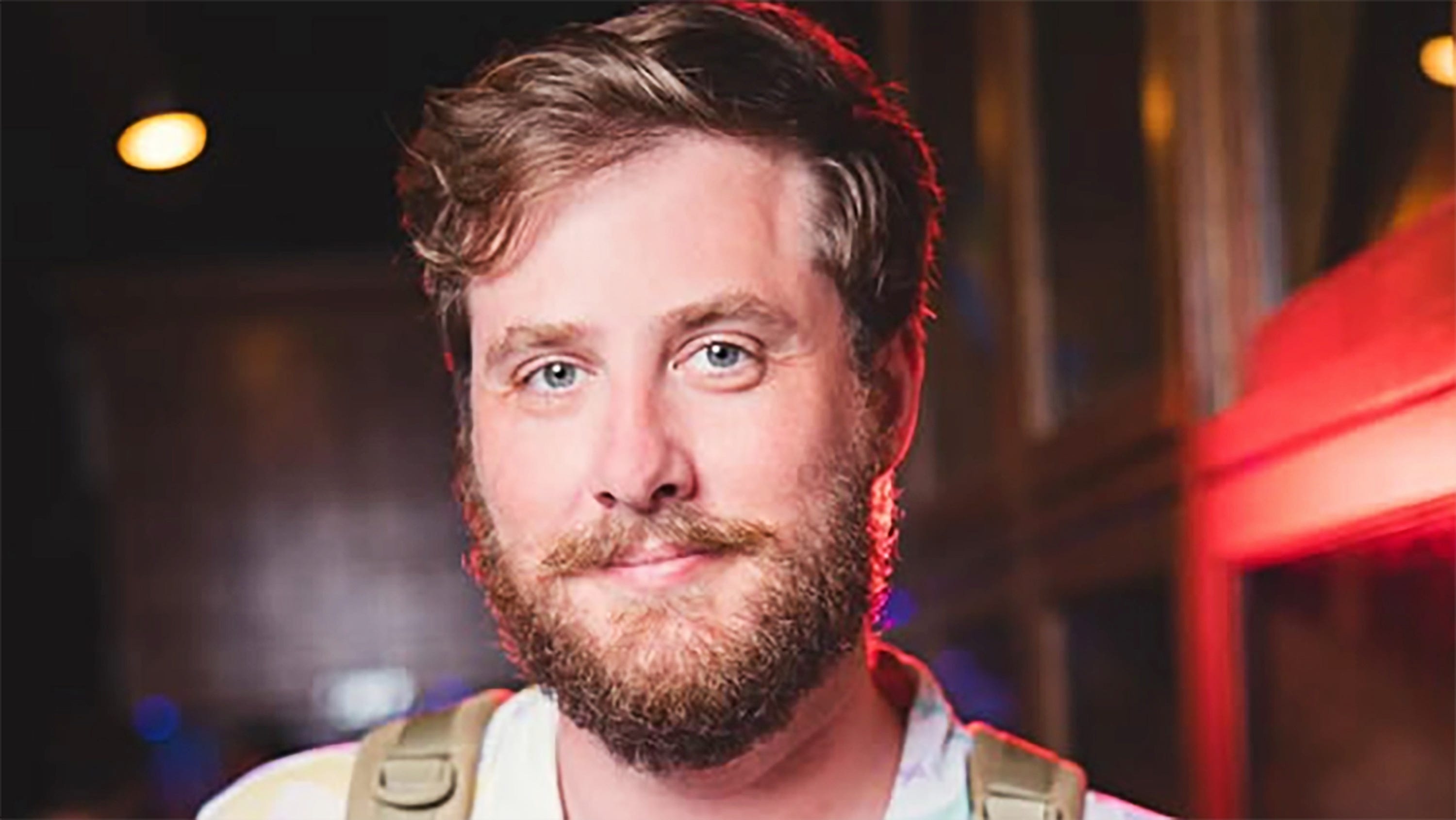
Trash talk: How Garbage Day’s Ryan Broderick analyzes internet culture
Puzzled by some seemingly impenetrable online trend? Readers (and listeners) count on Broderick to explain where it came from and what the hell it means.
Ryan Broderick — the editor-in-chief of Garbage Day, the premier newsletter dedicated to internet culture — cut his teeth during the MySpace era. “The first stories I was pitching around in college to different blogs were explaining MySpace drama, and I feel like I’ve had a foot in that world ever since,” he tells Depth Perception. “Now the whole world is engulfed by internet stuff, so the beat has only gotten bigger and wider.”
Broderick launched Garbage Day in summer 2019, starting with a humble post titled “Sonic The Hedgehog’s Stinky Feet.” Five and a half years later, the newsletter boasts more than 100,000 subscribers, with 5% to 10% paying. Garbage Media, now an eight-person team, produces the weekly podcast Panic World, which covers “how the internet warps our minds, our culture, and eventually reality,” and recently started a research arm called Garbage Day Media Intelligence.
Garbage Day (tagline: “We doomscroll so you don’t have to”) proved particularly crucial in 2025 for its reporting on and analysis of the Charlie Kirk assassination. Its September post, “Charlie Kirk was killed by a meme,” was viewed close to 600,000 times, a newsletter record, according to Broderick.
In this edition of Depth Perception, Broderick, who is based in Brooklyn, talks about the kinds of stories that resonate with Garbage Day readers, the perils of working in the “content mines” of the 2010s, and why it’s so important to be “voicey” and “human” in the age of AI slop. The following has been edited for length and clarity. —Mark Yarm
Learn from top longform journalists and find the best in-depth reporting. Subscribe to Depth Perception:
Why did you become a journalist?
I wanted to be a writer, but I wanted to have a job, so in college I switched to the media program. I was part of the school paper, and I just really liked that culture. So I started writing for blogs. I think my first internship was for The Awl. I worked at Vice, worked at BuzzFeed for a long time, wrote for Gawker for a little bit. Ended up freelancing at The Verge. So I spent the 2010s working in that world. At the end of 2020, I went full-time with Garbage Day. It’s funny, you ask about journalism, but I’ve lived so long now out in the wilderness that I feel very disconnected from that world.
What world do you consider yourself a part of now?
Probably internet creators. I talked to a lot of indie media people, which is a term that kind of appeared out of nowhere a year or two ago. I’ve talked to the 404people, and I’ve talked to [the people running] Aftermath and places like that. And it is kind of exciting to have this new scene that is starting and that I feel a little more connected to. I feel like having a direct relationship with our audience has put us in a unique position. I’m in a Discord all day with Garbage Day readers. So it feels very much like a community of our own.
How many hours a day do you spend online?
I think it’s a fairly normal amount. I mean, I work on the internet all day. But when I started Garbage Day full-time, I felt like, “If I’m so deep in the weeds on this, no one’s gonna read it.” I never wanted to be in the position that I think a lot of internet culture writers find themselves in, where I’m picking up a random rock and I’m going to look at the bugs.
I have a few systems for tracking stories and content across the week [that] we put into Garbage Day, which means that I can make connections. So it’s not so much like I’m spending time looking at some weird website full of extremists or whatever. It’s more like, “Oh, I’ve noticed this thing across a bunch of different platforms. It’s probably worth writing about.”
You must see some horrible stuff on the internet, though. How bad does it get?
I think everyone does now. We’re a few months out from Charlie Kirk dying online. I don’t go searching for it anymore. When I was younger, I took a much more cavalier approach. But I’m in my mid-30s now, and I don’t really want to sacrifice my psychological health to find some weird internet story. These days, probably X is the biggest cesspool. But I’m not going and trolling around 4chan anymore for stories. I try to use the internet like an average person would, but I know when to add context and how to make connections.
When Panic World met Long Shadow: Listen to Ryan Broderick and Garrett Graff talk “Russia, Russia, Russia”
Ryan Broderick knows a lot when it comes to the web, but he doesn’t quite know what to think about Russian interference in the 2016 election. So on a recent episode of his Panic Worldpodcast, he pulled in Long Shadowhost, journalist, and author Garrett Graff to re-examine the truth behind the scandal.
Panic World is a weekly chat show that explores how the internet warps our minds, our culture, and eventually reality, which is pretty much the story of Long Shadow: Breaking the Internet, only in a longform narrative format. Episode 6, “Weapons of Mass Distraction,” explains how the North Korea hack of Sony Pictures led to Russia’s hack of the Democratic National Committee, among other online misdeeds. But there’s more cross-over fun to be had: Broderick is also interested in Howard Dean and “the Dean Scream,” which Graff lived through as a Dean staffer and then covered in episode 2, “Establishing Connection.”
You can catch Broderick’s interview with Graff as a bonus episode in the Long Shadow feed this week, and be sure to listen and subscribe to Panic World, wherever you get your podcasts.
Charlie Kirk’s assassination spurred a conversation online about mainstream media coverage of internet culture, which the alleged shooter was very steeped in. What does the mainstream media get wrong about internet culture?
I was just talking to a friend of mine who has a Ph.D. in memes and internet culture. And he and I were commiserating about this very question, which is that there’s not really any such thing as “internet culture” anymore. Like, it’s just culture. Everything’s online. I would say the biggest misconception is that five years out from the pandemic, there is this attitude, particularly from establishment or mainstream or corporate media, that there’s something different there.
Like, you can look at the installation of Bari Weiss at CBS. That happened because her Substack was popular — this internet thing — and now she’s literally taken over a broadcast media company. So it’s all sort of tied together now, but there’s still, I think, a hesitancy to really reckon with what that means.
What were the big stories that resonated with Garbage Day readers in 2025?
Our coverage of Charlie Kirk was the biggest growth we ever had in a single month. It was the biggest readership we’ve ever had. I was brought on the news to talk about it, so that was a really interesting time for us. According to our metrics, we had a big readership from our coverage of the social media dimensions of the Zohran campaign in New York. We’ve also spent the summer covering the Trump administration’s reliance on social media to dictate policy. So we’ve been covering a lot more politics this year than we usually do, and that has been pretty popular with our readers.
We’re also trying to carve out a more nuanced point of view on AI and where it’s going. And every once in a while, we seem to break through and write something where our readers don’t immediately recoil with disgust at the very mention of AI. In the spring, I did an experiment where I used ChatGPT as a therapist for several months and then compared that to using a human therapist. We try to find ways to play with it and understand and explore it and not totally dismiss it, which kind of comes from my time early on in Garbage Day covering crypto.
Speaking of AI, we’re seeing more and more AI slop “journalism” on the internet. How bad do you think the problem is going to get, and is there anything we can do about it?
I have had all kinds of arguments about this. There’s one way to think about it, like, “AI slop becomes the lowest common denominator product across the web, particularly for working-class people, people in the global south.” In the same way as online journalism right now, if you want to pay for it, you might get good stuff, but if you don’t want to pay for it, you’re looking at right-wing garbage on Facebook. But that sort of implies that AI will get cheap enough that you can keep doing that. But these AI companies don’t make enough money to really run, and it’s still a pretty expensive thing, even if the user is only paying cents on the dollar to generate thousands and thousands of articles.
So I’m not totally sure how that will work out in the long run, but I do think broadly right now is a really good time to be writing in a very voicey, human way. Like with Garbage Day, every issue has a disclaimer at the bottom that says, “Any typos in this email are on purpose actually,” and it’s sort of a fun way to acknowledge that these are posts written by human beings. That voicy-ness is very attractive right now, and it’s something that other human beings are willing to pay for, which is pretty cool.
“We’re also trying to carve out a more nuanced point of view on AI … every once in a while, we seem to break through and write something where our readers don't immediately recoil with disgust at the very mention of AI.” — Ryan Broderick
What stories of yours are you proudest of?
It was very exciting for me this year to set up a Signal account for federal workers to text us about what it was like during the DOGE takeover and to be able to publish that. We were getting emails from different departments, and being able to verify and report that out — we’d never done that kind of scoop-based journalism before.
And then during the Charlie Kirk assassination news cycle, we moved to a daily publishing schedule. Garbage Day has, at most, published three times a week. It’s supposed to be a step back, a digest, a magazine kind of product. We were able to go daily during the Charlie Kirk assassination news cycle because I had hired the people this year to help me scale the business. We were basically running a small newsroom and keeping up with larger publishers and having our stuff cited around the country. It was a really fucked-up cycle, but for me, it felt pretty amazing.
And what story of yours do you most regret?
I spent a large chunk of the summer really trying to go after a more political beat and a more political audience. I think our Trump World coverage was needed at the time, but we probably overdid it, and now we want to go back to kind of bread-and-butter internet culture stories and fun rabbit corners to poke around in, instead of just covering whatever madness is coming out of MAGA every week.
You mentioned your time at BuzzFeed News earlier. How did you bounce back after being fired from BuzzFeed for plagiarism?
The major thing there is, I didn’t agree with their decision. I’ve never agreed with it. I have done a lot of soul searching over the years to sort of understand what happened. It’s something that informs my life and my work to this day. It informs Garbage Day in the sense that I want it to be extremely clear where we’re getting everything we’re getting, how we’re editing it. I want the work that I’m doing to be from me and not filtered through a bunch of editors or style guides.
Also, I’m not super-interested in the conditions that a lot of digital media publications had created for young writers in the 2010s, where you are writing constantly, and you are putting yourself in harm’s way by poking some hornet’s nest or fighting with editors about, “How do you write about the internet? And when can you just link to something and say, ‘I want to link to this’?”
Not to get too far into the weeds, but the way Garbage Day functions now is in direct response to the jobs in the content mines that I had in the 2010s that I think were not great environments.
What makes you hopeful for the future of journalism?
It just continues. You know, I’m on Bluesky. I see people talking about the end of literacy, the end of journalism. And in a way, yes, OK, things are not good. There are not as many jobs as there used to be. The shops and the newsrooms are smaller, but journalism still happens. People will always do it, as long as we have a First Amendment in this country. It’ll just be chaotic and confusing, and there’ll be problems. But the fact that there are little indie media places that are hiring people and doing good work, and they’re finding new technology — or sometimes, in the case of newsletters, discovering old technology — that allows them to do it, that’s just amazing.
Yes, there’s a lot to be pessimistic about. But I’ve lived through probably six layoff cycles and a dozen pivots to video since I graduated from college in the 2000s. It finds a way. I’m fairly optimistic about it, to be honest.
Further reading and listening from Ryan Broderick: