Running on AI: How Nicholas Thompson wrote a book while leading 'The Atlantic'
Artificial intelligence is "the best editorial tool we’ve ever had," says the journalist and Atlantic CEO. On the other hand, "it’s also a force that could completely obliterate us."
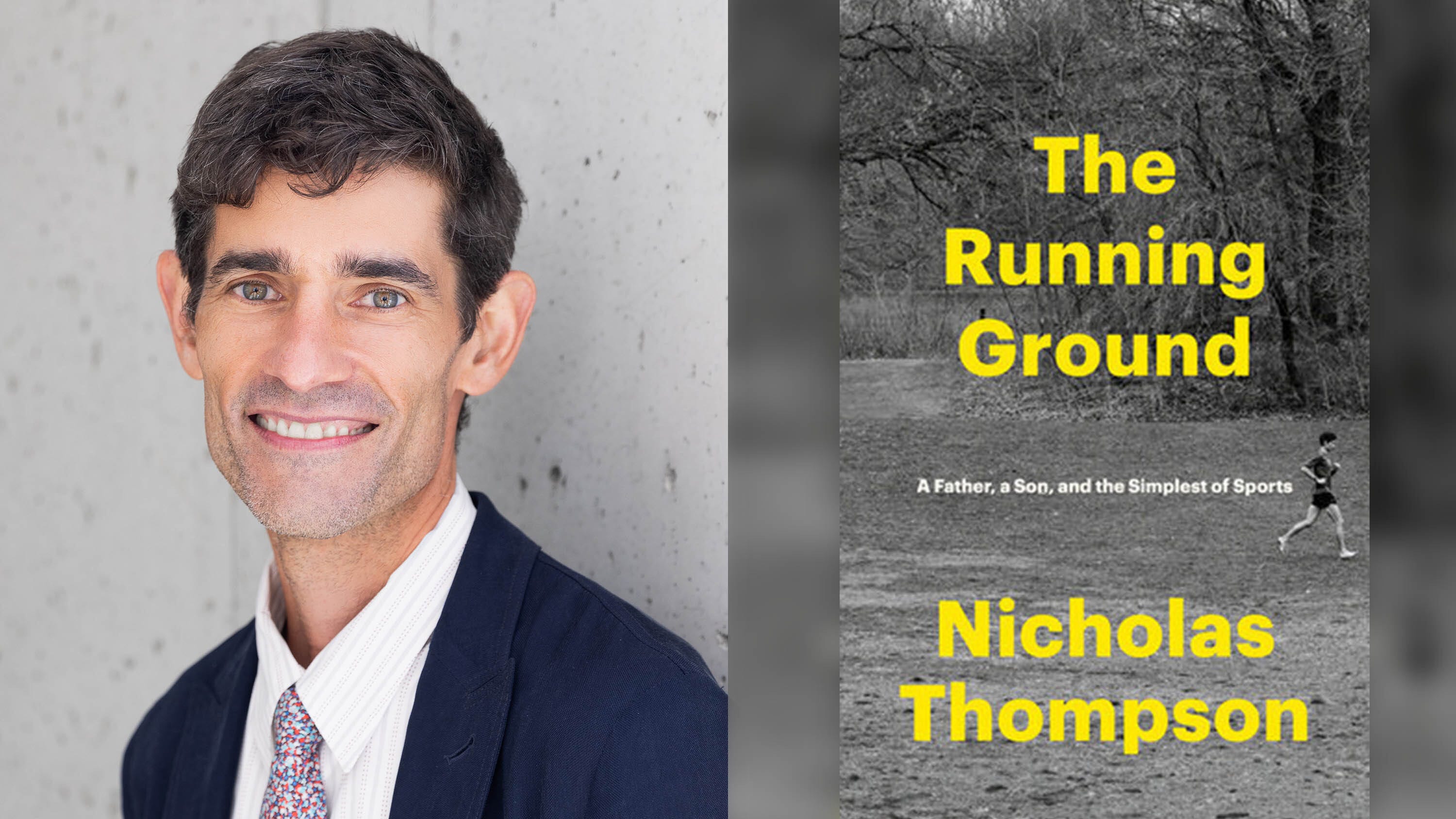
Photo credit: Carl Timpone, BFA.com; Cover image courtesy Random House
Nicholas Thompson is actually getting faster with age, defying the usual trajectory of human physiology. In April 2021, two months after being named CEO of The Atlantic, the veteran journalist set the American record for men 45 and older in the 50-kilometer race.
His new book, The Running Ground, out Oct. 28, investigates that improbable achievement and what running can teach us about limits and father-son relationships. But its writing presented a challenge for him: How do you produce a book while running The Atlantic, a role that demands constant attention in an industry that’s mostly collapsing?
The answer, in part, is AI. Thompson used it extensively with the book’s writing, which he has said took five years. He didn’t use it to generate sentences, which he considers “unethical and wrong,” but to process his father’s diaries, check chronology, and handle the grunt work that would otherwise eat up weeks. “It’s like having an infinitely capable research assistant who can give you an answer, not in 15 hours, but 15 seconds,” he tells Depth Perception. It’s a fitting approach for a journalist, editor, CEO, entrepreneur, and marathoner who excels at doing multiple things at once.
Learn from top longform journalists and find the best in-depth reporting. Subscribe to Depth Perception:
Thompson’s path to running The Atlantic was never part of any plan. When David Remnick hired him to edit at The New Yorker, it was on the condition that Thompson would sit still and just edit. No more TV appearances, no more side projects, no more scattered energy. Thompson agreed. Then Remnick put him in charge of The New Yorker’s iPad app, then its website, then its whole digital observation. “The man who made me promise to sit still ultimately was the man who set me on this trajectory of going on to become CEO,” Thompson says.
In this edition of Depth Perception, we talk with Thompson about writing The Running Ground, the business model for The Atlantic — which has turned profitable and topped 1 million subscribers under his watch — and what it’s like to run a major news organization when the president of the United States is trying to destroy outlets that report news he doesn’t like. —Parker Molloy
Why did you become a journalist?
Well, the best answer is that I was always a very curious person who liked to do a lot of things at the same time, for better or for worse. The critique of me has always been that I can’t focus on just one thing at the same time — that I’m always doing lots of things. And that’s actually a really good [characteristic] for a journalist.
The second reason I became a journalist is just the happenstance of [my] early twenties. I tried out a lot of things: I tried to be a musician, I tried to work for a technology company, I tried to be a political speechwriter, I tried to work for an environmental organization. I thought about going to graduate school, I almost went to law school, I almost went to get a Ph.D. in economics. I did a lot of things, but journalism just was the one that fit. It matched my personality, it matched my ambitions at that age.
And then the interesting question is why I stayed being a journalist. I’ve just loved it so much once I’ve gotten into it — getting to meet people, getting to travel, getting to learn things, and then feeling like you’re part of this important institution that plays a role in American democracy that I care about a lot.
You’ve had a really unusual career trajectory. Was becoming a CEO always part of the plan, or did your relationship with journalism change over time?
God, no. There’s this funny thing — I talk about it in the book — the moment David Remnick hired me at The New Yorker. I was up for the job. I’d been an editor at Wired, and I’d done well there and got recommended to The New Yorker. I go in for all these interviews. I don’t get it. I know I come close because a drunken assistant tells me so.
So a few months later, I go back to David and I say, “Hey, you should hire me now.” We sit down and have this heart-to-heart, and he says, “Look, we didn’t hire you because you’re so scattered. You do too many things. You want to go on TV. You’re starting a company. I need you to just come here, and for the rest of your career, you’re just gonna edit.” I was like, “Great, done.” I wrote him a long memo convincing him that that’s all I would do.
So I got there, and I never pitched a story to write. I never proposed doing anything else. And then one day, David was like, “You know, maybe you should run the iPad app.” And then he’s like, “Maybe you should manage the iPhone project, and maybe you should go run the website” and the product and engineering team. So the man who made me promise to sit still ultimately was the man who set me on this trajectory of going on to become a CEO.
So what’s different about leading a publication from the business side versus the editorial side?
Well, I have no idea what we’re gonna publish today. None whatsoever. They could publish a critical review of my book. They could write a story about how I’m a bad CEO. Probably not, but they could write a story trashing our biggest advertisers or explaining that subscription business models are a con. I have no idea. I have no control.
We have a very firm rule of church and state. And it’s great. It’s great for editorial independence. It’s great for trust. Jeff Goldberg never has to worry that I’m gonna tell him to write a story that butters up some business partner and it works great.
Long Shadow wins Signal Awards for best tech, history, and documentary podcast
Earlier this month, Long Shadow: Breaking the Internet won three Signal Awards, winning gold for Best Technology Podcast and earning silver awards for Best Documentary Podcast and Best History Podcast. Over its four seasons, the Long Lead-produced showhas now won eight Signal Awards.
Reporting on innovations, revolutions, cyberattacks, and meltdowns across 30 years, host Garrett Graff untangles the web in a way you’ve never considered before. Featuring memes and moments you know — like when the world became transfixed by the color of a dress — and others you don’t, but should — like how people sent death threats to the woman who posted that meme online — Long Shadow: Breaking the Internet scales the heights of internet virality and plumbs the depths of social media’s depravity. The podcast is a seven-episode odyssey that helps listeners better understand the dizzying times we’re living in now, both online and off.
Listen to the Peabody-nominated Long Shadowwherever you get your podcasts.
The Atlantic has become one of the success stories in an otherwise bleak media landscape. What’s working, and how much of it can be replicated versus being specific to The Atlantic‘s circumstances?
That’s a great question, and I don’t know the answer. There are things that we do very well. We are very good at running the math of paid marketing — figuring out how to promote stories on Facebook, how to use different platforms, how to adjust your [cost per acquisitions], all of that really complicated math that has a huge impact on your business. We’re really good at setting paywall rules, really good at identifying customer patterns that lead to propensity for renewal. We are very good at figuring out the optimal ways to price. We’re really good at this wonky stuff in the background. And we’ve cultivated this excellence — data science team, the product team, the engineering team, the consumer team. We are exceptionally good at that.
Now, it works because we have a certain kind of editorial, which is we publish these long, big investigative stories that stand out and are different and are worth subscribing to read. If we just published tons of stuff we reblogged — there are different business models that support that, but not ours.
So I think what we’ve done is replicable at a very small number of publications. And it would be interesting to see if you took the team that’s run the business side of The Atlantic and you moved it to a different publication, whether we could succeed. We’d have to find a new playbook. This playbook wouldn’t work — we would use a different playbook. But fortunately, I’ve never really tested that proposition because I’ve been at The Atlantic now for five years and it’s just been success after success.
How are you thinking about AI’s impact on journalism, both as a tool and a disruptor? What keeps you up at night about it? What makes you optimistic?
I mean, it’s the greatest tool we’ve ever had. It’s the best reporting tool we’ve ever had. It’s the best editorial tool we’ve ever had. It’s the best fact-checking tool we’ve ever had. It’s an amazing tool for processing notes, for digging through archives. It’s a giant magnet for finding needles in haystacks.
And then it’s also a force that could completely obliterate us — that could destroy our business model, could destroy our relationship with readers, and could replicate what we do. And it’s being run by companies that took our data in the middle of the night, violating our terms of service, lied about it, hid their activities, covered up their tracks, and built competitive business models without any compensation. So I have mixed feelings.
“Our editorial strategy, as it’s designed right now, is maximally resilient to AI. We do long stories that involve human-to-human reporting, told with voice and by individuals who have their own brands and people respect and like. And that will be much harder to replace than anything that’s generic or by people you don’t trust. So we’re as well positioned in the AI era as anybody could be.” — Nicholas Thompson
The Atlantic has some sort of agreement or deal with OpenAI, right?
That is correct. So we have a partnership with them. With most of the AI companies, they took all our content, they trained their models on them, and gave us nothing. With OpenAI, they took our content, trained their models on us, and paid us money, and allowed us to have a seat at the table as they design their search product. So we prefer the OpenAI model to the other models.
We’re nine months into Trump’s second term. They’ve launched investigations into broadcast networks, cut funds to NPR and PBS, et cetera. As CEO of The Atlantic, how are you thinking about operating in this environment? Has it changed how you’ve approached business decisions?
I mean, it changes some of the business decisions. Advertisers are cautious about putting their ads against stories related to Trump because they know that hostile political conversations aren’t exactly the sort of things that inspire purchase decisions or increase brand affinity. So that changes the way you advertise and the people you talk to and where you post those stories.
But it’s been very good for our subscription business. When stress goes up in America, people want sophisticated, thoughtful journalism, and stress has gone up in America. So people want our brand of journalism. I think that people, this time around, really appreciate the fact that we’re running a publication that criticizes him when that’s due and praises him on the times that he does things that we like. We praised the Argentinian bailout. We praised, obviously, the peace deal with Israel and Hamas. So I think people have really appreciated the work we’ve done.
The threat, of course — and I spent a lot of time thinking about this — is if he decided he wanted to destroy us and use the power of the government to destroy The Atlantic, what would he do? And I have some theories. I’m not going to tell you because if he hadn’t thought of them and I told you, and then he read your newsletter, he’d know about them.
We’re blessed to be owned by Laurene Powell Jobs, who cares about truth and journalism down to her deepest bones. So we’re in a very good position.
One of the things that several of the people I’ve spoken to for Depth Perception have talked about — because we focus on long-form journalism — is fighting for readers’ attention when it comes to long-form work. And The Atlantic is one of the places still regularly publishing long-form stories. How do you think about length and depth in an era of fractured attention?
So, I don’t want to step on Jeff Goldberg’s toes — those are editorial decisions. He could decide tomorrow that he’s only gonna publish stories of 20 words or less and I would build a business model around it. He could decide he’s only gonna publish one story a year and I would build a business model around it.
My view is that our editorial strategy, as it’s designed right now, is maximally resilient to AI. We do long stories that involve human-to-human reporting, told with voice and by individuals who have their own brands and people respect and like. And that will be much harder to replace than anything that’s generic or by people you don’t trust. So we’re as well positioned in the AI era as anybody could be.
For the question of attention, my view — I shouldn’t speak for the whole organization — but attention spans are shortening, clearly. But they’re also lengthening. If you look at the complexity of the TV that’s produced today versus the TV that was produced 20 years ago, it’s way more complex. There are plenty of long books that get tons of attention, long movies that get tons of attention. People are running marathons. There are things that people do that require sustained long effort. So we are scatterbrained and we’re constantly looking at our phones when we’re walking down the street and driving, but we also have the capacity for deep reflection.
Uncovering Sports Illustrated’s forgotten pioneer
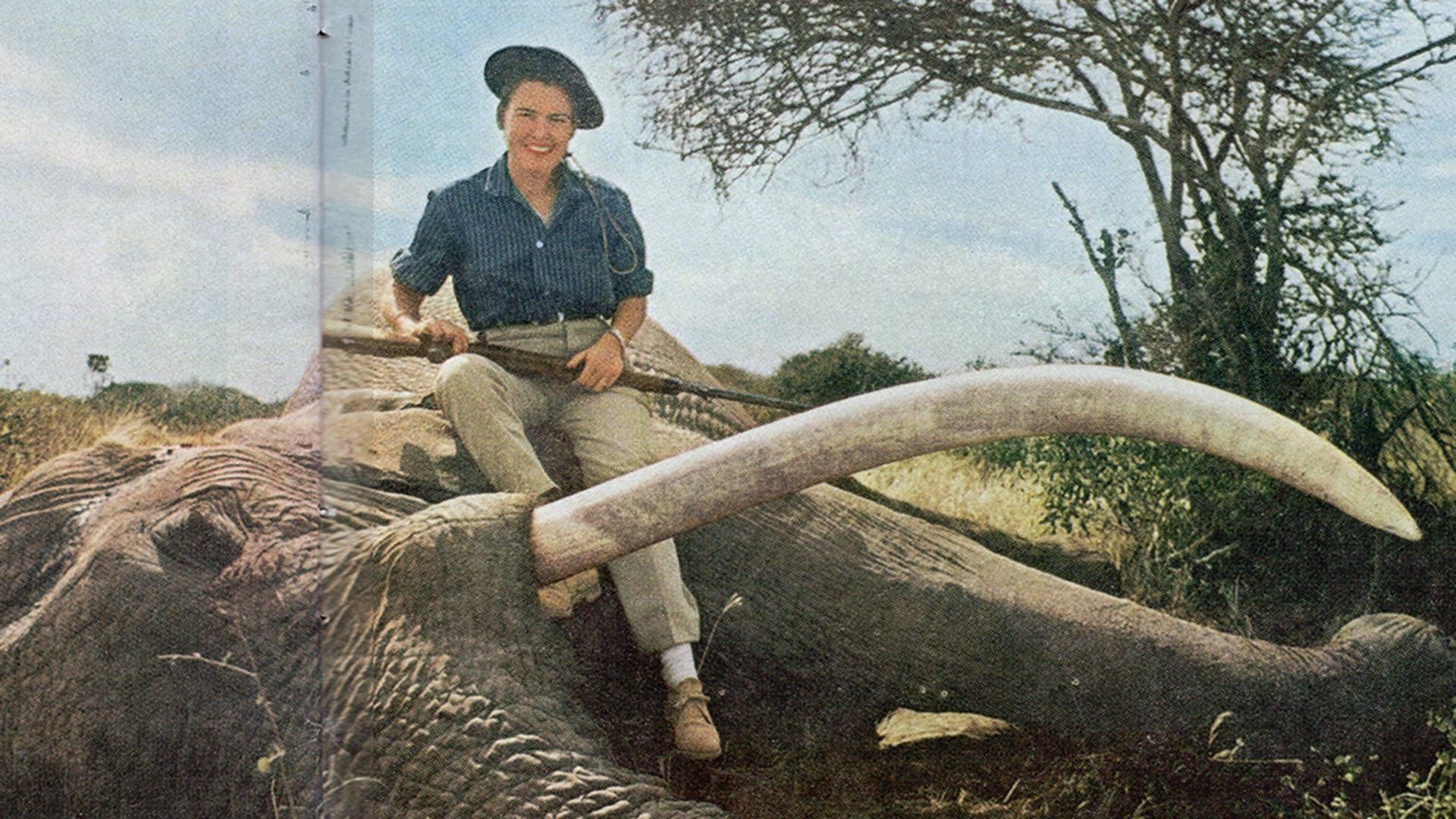
In the Mad Men era of magazine journalism, Virginia Kraft was deadly with a rifle and penned epic, deeply reported features. She hunted with kings, drank with Hemingway, and traversed six continents to take down all of the Big Five trophy animals. So how did she get lost to history?
In The Catch, a multimedia profile published by Long Lead, globetrotting adventure and environmental journalist Emily Sohn unearths and reflects on the legacy of Sports Illustrated’s lost pioneer by re-reporting one of her features from nearly 70 years ago. Examining Kraft’s now-controversial choices against her own modern values, Sohn’s profile is as much about being a forgotten trailblazer as it is about being an empowered woman breaking boundaries today.
Named “Best Individual Editorial Feature” by the Webby Awards, The Catch won the Newhouse Mirror Award for Best Profile and was selected for inclusion in The Year’s Best Sports Writing 2024 by Triumph Books. Read it today.
And that leads me to my next question, which is about your book, The Running Ground. It’s described as a meditation on what running can teach us about our limits and our lives. And it’s about fathers and sons. It’s quite different from a book on Cold War history or running a major publication. So what made you want to write this particular book now, and what have you learned about your own limits, either on the running trail or in the newsroom?
So I wanted to write the book because I had this very peculiar experience where, counter to most human physiology, I went from being a pretty good marathoner who trained all the time and tried as hard as I could to get faster, to being a very good marathoner as I went from my thirties into my mid-forties. I just got much better. And normally when you go from your thirties into your mid-forties in an athletic endeavor, you get much worse.
So I was investigating that phenomenon. And as I did, I realized there were some really deep answers that were buried inside of myself that explained how I was able to unlock this much faster version of myself. So the book was an exploration of how that worked and what happened.
And then once I had this insight that understanding — looking at running and my life — could help illuminate really big questions about how I had lived and how I had grown up and how I had gotten through complicated, hard things, maybe a book about the sport more generally could illuminate some big questions in life. And so that’s how I began it.
What makes you feel hopeful for the future of journalism?
Well, I do think that AI is. In my book, I used AI all the time. [It] never wrote a sentence, because I think that’s unethical and wrong and bad practice and it’s a crappy writer. But using it to brainstorm and edit — it’s crazy. I’d write a section on my father and I can take all my father’s diaries, upload them into Notebook LM or, with not-so-personal stuff, upload them into Claude or ChatGPT, and then ask, “Hey, here’s 50,000 words of material. I’ve synthesized it into 600 words. Is there anything in my 600 words that misrepresents what’s in these 50,000 words? [Are] there any quotes that I’ve used [that have] better versions? Is there anything that contradicts it?” It’s incredible. It’s like having an infinitely capable research assistant who isn’t as good as a New Yorker editor or an Atlantic editor, but who can give you an answer, not in 15 hours, but in 15 seconds.
If I had a really hard question — I profile five different people in the book and I had this really hard choice because I’d written six, seven, eight profiles — should I have five? Should I have six? Should I have four? Should I cut one of them? Which one should I cut? For that, I’m gonna rely on my Random House editor. You need someone who’s human.
A lot of people who are against the use of AI in general just seem to think of it only in terms of “let it write for me.” And that’s obviously not how most organizations are gonna use it.
Yeah, I mean, I think that’s kind of the fear and hatred of AI. There are two views of AI. There’s, “I haven’t really put in the time to study it and understand it, but it sucks.” And then there’s, “I’ve put lots of time into it and it’s amazing, but it scares me.” And I’m definitely in the latter camp.
The Atlantic is a savior. Talk about trust! Perhaps Mr. Thompson will let me write about the metaphor of throwing clay on a wheel. And as a history writer, I’m doing the same AI tasks: categorizing an inventory list of 500 archival items in seconds. Wow.



Great Question! "What makes you optimistic?"
What makes you optimistic?
The Atlantic is a savior. Talk about trust! Perhaps Mr. Thompson will let me write about the metaphor of throwing clay on a wheel. And as a history writer, I’m doing the same AI tasks: categorizing an inventory list of 500 archival items in seconds. Wow.