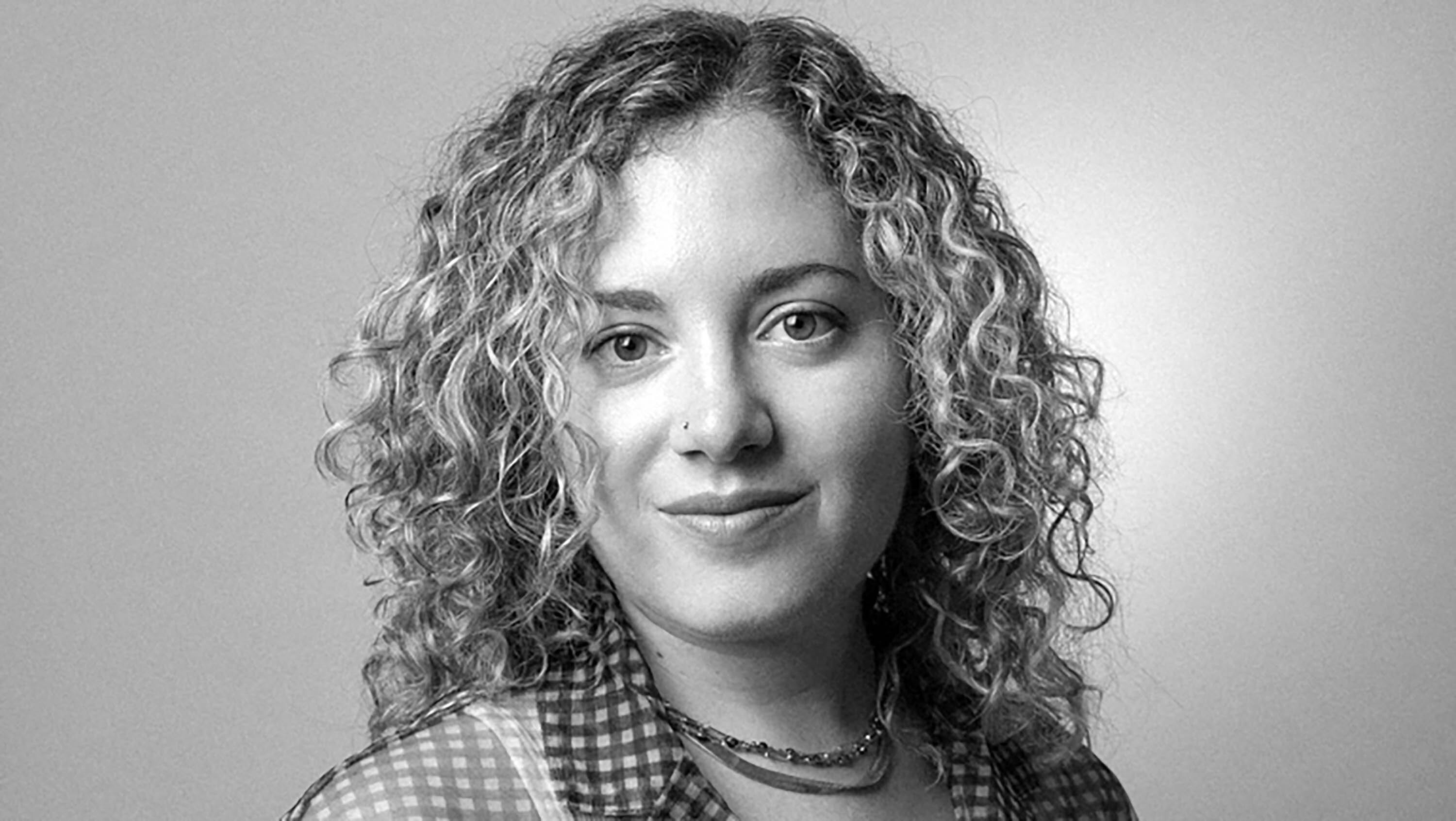
Morgan Lieberman documents the Alien Enemies Act's horrific legacy amid a new "Age of Incarceration“
The documentary photographer discusses her multimedia project for Long Lead, building trust with trauma survivors, and why historical parallels to the present feel impossible to ignore.
When Morgan Lieberman first learned that concentration camps had operated on American soil during World War II, she was stunned by her own ignorance.
"I was very ashamed and embarrassed that I didn't have this kind of context historically," the Los Angeles-based documentary photographer tells Depth Perception. Despite growing up in a city where this history had literally surrounded her, Lieberman realized she knew almost nothing about the mass incarceration of more than 125,000 Japanese Americans during the war.
That revelation sparked a two-year-long journey that culminated in "The Age of Incarceration," Lieberman's powerful multimedia piece for Long Lead that documents nine of the last survivors of Japanese American incarceration camps. The project represents a significant departure for Lieberman, whose work has appeared in outlets like National Geographic, TIME, and The New York Times. For the first time, she combined her documentary photography and videography with long-form written narrative, creating an intimate portrait of lives shaped by historical injustice.
The timing of the project's publication feels urgently relevant. As Lieberman was completing her reporting, the Trump administration began invoking the same 1798 Alien Enemies Act that former President Franklin Delano Roosevelt used to justify the wartime incarceration. "It's very eerie to think that we are finishing up this project and the Trump administration began enacting legislation that was enacted in the '40s," she says. For Lieberman, whose Jewish identity deeply informed her approach to the story, the echoes between past and present make her work feel less like journalism and more like activism.
In this edition of Depth Perception, we speak with Lieberman about building trust with elderly survivors, the challenges of multimedia storytelling, and why preserving disappearing histories has become her life's mission. —Parker Molloy
Subscribe to Depth Perception to learn from top longform journalists and find the best in-depth reporting.
What drew you to become a documentarian? How did you discover that calling and what led you to focus on long-form, multimedia storytelling?
I would have to say this is the first time there's been three components to my work — I'm not used to writing a full, long-form essay. That was actually the most challenging part for me, because I feel like that's a very different part of the brain than photographing people and telling a story visually.
Growing up in LA, I'm very lucky. I have a grandfather who was one of the biggest movie poster artists of the '70s. He's 88 now and still painting every day, but he's a big role model for me. I grew up in his studio watching him compose his portraiture and learning composition, tone, and color. I sort of applied that to photography in high school when I was rejected from my high school newspaper and needed to get a job. So I actually contacted my local newspaper and started working for them freelancing at age 16.
Then I went off to journalism school at the University of Missouri… I had a great education there and fell in love with journalism. I was actually part of an inaugural documentary journalism program there that was very focused on nonfiction storytelling and documentary film. That's where my love of filmmaking started.
I've just always been drawn to real stories about real people and giving a perspective that's maybe underrepresented or often unseen. There's been quite a domino effect in my career over the last eight years, but something I'm very proud of that I continue to work on is documenting older lesbian partnerships across the US. I believe that led to this project with Long Lead — just focusing on older generations and often erased history and queer history. They're all very intersectional topics.
How did this piece come together with Long Lead? Were you already working on this story, or what drew you to Long Lead as the right home for a project of this scope and sensitivity?
Sarah Rogers, who's the creative director for Long Lead, reached out to me out of the blue as I was working on this project, but I hadn't told her yet. She reached out about helping with "Home of the Brave," documenting Judge Carter walking around the [Veterans Affairs campus], which ended up being an incredible assignment. I think I walked nine miles with that man, and he's in his eighties.
But I hadn't found a home for this project. At the time, I had only documented three survivors in LA — keep in mind, this project now has nine, so it's really expanded and evolved since. I sort of just soft-pitched Sarah and said, "Hey, I'm working on this. I feel like it's timely. I don't have a home for it. I know that next year is the 80th anniversary of World War II ending, so if we need some sort of news peg."
She immediately responded with so much enthusiasm and positivity, and they were on board right away.
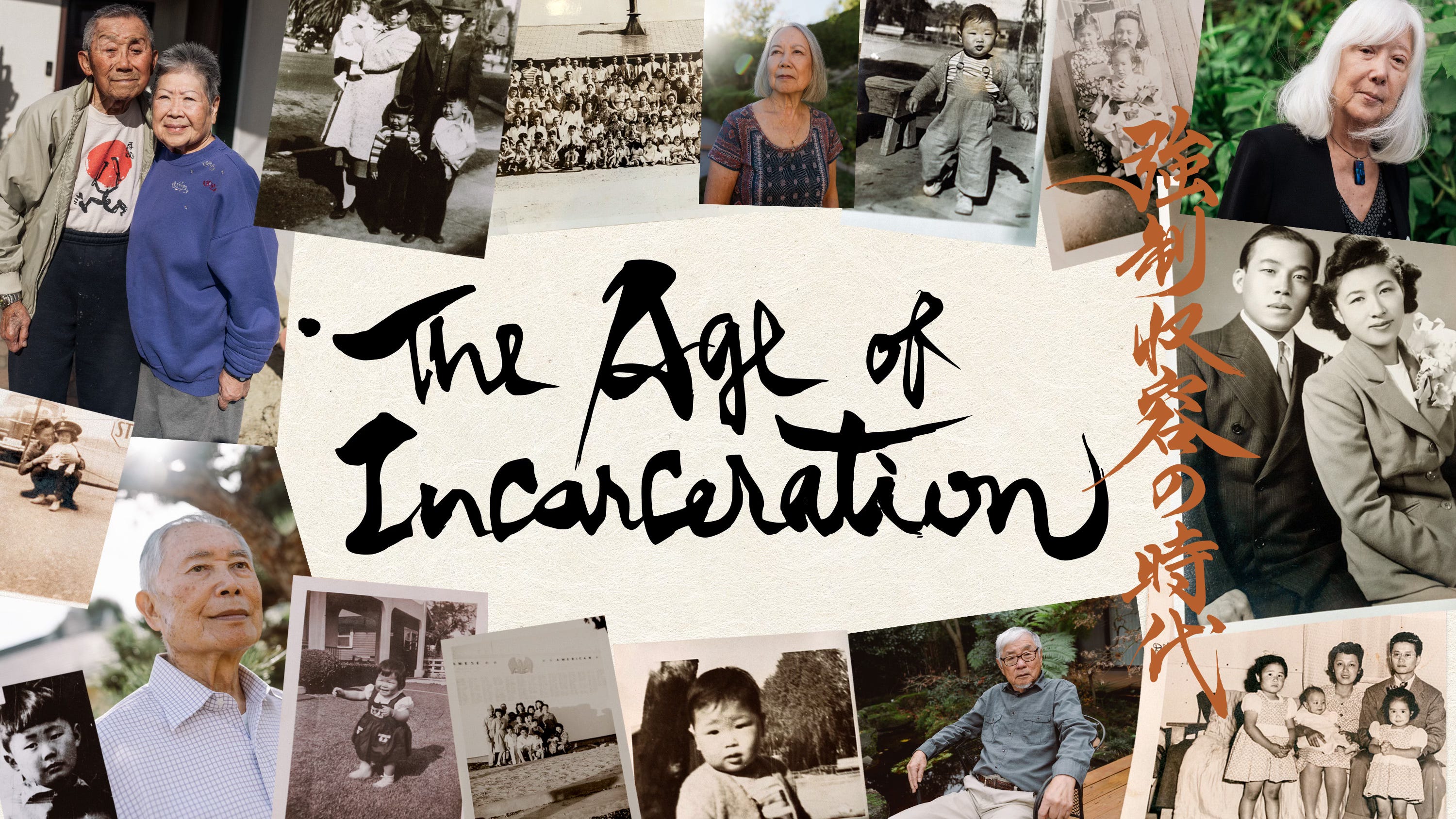
A now-and-then look at people of Japanese descent who were detained in the United States during World War II. Colorphotos by Morgan Lieberman, black-and-white snapshots courtesy of the survivors.
In 1942, under the shadow of World War II, the U.S. government invoked the Alien Enemies Act to justify the forced removal and incarceration of more than 125,000 people of Japanese descent — most of whom were American citizens. The orders from White House uprooted and split families, causing them to abandon their homes, businesses, and communities.
In "The Age of Incarceration," photojournalist Morgan Lieberman captures the testimony and experiences of nine of the last survivors of Japanese American incarceration, 80 years after the war ended and these people were released. Reflecting on their experience of a childhood spent in detention, this series of portraits and interviews shares stories not just of injustice, but of resilience, documenting what they endured, what they’ve carried with them the rest of their lives, and what about America’s past their country still hasn’t reckoned with. Read it today at age-of-incarceration.longlead.com.
What drew you to documenting the survivors of Japanese American incarceration? Was there a specific moment when you realized this story needed to be told now?
I would say examining my Jewish identity over the last few years. I've been thinking about my Jewish identity a lot, and at the same time thinking, wait a second, there were concentration camps that existed on American soil at the same time. Why have I never really researched this? Why was this not very present in my history books in school? It sort of just gets brushed over.
Also, growing up in LA and knowing that this history has sort of surrounded my backyard — I was very ashamed and embarrassed that I didn't have this kind of context historically. As I kept working on it, I was mind-blown at how little I knew.
Tamiko Nimura, who is the editor that was incredible to work with on “The Age of Incarceration,” said that I had a kinship with these survivors, and that's truly what I feel. When I'm in their homes and it's very intimate and vulnerable, and we're talking about their childhood and this trauma that isn't often discussed — maybe they haven't discussed it for decades — I do feel a kinship with them because of my Jewish identity. I think that made it easier for me to connect to this narrative on an emotional level.
In the piece, you mention realizing that "now, more than ever, it's vital to reexamine the past so we can better understand the darkness that's gripping the present." Can you elaborate on what you mean by that?
It's very eerie to think that as we finished up this project, the Trump administration began enacting legislation that was enacted in the '40s during World War II to round up Japanese American citizens or anyone with Japanese American ancestry. That was FDR. So to think that history can repeat itself — we're seeing it in a lot of different ways right now.
It's a very overwhelming feeling of "this is familiar" for so many immigrants and for Japanese American families that are watching what's happening right now, especially in LA or along the West Coast. They're thinking about their grandparents. These are descendants that know their own history and lineage, and this feels very familiar to them.
I feel powerless, but I think putting out this project feels very urgent. My goal in life as a documentarian is that this is my activism. I just want to start a conversation. I'm not the first person to start this conversation because there have been some incredible stories and historical records of this narrative… I'm really glad that we're talking about this because younger generations really need to know that this has already happened and it can't happen again.
There is so much relevant reporting in “The Age of Incarceration” that it didn’t all fit it into the feature. For more — like this video where 87-year-old Lester Ouchida, survivor of the Jerome and Gila camps, recalls a harrowing encounter one night during World War II — follow Long Lead on TikTok, YouTube, Instagram, Threads, and Bluesky.
You draw explicit parallels between Roosevelt's use of the Alien Enemies Act and Trump's current invocation of it. How do you approach making those historical connections without being heavy-handed?
I have some great editors and fact checkers that I work with, but I think it's very clear when you're in the news cycle and reading various news outlets — you're seeing this is happening, this is a timeline. There's evidence that this is happening and this is factual.
I'm glad that I have the support of Long Lead to say we're going to publish this because we're not going to censor this story, because this is the reality of what's happening. It's very easy to lose track of all of the legislation that's happening right now. I think a lot of us feel whiplash with the chaos that's happening in this country politically. I really hope that it does start a conversation about what's happening right now and how we have to speak up and protect each other and be aware of our rights.
You spent time building relationships with these survivors over multiple visits. How do you balance the intimacy required for this kind of storytelling with journalistic distance?
I think for me, it's patience, it's kindness, it's gratitude. I'm sitting with them in their homes. It's an absolute privilege to be there. They don't have to open the door to me, and they do because there's a huge level of trust. I make it very clear from the beginning what my intentions are: to tell their story with visuals, with video, with writing in their own words.
They really appreciate being able to tell their story in their third act, where often older individuals feel invisible in our society. A lot of these survivors in this project have been activists and role models and have had incredible careers and raised awareness about this topic and their lives. So this maybe isn't the first time they're speaking on it.
But when you start to talk to them, some of the survivors have told me that their parents did not want to talk about incarceration when they left the camps… how does that damage and create a destructive psyche for a young child that wants to know what they just went through for three to four years?
I hope that it's healing for them in their '80s and 90s to kind of go back to that time after they've experienced a lot of healing in their lifetime. They've been able to share this journey with their grandkids and kids. It's in the background always, but they've had incredible lives since. So it's not just focused on their trauma from childhood — it's about the aftermath and the lives that they built.
I feel a friendship with a lot of the survivors. I keep in touch with them. I send them prints of the portraits I take of them, and I want them to have that for their own archives. But there's still obviously a level of professionalism.
Behind-the-scene photos of Lieberman interviewing George Takei, a survivor of the Rohwer and Tule Lake camps. Photos by Jensen Rubinstein (left) and courtesy of George Takei (right).
How long have you been working on this project?
Since 2023. I really want to give a shout out to Sarah Bone, who is with the National Park Service. She's a park ranger that works for Manzanar, a former incarceration camp near Mammoth, California. She was the one that really connected me to the majority of the survivors in this project, because they have an oral history project that they've been doing for over seven or eight years. They have hundreds of interviews.
This project would not be what it was without that kind of introduction. That really helps me build trust when there's some sort of referral, some sort of word of mouth of "Hey, this girl's legit." I really appreciate her support, and I hope that we can maybe do an exhibition with Manzanar as well, since they have the space for it.
At the end of the piece, it notes that records and resources began disappearing from government websites during production. How does that affect how you think about the role of journalism in preserving history?
This is an incredibly humanizing perspective. I do fear that, especially as a gay woman thinking about queer archives that are disappearing, or any note of any DEI term on the White House website just being scrubbed. Journalism is integral to helping people understand their rights. This is a democracy and we have to stay informed.
I think really the only way to do it is to listen to journalists and to listen to real stories about real people, and follow work that is factual and verified, not getting all of your news from social media. I hope whoever's listening has at least one news subscription. It's very important to get past the paywall and really read as much news as you can without overwhelming yourself.
“It's a very overwhelming feeling of ‘this is familiar’ for so many immigrants and for Japanese American families that are watching what's happening right now, especially in LA or along the West Coast.” —Morgan Lieberman
You open up about your own background as an American Jew. How does your own family history and identity inform your approach to this story?
I'm very lucky that my family came from Poland, Russia, and Ukraine in the '20s and '30s, so right before World War II. So we were spared from the Holocaust. But growing up, I grew up in a very Jewish community in Los Angeles, where the majority of my friends had lost family in the Holocaust.
For me, it's sort of a secondhand grief that I have felt my whole life, just with the awareness of, “This is what happened to my community, and it's one of the biggest human atrocities of all time.” So I carry that with me, and I think that these survivors carry their trauma with them. I would hope that their kids don't carry it, but how could they not? Because it's generational, and it's in your DNA.
For me, I think that if I wasn't Jewish, I don't know if I would be as motivated to tell this story. I definitely felt such a connection to the story because of this, and also knowing that a lot of the camps in the U.S. — I wouldn't say every single incarcerated camp, but most of them — were modeled off of the concentration camps in Europe. I learned that when I was up north in San Jose at the Japanese American Museum there.
It's just something that I'm going to have to keep pursuing, my Jewish identity, race history. There are just a lot of overarching elements with queer history that I really want to explore in the years to come, and also the importance of maintaining archives. As we were talking about, archives are disappearing.
Japanese American incarceration camps, clockwise from top left: Tuna Canyon, Poston, Manzanar, Heart Mountain. Photos by Morgan Lieberman
In this piece, you document both the survivors and the physical spaces of the camps themselves. What did visiting those sites add to your understanding of the story?
I think it's so important to visit these sites. It's very strange that some of the sites are not well kept at all, but then some have full staff from the National Park Service and resources.
What was very chilling for me was going to Poston, Arizona. I hadn't done more research on Poston, but I had traveled about five hours to get there just to photograph the monument for Japanese American incarceration camp survivors. I went all the way there and realized that one of the camps was down the street, but it was really hard to find, at least on Google. There was no signage around the area, but I found a dropped pin from a Google review, and that's how I was able to find Poston Camp One, which you'll recognize from the very last image in the piece — the cranes on the fencing around the perimeter.
The cranes felt very empowering to me. It felt like a sign of hope, a sign of resilience. Tsuru for Solidarity, a Japanese American organization dedicated to ending detention sites and supporting immigrants and refugees targeted in the U.S., had made and placed the paper birds. They're intended to remind us that despite tremendous healing and hope, history is often repeated because of the quiet indifference of the majority.
For me, that crane image mirrors perfectly this past and present fusing together.
What do you hope readers take away from this piece, particularly younger readers who may not be familiar with this history?
I hope that they really talk to older generations more, to ask them about their lifetime, and to really honor the stories of Japanese Americans and immigrants of this country and what they've built here.
If they take anything away from it, just know this wasn't that long ago. There's a lot happening right now that this was a blueprint for. It might be a little bit different, it might be a spectrum, but it is happening right now. People are losing their rights that have been here for decades and for generations.
All I can say is that it's been the most educational experience I've ever had working on a project. I'm so grateful to all the survivors that allowed me to tell part of their story.