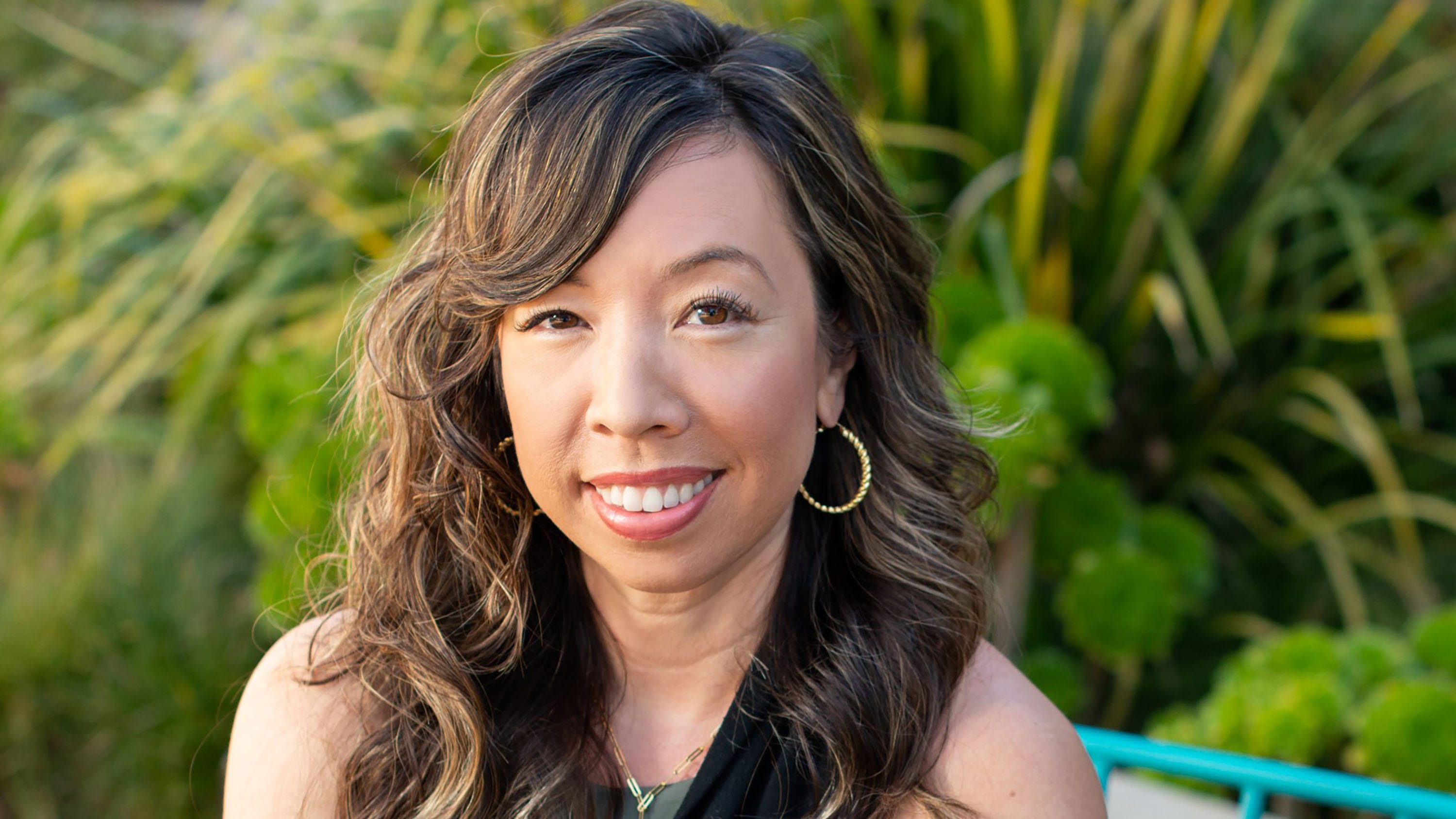
Two years after wildfires devastated Maui, journalist Erika Hayasaki shares how she reported the disaster’s human impact
Hayasaki reflects on her patient approach to interviewing people and communities who grounded her reporting during one of 2023’s quickest-unfolding disasters.
Next week marks an anniversary that reminds us of the value of longform reporting. Two years ago on August 8, 2023, wildfires ripped through Lahaina, Maui, killing at least 100 people and destroying thousands of structures in Hawaii's deadliest natural disaster.
Amid the relentless churn of breaking news at the time — often dissected into social media snippets shortly after — journalist Erika Hayasaki chose a different approach to covering the disaster.
The historic town, once the capital of the pre-colonial Hawaiian Kingdom, was leveled in hours. Media coverage initially focused on destruction and emergency response, but deeper stories of survival, loss, and systemic failures emerged over time. Hayasaki, a former Los Angeles Times national correspondent and current UC Irvine literary journalism professor, made a deliberate choice: She traveled to Maui for two extended periods of 10 days and eight days, documenting the invisible aftermath that "parachute journalism" often misses.
Her resulting work — seven feature stories in all — was published in The New York Times, The Guardian, MIT Technology Review, The Cut, and more. Those articles put a spotlight on the myriad toll on marginalized communities, particularly Filipino and Native Hawaiian women carrying the invisible burdens of trauma and displacement.
In this edition of Depth Perception, Hayasaki shares her belief that the most important stories often begin where breaking news ends: in the quiet places where recovery and consequences reveal themselves to those willing to stay. This interview has been edited for conciseness and clarity. — Kelly Kimball
Subscribe to Depth Perception to learn from top longform journalists and find the best in-depth reporting.
I'll jump into my favorite piece you wrote on this topic, about the Filipina janitor Edralina Diezon, for The New York Times. Diezon survived the fires, and ultimately passed away one year later. How do you ethically and meaningfully report stories that unfold long after an immediate disaster?
Because I was a news reporter and national writer for a long time at the LA Times, I was very familiar with the practice of parachuting into a disaster and writing stories. … But even when I was at the LA Times, I would advocate to stay longer.
[For example], I covered the Virginia Tech massacre as a national writer, flew in within 24 hours with the world's media for breaking news coverage, but asked my editor if I could stay, because I found all the survivors from one classroom where the teacher had been killed. They were all going to go to the professor's funeral in a couple weeks. I ended up going to the funeral with some of these survivors. So it was a story … about these young students who loved this French teacher and were coming together in her honor.
For me, I always think about the importance of going back when everybody's forgotten the story, or they've moved on. And unfortunately, in this news cycle, we move on so quickly. It's even quicker now than it was [back] then, because we're being constantly bombarded with headlines and trauma and news. But there is something about going back and telling a human story and telling a story about ‘how do we survive?’, and 'how do we live in the face of tragedy or trauma?’ that is important in returning to these stories when people have forgotten.
Right now we're just scrolling through disaster headlines, right? The goal of a journalist who wants to do deep and meaningful work should be to write something that at least makes somebody feel something. As one of my editors used to say, [it should be] something that "parts the curtain on humanity.”
A colleague once described to me that the climate beat is now also a grief beat. We can't talk about a disaster like the Maui fires without talking about the personal yet invisible burdens. What do you feel like these sources may have taught you about survival, recovery, and the things that maybe go unaddressed in quick-turn coverage?
Every time I go into one of these stories, I feel like I learn something from each of these individuals about human strength. The Edralina story really was indicative of the hidden toll of a fire: She was still working even after losing everything, and her death came down to trying to catch a bus while running across a highway. But the reason she had to catch that bus and run across the highway is because she had to get to this hotel before the last bus, and she wouldn't have been in that hotel if she hadn't lost everything. She had to hold on to that job because there's so many factors; these little choices in a day that you make to survive. It was almost like she was a victim of that fire. Her death was a result of that fire, but it wouldn't be counted in the overall toll.
Dive into immersive, award-winning journalism
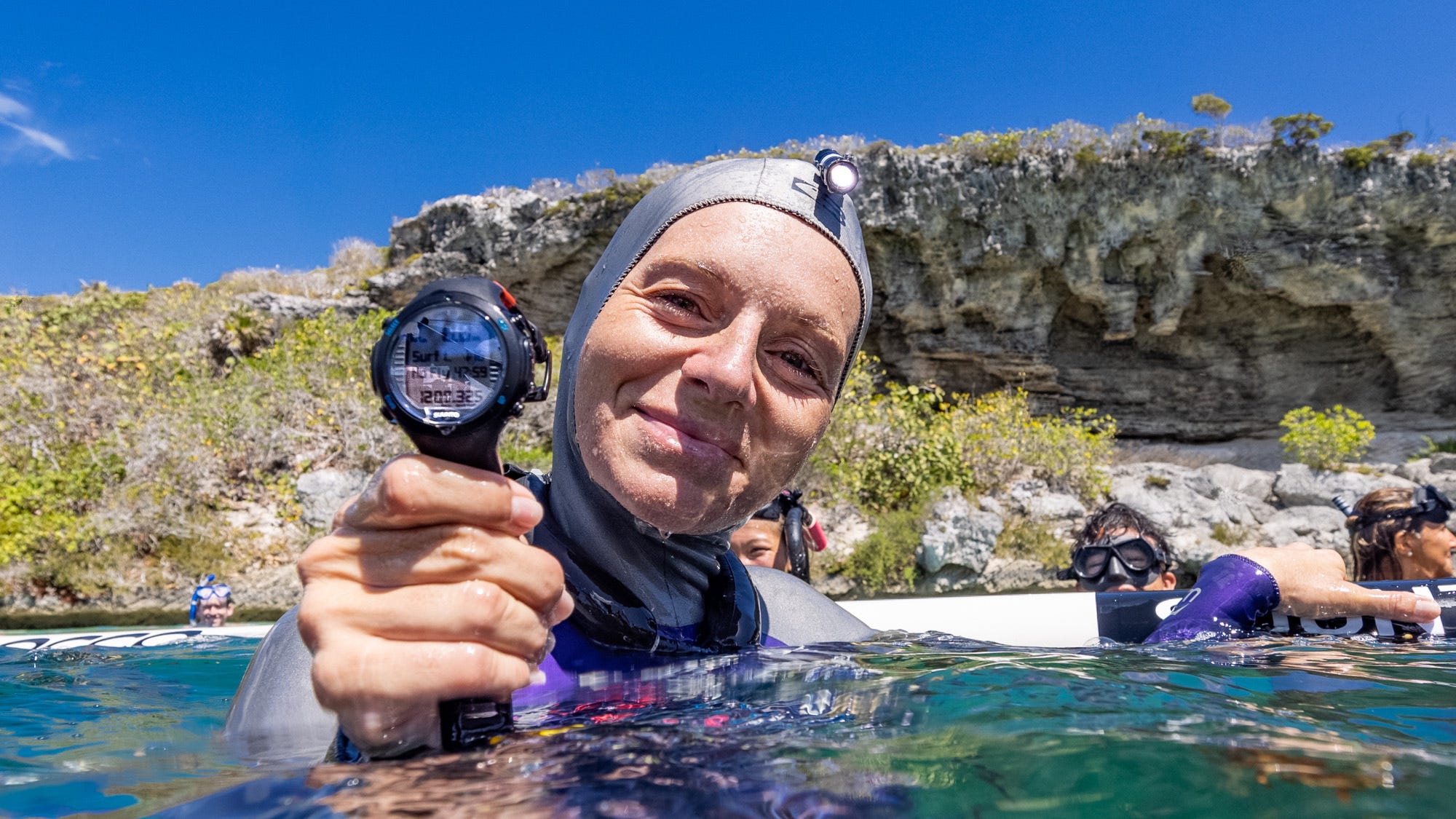
Image by Daan Verhoeven
On a winter night in 2010, Alenka Artnik, sunken by grief, found herself alone on a bridge, contemplating suicide. Ten years later, she became the world’s greatest female freediver and has gotten stronger with each record-breaking plunge.
Earlier this month, Artnik set a new world record — 123 meters down, on just one breath — surpassing her previous 122-meter dive. Celebrate her record by reading Long Lead's two-time Webby Awards-winning profile of this world-champion freediver, “The Depths She’ll Reach.”
This immersive deep-dive, written by Xan Rice and filmed underwater by Daan Verhoeven, was Long Lead’s first multimedia feature. It recounts how Artnik emerged from obscurity and mental health struggles to become one of the world’s most elite athletes.
Only a few people — all men — have dived deeper than Artnik has on just one breath. And soon, she may surpass them all. Read “The Depths She’ll Reach” today at thedepths.longlead.com, and congratulations, Alenka!
Much of the current coverage from Lahaina focuses on local stories, about stalled rebuilding efforts, controversial million-dollar settlements, and bureaucratic loan programs, which are often framed in high-level policy language. How do you see your longform narrative work complementing this kind of reporting?
I think there's room for all kinds of storytelling. The local reporters doing investigative and accountability reporting is so important. Some people are not going to pick up the stories that are just straight news written as explanatory pieces. Some people are [instead] going to pick up those human stories because it's a love story, and then they're going to learn along the way.
That's why when I wrote the New York Magazine story about the two young women — that was a love story — but it was important to me to tell a story also about what went wrong bureaucratically and systematically in creating conditions where people were trapped. That required reviewing thousands of documents, listening to all the 911 calls, reading through lawsuits and police reports. But people don't necessarily think of that kind of reporting when you're thinking about a love story. But that's what narrative does.
“Right now we're just scrolling through disaster headlines, right? The goal of a journalist who wants to do deep and meaningful work should be to write something that at least makes somebody feel something. As one of my editors used to say, [it should be] something that ‘parts the curtain on humanity.’” — Erika Hayasaki
How did you consider the fact that you spoke with many Native Hawaiian sources and those among the Asian-American diaspora?
That was incredibly important to me, to have a strong understanding of the context before I began most interviews. I spent time reading deeply about Hawaii’s colonial history and the experiences of Native Hawaiians. That background really shaped how I approached each story.
For example, in a piece for MIT Technology Reviewabout DNA testing after the fires, I explored the mistrust around submitting DNA to government agencies — something that stems from a long history of systemic injustice. In another story, I wrote about Kekoa [Lansford,] who is Native Hawaiian and Filipino. He felt the presence of his ancestors guiding him as he ran into the fires. His heritage and his deep love for his community were inseparable from his actions.
It was also crucial to have community liaisons. A friend who lives on Maui (she’s Filipino and speaks Tagalog and some Ilocano) helped build trust and connect with people. I also attended events for Native Hawaiian and Filipino communities. Most of my sources were AAPI, because they make up a significant portion of those affected, and their voices are often underrepresented. By showing up consistently — in homes, shelters, and community gatherings — I was able to build trust and tell these stories with care.
Fantastic interview — very inspiring how Erika develops and digs deeper into these breaking news events to tell the human stories, working to spend more time on the ground and cultivating connections with the people in the impacted communities.
This is the kind of news we need: information, yes, but most of all, the question with which Erika’s work challenges us: How do we go on? It’s useless and unhealthy to carry around bad-news headlines in our minds from doom-scrolling. To read her work is to learn about how people like Fausto Lopez keep going after a prison sentence: because of the people who help and mentor him, the systems like Project Rebound Cal State San Bernardino, and the good that longs to live inside us.



Fantastic interview — very inspiring how Erika develops and digs deeper into these breaking news events to tell the human stories, working to spend more time on the ground and cultivating connections with the people in the impacted communities.
This is the kind of news we need: information, yes, but most of all, the question with which Erika’s work challenges us: How do we go on? It’s useless and unhealthy to carry around bad-news headlines in our minds from doom-scrolling. To read her work is to learn about how people like Fausto Lopez keep going after a prison sentence: because of the people who help and mentor him, the systems like Project Rebound Cal State San Bernardino, and the good that longs to live inside us.