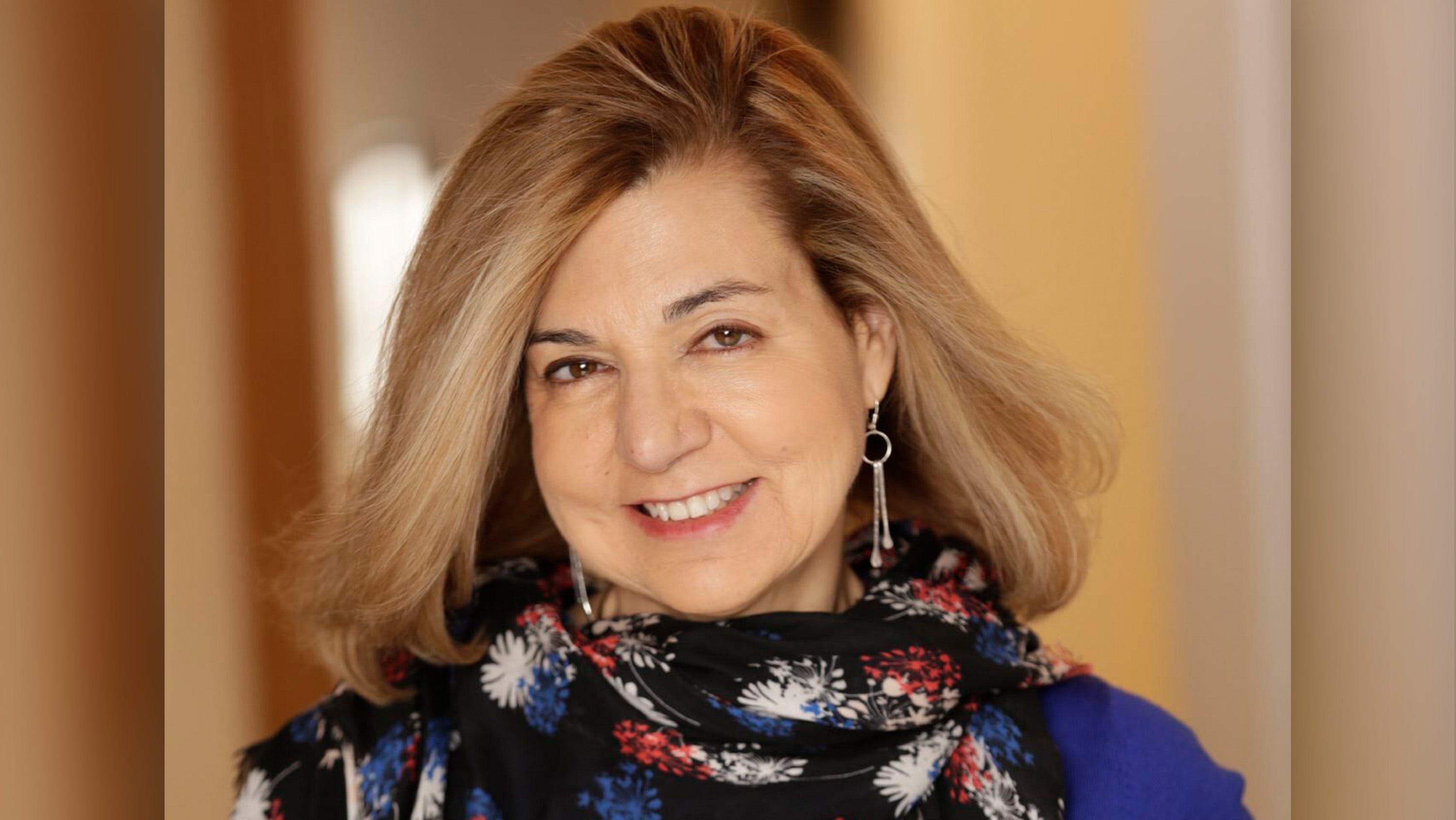
Margaret Sullivan knows what it’s like to be a burr under the saddle of The New York Times. She did it for three-and-a-half years.
As the paper’s fifth public editor from 2012 to 2016, Sullivan fielded hundreds of emails per week from readers, took their complaints to editors who didn’t always want to hear them, and published her conclusions in the paper itself. Sometimes TheTimes was right. Sometimes it wasn’t. Either way, readers had someone inside the building who would actually pick up the phone.
Then TheTimes killed the position.
The stated reason was that social media had made the role unnecessary. Sullivan doesn’t buy it. “I don’t see any relationship between that and people tweeting ‘The New York Times sucks,’” she tells Depth Perception. “Those are just two very different things.”
But she gets it — sort of. When her publisher at The Buffalo News once floated the idea of creating an ombudsman, her first instinct was to shut it down. “I said, ‘Oh, no, no, no. We don’t want that.’” She tells this story about herself all the time, she says, because she’d rather get out ahead of it than have someone else call her a hypocrite. But a local paper in Buffalo, she argues, is a different animal than the most influential media organization in the world.
Learn from top longform journalists and find the best in-depth reporting. Subscribe to Depth Perception:
Sullivan spent 32 years at TheBuffalo News, starting as a summer intern in 1980 and eventually running the 200-person newsroom for more than a decade until 2012. After TheTimes, she became TheWashington Post‘s media columnist for six years, then left on her own terms in 2022. “It’s a good thing I left when I did, obviously, because the place — I mean, I don’t think it was cause and effect. I did not cause the disaster,” she says. “But I think I did kind of see it coming a little bit.”
These days, she directs her attention at the whole industry from outside of it, writing a weekly column for The Guardian US and her Substack Newsletter, American Crisis, from her home in New York City. She’s written two books, served on the Pulitzer Prize Board, directed the Craig Newmark Center for Journalism Ethics and Security at Columbia, and won multiple awards for defending First Amendment principles. She is, in other words, one of the best-credentialed media critics in the country. And she’s worried.
In this edition of Depth Perception, we speak with Sullivan about the death of the public editor, billionaire media ownership, and whether Substack is a real alternative to institutional journalism or just a lifeboat for people who already had careers elsewhere. The following interview has been condensed and edited for length and clarity. —Parker Molloy
When you look at the arc of your career, does it feel like a logical progression, or does each move surprise you?
The biggest surprise, really, is that I spent 32 years at basically my hometown paper in Buffalo. I came there as a kid. I did a lot of different jobs. I became the top editor. And I really thought I was going to [stay] in Buffalo.
But I always had this notion that I would like to be either the ombudsman of The Washington Post or the public editor of The New York Times. I felt like that would be something I would be good at. And I like to do jobs that I can be good at. So one day I read that the job of public editor at The Times was going to be open, and I went after that job with everything I had.
And then, as you know, it’s a difficult job. Somebody called it the worst job in journalism because you’re dealing with the people who work at The New York Times, who have this weird combination of imposter syndrome and also being very impressed with the fact that they’re at TheTimes. So criticism does not go over really well. And that is the job of a public editor, to do that.
To answer your question more directly, did I think when I was a young journalist, “Oh, I want to be a media critic someday?” No, I had no idea what that would even mean. But it has kind of developed from there. And I guess, oddly enough, this is my specialty.
Tell the world: You want more journalism that’s worth your time
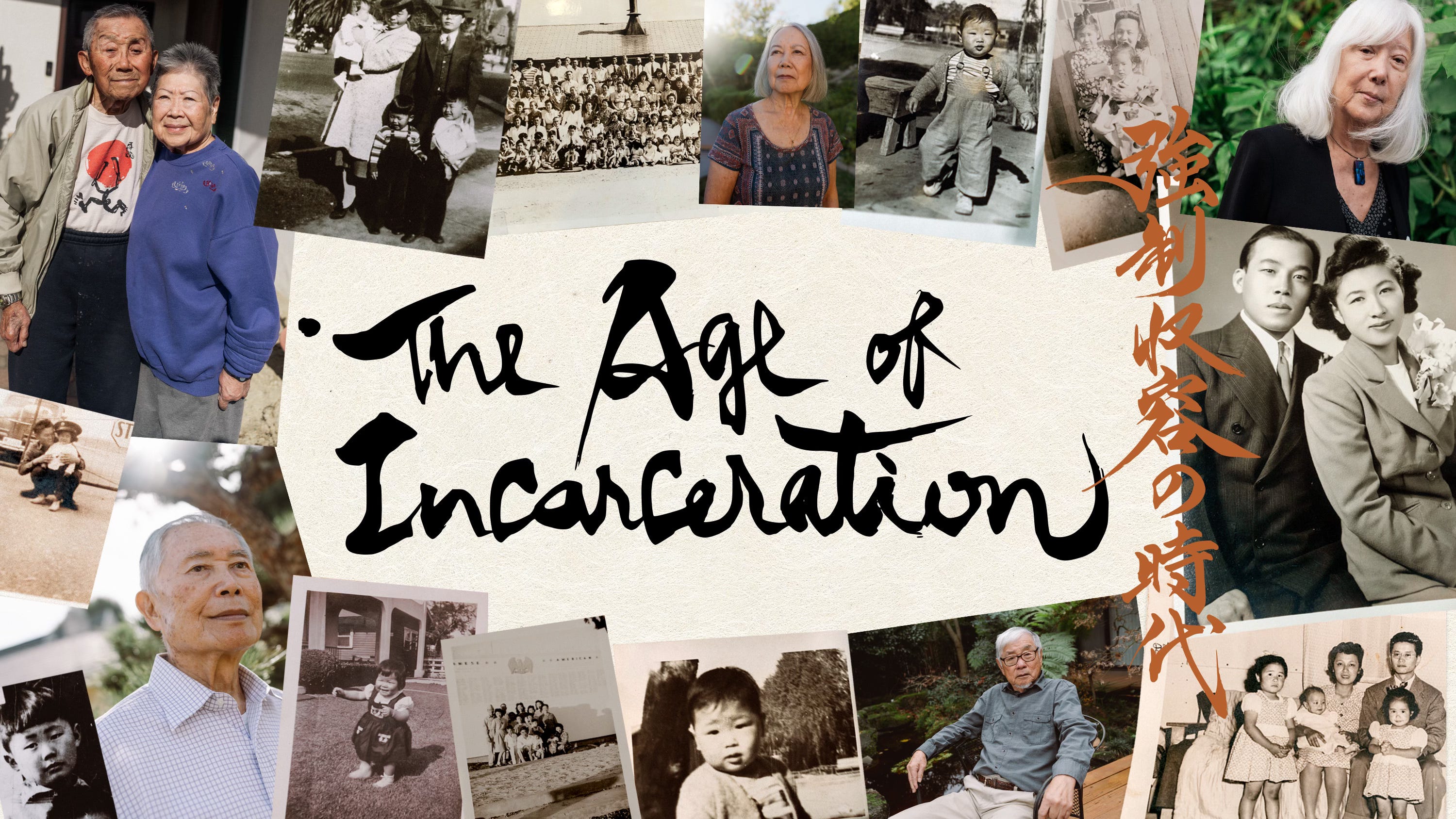
Experience Long Lead’s multimedia feature The Age of Incarceration at https://age-of-incarceration.longlead.com.
Every year the Webby Awards do more than just celebrate the best of the web. They’re an annual opportunity for people to push the web forward. When you vote in the Webbys, you’re telling the world what work you want to see more of online.
Over the past four years, Long Lead has been honored with seven Webby Awards — including the prize for “Best Individual Editorial Feature” for an incredible three-straight years.
This year The Age of Incarceration, Long Lead’s portrait and interview feature with some of the last survivors of the U.S. Japanese detention camps, was also nominated for “Best Individual Editorial Feature.” The nomination is an honor, but winning it four straight years would cement our small studio as a force in journalism. Please vote for The Age of Incarceration in the Webby Awards today.Voting closes in hours!
TheTimes abolished the public editor role in 2017. The rationale was that social media had made it redundant, that anyone could tweet their criticism at the paper. Nine years later, do you buy that argument?
No, I absolutely don’t. And I didn’t buy it then, because I did the job. It’s not just about people tweeting at The Times. It was readers writing to someone internal who took it seriously. I would take their criticism and go to whoever the editor was and say, “I’ve gotten 25 letters about this, and it does seem like a legitimate criticism. What do you say about that?” Then I would get their answer, I would write a piece where I would quote the readers, quote the response from The Times, and then synthesize that and come up with what I think.
I found out quickly that I had to do that. I couldn’t just present the criticism and the answer. What people wanted from me was to be kind of like a judge and say, “I’ve looked at this, I’m a somewhat reasonable person, and this is the conclusion I have.” Some of my conclusions were really highly critical of TheTimes. And then that piece would run in The New York Times, where readers could find it.
I don’t see any relationship between that and people tweeting “TheNew York Times sucks.” Those are just two very different things.
From the public’s point of view, people want to understand the process better. “Why is this an unnamed source? Why is the headline changing all the time?” Those questions could be answered in ways that help restore trust, but it feels like a lot of these organizations are closing off more, not less.
Exactly. And even for The New York Times, the public editor acted as kind of a steam valve. If there was a ton of criticism, and they were under fire, there was a way to let out some of the steam and say, “Yes, we’re taking this seriously. And here’s our public editor airing the problem.” It might not make everybody feel good, but it did make people feel like they had some recourse. For example, if they were seeking a correction and they were told, “We’re not going to correct that,” they could come to me. And if it rose to the level, I could say, “Well, what gives? Why aren’t you correcting this? It looks like it’s wrong.”
“You have these guys who are not interested in the First Amendment. They’re not interested in press freedom. They’re not interested in holding powerful people accountable, because they’re the powerful people who don’t want to be held accountable.” —Margaret Sullivan
You’ve written about “an increasing self-importance and sense of self-congratulation” at TheTimes. You pointed to the Mamdani coverage specifically, and you wrote for The Guardian during the campaign that TheTimes seemed to be trying to wreck his mayoral bid. You discussed with Paul Krugman how the paper didn’t even rank Mamdani in its ranked-choice recommendations. What do you think is driving that coverage?
Nobody there would ever admit that they have been unfair to Mamdani. I heard there was a staff meeting in which some staffers brought up the coverage and brought up what I had written about it and said, “You know what, that’s right.” But in terms of the leadership or the hierarchy, they’re like, “Nope, we cover everybody the same.”
What do I think is really the reason? TheTimes is a powerful institution, and it “gets” that institutional power. They get a Cuomo. They don’t really get a Zohran Mamdani. And I think there’s a deep discomfort with it. I also think they’re thinking, “This guy really doesn’t have much experience. It is our responsibility to hold his feet to the fire, to really scrub his background, to really examine how he’s governing. And that is our job.” So I think there’s a disconnect there.
It kind of reminds me of during the first Trump campaign, in 2015 and 2016. TheTimes was very, very tough on Hillary Clinton. They just would not let go of her email sins — supposed sins. And when Jim Comey came back eight days before the election and said, “Oh, we’re going to reopen this FBI investigation,” it was almost the whole front page of The New York Times. And it did not help her.
All of that extremely critical coverage of her was explained as, “Well, she’s going to be the president, and we’ve got to make sure that we’ve really investigated her so that no one can ever say that we were in her pocket.” But we got Donald Trump instead. Twice. So it’s like the law of unintended consequences.
In your interview with Krugman, you said that you think we’ve turned “some kind of weird corner,” where the extremely wealthy are controlling society in a way they weren’t before. Do you think there’s a version of billionaire ownership that works for journalism, or has the experiment basically failed?
I’ve worked for two billionaires. So I feel like I have billionaire insight.
I worked for Warren Buffett, indirectly, who owned the paper in Buffalo. And he was very hands-off. He never called us up and said, “Please endorse this person or that person.” But ultimately, he sold all of his papers. And that was very bad for all those papers. And what was the motivation there? Well, the motivation is what it always is for billionaires.
Then Bezos at The Washington Post, he was the good Jeff Bezos during those years. And then somehow, he turned some kind of weird corner. I think it’s just because they’re looking out primarily for their commercial interests, whether it’s Blue Origin or the shareholders at Berkshire Hathaway. That is what drives the train.
And unfortunately, there’s more and more ownership of media companies by these extraordinarily rich people. Larry Ellison, one of the truly richest people in the world, and his son, David Ellison — they are changing CBS radically. They probably will be able to do the same to CNN. And ultimately, you have these guys who are not interested in the First Amendment. They’re not interested in press freedom. They’re not interested in holding powerful people accountable, because they’re the powerful people who don’t want to be held accountable. It’s actually really, really troubling.
I won’t say it’s like, “Oh, you can’t do the right thing if you’re really rich.” In Boston, the owners of The Globe, the owners of The Minnesota Star-Tribune, those are local rich people who are actually letting their news organizations thrive. But in general, these people who are at the top of the money pyramid, their interests just aren’t about mission-driven, Watergate-style journalism. That is just nothing they’re interested in.
View and vote: Long Lead’s “double” feature needs you
What do twins know that the rest of us don’t? Something clearly important since they tend to live longer than the rest of us. While the data behind that fact is clear, the reasons aren’t, so Long Lead creative director Sarah Rogersdecided to ask them in Double Meaning, a portrait and photo essay exploring the people who attend the annual Twins Day festival in Twinsburg, Ohio.
But get this: Double Meaningis actually a double-feature. Tucked inside is Twins Fest, a documentary film short by filmmaker Kate Bennis that was recently named an honoree at the Webby Awards. This week, it was also nominated for “Best Documentary Feature” and “Video of the Year” by the Society of Publication Designers and “Best Documentary Film Short” by the Telly Awards.
A lot of really good media criticism is happening on Substack right now. But there’s no institutional check on quality. Do you see Substack as a genuine alternative to institutional media, or more as a lifeboat for people who already had careers somewhere else?
It does seem to have been a lifeboat for a lot of people. You see people, they’re fired or they leave out of some sort of scruples one day, and they’re on Substack the next day, and they seem to be doing pretty well there.
I do think that legacy newsrooms have something that individual voices don’t have, whether they’re on Substack or elsewhere, which is legal departments [and] editors who are willing to let them go off for six months and do a huge mind-blowing project. You can’t do that if you’re on Substack. You have to produce, produce, produce.
And a lot of what we see on Substack and similar places is opinion. Now, opinion is fine, but opinion has to be based on something. And a lot of what it’s based on is the reporting that’s being done still by TheWashington Post, by [The Associated Press], by Reuters. That’s what people are getting outraged about and getting all of their followers worked up about. So what happens when those legacy news organizations can no longer make it because everybody’s decamped over here? I don’t know. It’s a situation that is evolving, and I don’t think we know how it’s going to play out.
What do you think the future of local journalism looks like?
It’s got to be a patchwork. And it’s not all bad that there’s not one dominant newspaper in town who gets a say. Because the voice they were speaking with tended to be a middle-aged or older white male voice. That’s who the editorial board was. That’s who the publisher was. That’s who the owner was. So it’s not all bad that some of the power has seeped away there.
I use Buffalo as kind of my little lab because I understand it so well. What was a 200-person newsroom is down to probably less than 50. And that’s typical around the country. But there’s a nonprofit site called Investigative Post that does good work. There’s radio. There’s four television stations. And while everybody’s struggling, none of them are fat and happy with 35% profit margins the way The Buffalo News used to have, literally. But they are all working toward presenting some sort of reality to the populace.
What’s keeping you up at night?
When I see what Trump is doing, particularly with this war, it’s so worrisome. I really think we’re on the brink of complete disaster.
What’s making you hopeful right now?
When I see all these people protesting out in the streets, when I see people organizing, when I see writers who clearly care a lot, and when I see people doing important cultural work, like in the arts, that all makes me feel like all is not lost.
If someone is graduating from college in 2026 and wants to be a journalist, what do you tell them?
Try to have very diverse skills. Be able to do a lot of different things. Don’t just think, “Oh, I’m a radio person” or “I’m a this or that.” You have to be able to pivot. Get whatever paid work you can. Don’t be fussy. Go get an internship. Be willing to travel and work the contacts. Nothing matters more in any workplace than relationships.
Doubtful that the original mission of Substack was what it is today. Now it’s overflowing with opinion politics and that’s fine, but who are the fact checkers now? (Former Sacramento Bee freelance Op-Ed contributor.)
In my limited experience, the NYT is quite slow in their news reporting, and rarely prints reader comments that point out how slow they are to the party. The Paulo Zampolli story (a Trump insider who ICE-ed his ex -and the mother of his child- into deportation to Brazil) got coverage 3 months after Substack writers. The whole George Santos debacle was clearly a failure of their metro desk to do any reporting on local candidates.




Doubtful that the original mission of Substack was what it is today. Now it’s overflowing with opinion politics and that’s fine, but who are the fact checkers now? (Former Sacramento Bee freelance Op-Ed contributor.)
In my limited experience, the NYT is quite slow in their news reporting, and rarely prints reader comments that point out how slow they are to the party. The Paulo Zampolli story (a Trump insider who ICE-ed his ex -and the mother of his child- into deportation to Brazil) got coverage 3 months after Substack writers. The whole George Santos debacle was clearly a failure of their metro desk to do any reporting on local candidates.
The paper of record- needs an ombudsman- badly!