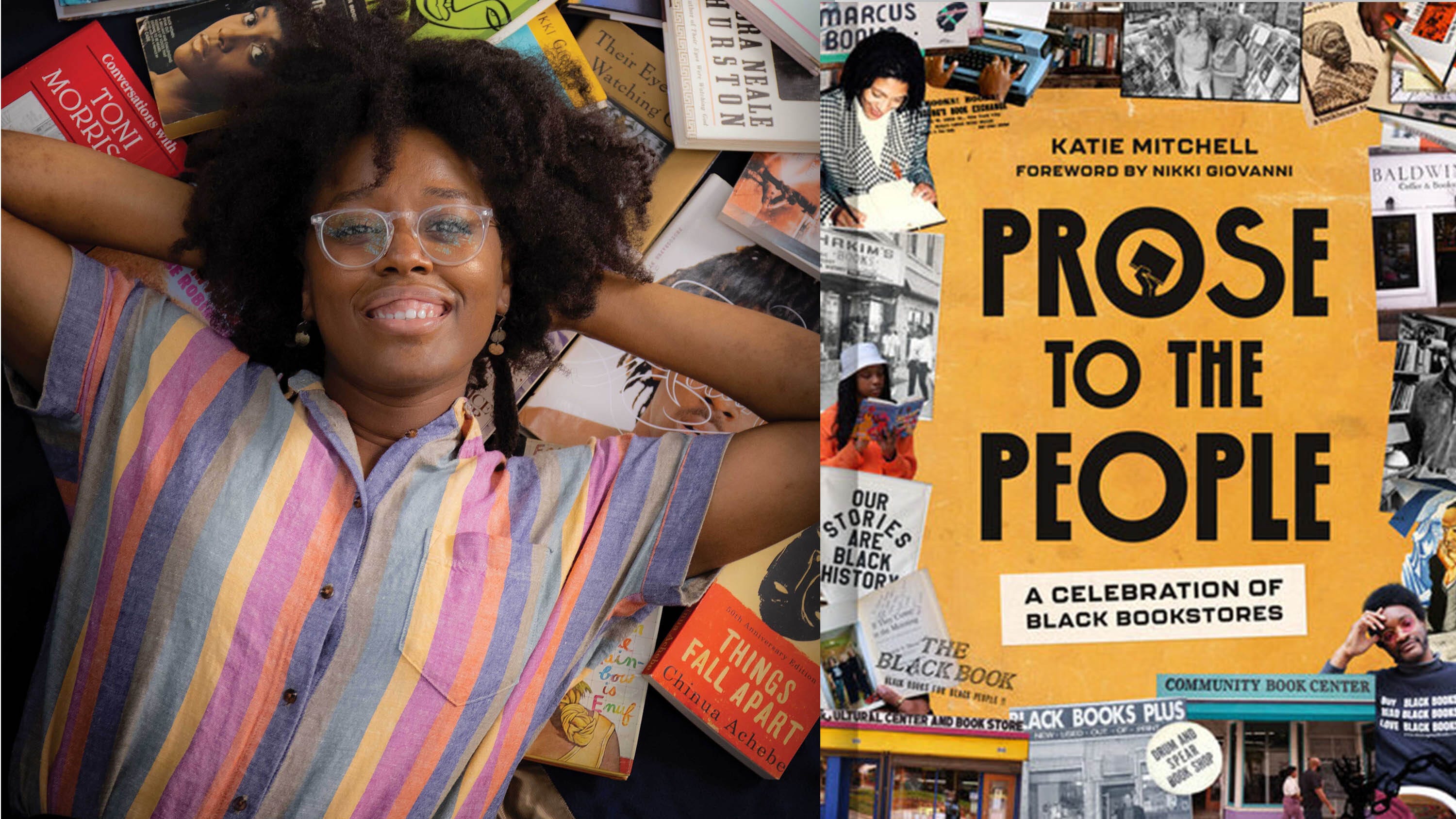
For Black bookstore owners and authors, reading has always been, as writer Katie Mitchell describes it, an act of liberation and defiance.
In her new book, Prose to the People: A Celebration of Black Bookstores, Mitchell draws a direct line from Frederick Douglass’ promise — “Once you learn to read, you will be forever free” — to today’s dramatic wave of book bans targeting marginalized voices across the United States. The book couldn’t have been published at a more prescient time: Since 2021, PEN America has documented nearly 16,000 book bans in public schools nationwide, a number not seen since the Red Scare of the 1950s.
Among the 4,218 unique banned titles in the 2023-2024 school year, more than a quarter of the banned history books specifically highlight Black people. The leaders of the book ban movement have become more emboldened as the new school year begins. In Florida, a state with the most book bans in the country, yet another purge at public schools has swept over 600 more titles from classrooms, including The Diary of Anne Frank and The Handmaid’s Tale, which reportedly cost the district between $350,000 and $500,000.
Subscribe to Depth Perception to learn from top longform journalists and find the best in-depth reporting.
And yet, a counter-movement has been taking shape. Earlier this month, the National Association of Black Bookstores launched, joining longstanding efforts such as the Black Bookstore Coalition in sustaining vibrant spaces of community and literacy. Mitchell, who herself owns a bookstore called Good Books in Atlanta, has been featured in outlets including The New York Times, NBC, and NPR, underscoring the enduring role of Black-owned bookstores and the thinkers they amplify.
In this edition of Depth Perception, Mitchell discusses her book and the 50-plus stores it profiles, and how they remind us that despite repeated attempts to erase Black voices, the persistence of Black bookstores stands as an act of collective resistance. — Kelly Kimball
In both your book and your recent essay for In These Times, you explain how Black bookstores emerged from the Civil Rights era as cultural hubs for Black creativity and also as political frontlines under FBI surveillance. How does that dual legacy of community and scrutiny continue to shape Black bookstores today?
Black bookstores in the U.S. started even earlier. The first known one opened in 1834 by David Ruggles in New York City. He was an abolitionist who published anti-slavery texts and helped free Frederick Douglass and other fugitive slaves. Ruggles really set the tone for Black bookstores as sites of liberation. That tradition continued through the Civil Rights Movement, the Black Power Movement, the Movement for Black Lives. Black bookstores have always been places where organizers — or sometimes the owners themselves — shared information with the public.
I see Black bookstores today continuing in that tradition: safe spaces where people can talk about banned books, about the attack on Black thought. Looking at the long arc of Black bookstore history, we see it repeating and building on itself.
You describe your book as a reader’s “road trip companion” through the world of Black bookstores, blending photography and prose. How did you develop that approach, and how do you think it helps readers understand the book’s central themes?
When I wrote Prose, I wanted the reading experience to mimic walking into a Black bookstore. You don’t just see one author, you see many. You see artwork. There are different genres.
So my book includes poetry, essays, interviews, and multiple viewpoints. Not everyone [agrees in] Prose to the People which I think is important. I think that's what you get when you go into a bookstore.
People also often comment on how beautiful the book is. That was intentional. I wanted it to be approachable, a work of art that people pick up and then get lost in the history and message. There are also little Easter eggs — like photos of someone you might recognize appearing again in another place. It all came together serendipitously.
Deesha Philyaw burst onto the literary scene in 2020 with her debut short story collection, The Secret Lives of Church Ladies. The book, which explores the hidden desires and complexities of Black women's lives, became a critical darling, winning the PEN/Faulkner Award for Fiction, the Story Prize, and a Los Angeles Times Book …
What was a specific bookstore that surprised you, or that deepened the project for you?
The Hugh Gordon Bookshop really stood out. Being named the Hugh Gordon bookshop, you would think Hugh Gordon owned it, but really he left in his will that he wanted his friend to start this bookstore with the books that he had collected over his lifetime. Upon his death, he [bequeathed] to the City of Angels this book store that would be such a community hub that W.E.B. DuBois frequented [it and] Langston Hughes sent materials to it.
Hugh Gordon's family participated in The Great Migration. His parents were owned by the governor of Georgia, and so the family moved to LA to start this new life, and I got the opportunity to talk to his great-niece and learn more about the family and more about what they did. What I really loved about that bookstore is that they really focused not on just selling books. They were teaching people how to read. … teaching Black people Black history. They were able to do that for decades. They had rent parties when the money was funny. They were really in the community.
They closed in the 1970s. But in my book, I wanted to include both closed and open stores so people could see the full story of Black bookstores in the U.S.
“In my book, I wanted to include both closed and open stores so people could see the full story of Black bookstores in the U.S.” —Katie Mitchell
If you can imagine the next chapter for Black bookstores, what does that look like?
I've seen some really cool things from people. Sister Sci-Fi in Oakland, [California] has a book vending machine. Different ways of being is really important, especially, [since] we're in 2025. The bookstore might not look the same as it did in,, the ‘80s.
I think being creative, experimenting with different ownership models [will define the future of Black bookstores.] For Black bookstore owners, I think that means being really responsive to the community's needs — whether that is through the inventory or in the programming — to help people learn about blackness. For the customers, I think it's supporting these stores, and not [in] a way where [it feels like a] chore to support Black bookstores. Just making it a part of your everyday routine, like how you go to the grocery store or the post office.
Anything else you’d like to add?
I think one of the themes that comes into Prose to the People that I wasn’t necessarily expecting was the relationship between Black bookstores and incarcerated people. A lot of Black bookstores have incarcerated customers. They do book clubs with incarcerated folks. No Name’s Radical Hood Library in LA, for example, has a book club where incarcerated people read, so people on the inside and outside are reading and sharing thoughts.
That’s something that I think happened from the very beginning. With David Ruggles, the incarcerated people were enslaved, really. Then later we have Paul Coates — the founder of Black Classic Press, a former Black Panther, and the father of Ta-Nehisi Coates. He had the George Jackson Prison Movement, where he was sending books to incarcerated Panthers, making sure they had money, and then, when they got out, making sure they had jobs.
I see that pattern time and time again, even with stores you wouldn’t necessarily think of as local. There’s one called Black Books Plus, and the owner showed me letters from incarcerated customers. One of them wrote to her about what the book meant to him. He said, “My body may be imprisoned, but my mind is free because of the books you’ve given me.”
Further reading and listening from Katie Mitchell:
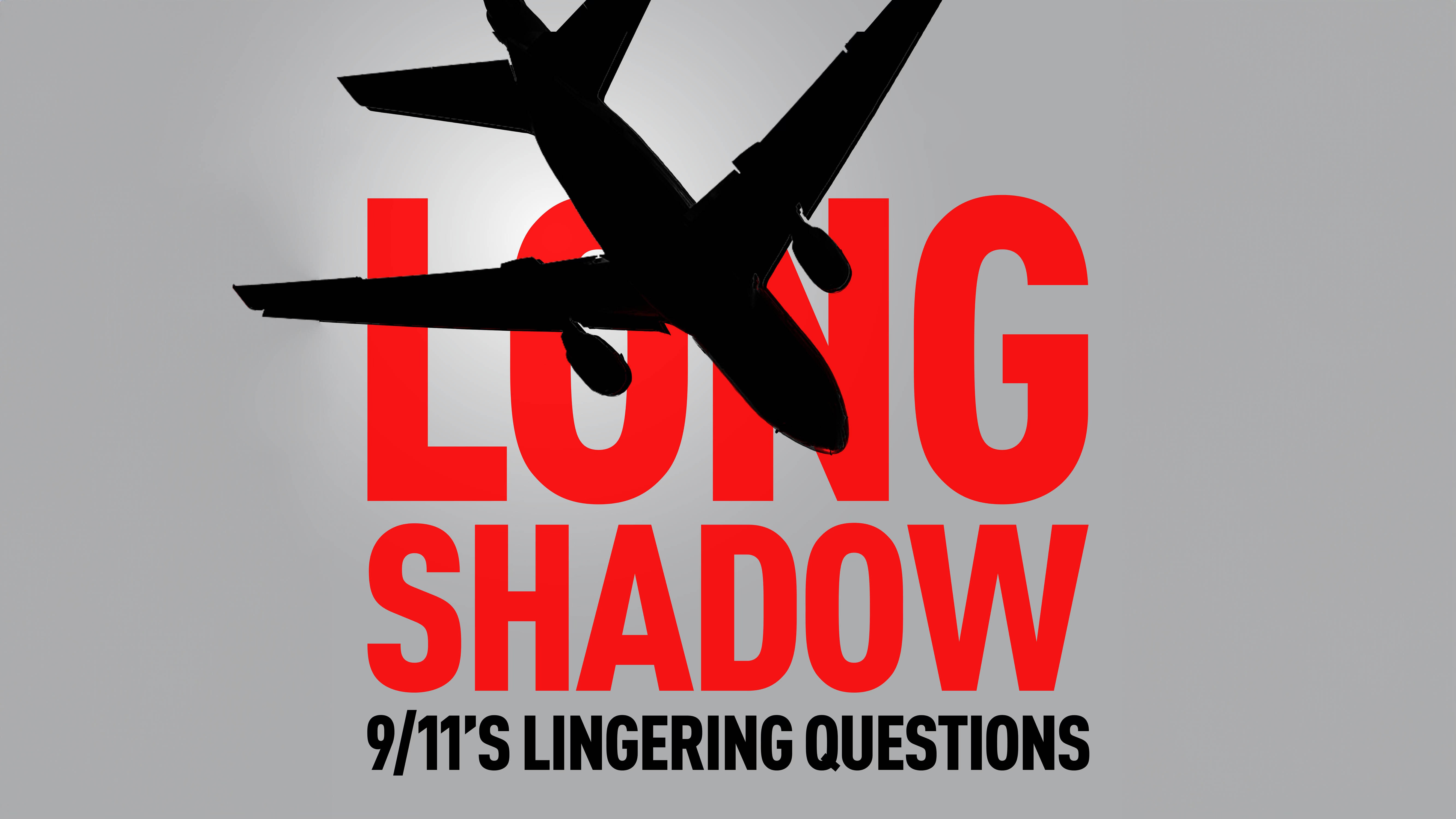
Never forget: Listen to Long Shadow: 9/11’s Lingering Questions
Garrett Graff has spent two decades covering the legacy of 9/11, from the rise of Homeland Security and the War on Terror to its effects on American politics. It’s the most important story of the modern age, says the Pulitzer-finalist historian. It’s the hinge on which so much changed, the dividing line between the 20th century and the 21st.
“The history we now teach of September 11 is a simple one,” he says in the first episode of “Long Shadow: 9/11’s Lingering Questions.” “But that telling is too tidy. For those who lived through it, the chaos-filled 102 minutes from the first crash to the final tower collapse were a mess of fear, chaos, confusion, and trauma. We didn’t know when the attacks began. We didn’t know when they would end…. And worst of all that day — we didn’t know what would come next.”
Remember September 11. Listen to the Murrow Award-winning podcast “Long Shadow,” wherever you get your podcasts.
Katie is absolutely brilliant. I love the addition of open and closed Black bookstores to tell the full story. A great reminder about relationships, memory, and what permanence truly means. Prose is this generation's staple GoodBook for the house!




Katie is absolutely brilliant. I love the addition of open and closed Black bookstores to tell the full story. A great reminder about relationships, memory, and what permanence truly means. Prose is this generation's staple GoodBook for the house!