

Journalist Eoin Higgins on the defamation lawsuit that proved his point
Frivolous defamation suits can work even when they lose — take it from someone who beat one.


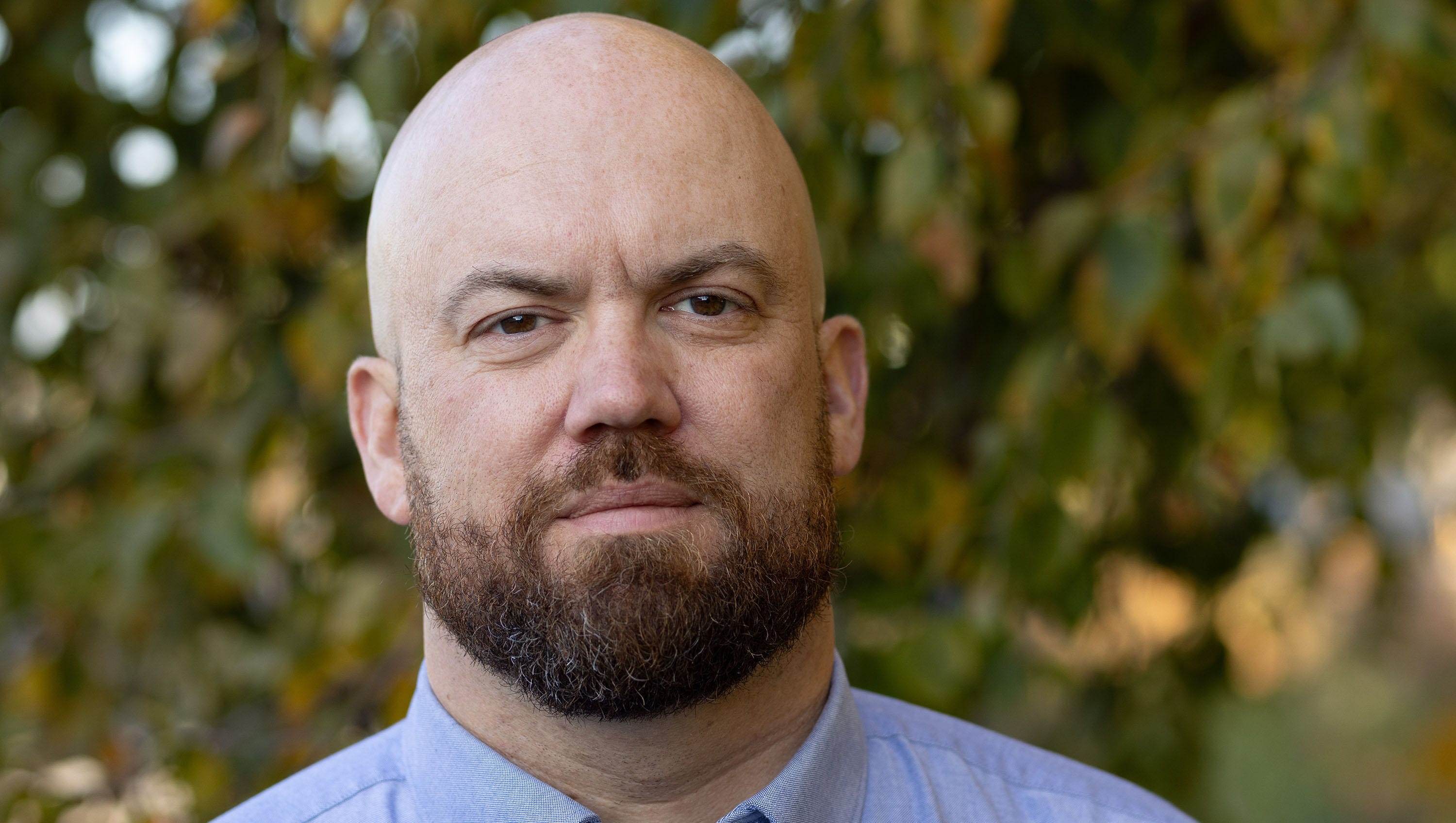
When journalist Matt Taibbi sued Eoin Higgins for defamation, the offending words were sitting right there on the cover: “Owned” and “Bought.” Higgins’ book, Owned: How Tech Billionaires on the Right Bought the Loudest Voices on the Left, argues that a handful of Silicon Valley billionaires pulled a generation of once-left-leaning independent journalists rightward, with Taibbi and Glenn Greenwald as the central case studies. Taibbi’s theory was that calling him “owned” was a literal, false claim that he’d been purchased. In May, a federal judge dismissed the suit with prejudice, finding that the words were obvious rhetoric rather than statements of fact.
Higgins is a journalist and historian from the Berkshires who came up through the scrappy left-leaning outlets of the 2010s — places like CounterPunch, FAIR, The Outline, and Splinter, most of which no longer exist. A high school dropout, he didn’t go to college for a decade, and then cut his teeth doing local reporting in western Massachusetts. He broke stories on the Alex Morse primary and the Boston Police Department for The Intercept and The Appeal before publishing his first book, Owned, in 2025. Now he’s turned the lawsuit against him into a kind of cause: He and his publisher are seeking $178,000 in attorney’s fees, and he’s been making the argument for a federal anti-SLAPP (Strategic Lawsuits Against Public Participation) statute.
“The point is not to win,” he says of the lawsuits and threats aimed at journalists by Taibbi, Kash Patel, Donald Trump, and others. “The point is to shut you up.” In this edition of Depth Perception, we talk with Higgins about coming up in a dying media ecosystem, why he refuses to write for free, and what it’s like to be sued over a metaphor. —Parker Molloy
Let’s start with your background. Where are you from, where are you now, and why did you become a journalist?
I live in Maine now and I’m originally from western Massachusetts, the Berkshires, which is a very rural, artsy area. It’s kind of called Hamptons North for New York City, a real upstairs-downstairs kind of place. I’ve lived on the West Coast, in the South, in the Midwest, in New York City, but I’ve arrived back in New England after many years.
I didn’t go to college for about 10 years after leaving school at 17, so I had 10 years of a lot of different life experiences: living all over the place, going to a lot of shows, trying my hand at being a DJ. Then I went back to school, to the Evergreen State College in Olympia, Washington. After that, there was a family tragedy, so I moved to New York and ended up going to Fordham University to get a master’s in U.S. history. And you can’t really do anything with that.
I was kind of spinning my wheels and I applied for a job doing secretarial work at a local publication [in the Berkshires]. Then I went on vacation for a couple of weeks … [and] when we got back, there was a message asking if I’d like to come in and try to become a reporter. I’d been blogging a little at that point because my wife had basically said, “You need to do something, you can’t just sit around the house.” So I’d started doing that to occupy my time. And I decided, yeah, I’ll try to be a reporter, I’ll see how it goes.
So I did local reporting in the Berkshires for a couple of years, but at the same time I was also blogging and starting the freelance life. This was 2015-2016, which, as you’ll remember, was a very entertaining time to be on Twitter and to be writing about politics. So I was at the center of this perfect storm for the online stuff, but I also had the advantage of training in journalism at the local level. Local reporting is a very specific skill set and it translates to the more national stuff I do now. It’s really nuts and bolts, and that’s how you learn and since then I’ve just worked for a bunch of different places, and now I am where I am.
A lot of your early bylines ran through CounterPunch, FAIR, Common Dreams, The Outline, Splinter, Deadspin, basically the left-of-mainstream, alt-media circuit of the 2010s, much of which doesn’t exist anymore. What did coming up in that ecosystem teach you?
They all taught me different things. I have to cite CounterPunch because they were the first people to publish anything outside of my own blog. From the beginning I made a promise to myself: I’m not going to write for other people for free. But if I blog something on my site and somebody wants to republish it, that’s fine. And that’s what CounterPunch did. I cold-pitched them and they started running a lot of my stuff, which helped me develop a profile. So I always have to give it up to them. They’ve been longtime supporters, I’m still in contact with them, and they publish a broad range of views for people on the left. Some of what they publish I don’t agree with, and some of it I do, but it’s good to have a place where you can read all of that.
The Outline came a little later. They’re no longer around, but they were a great publication to write for — really interesting design, interesting pitches and ideas. The editor I worked with there, Leah Finnegan, was a great technical editor who punched my stuff up really well. Every time I worked with a different editor, I’d learn something. Of the [outlets] you mentioned, I’d also say Jim Naureckas at FAIR, which is still around and has been for over 30 years. He’s one of the greatest editors I’ve ever worked with, just makes your stuff so much better. Both he and Janine [Jackson] there are really great.
So on the technical side, I learned a lot from those editors. I learned how to pitch, and I learned a lot about getting rejected and that being okay. You have to have a really thick skin doing freelance. You’re throwing something out to 10 different places and they might all say no, and then you have to think of something different. Or you have a great idea and you send it out, but 10 minutes earlier somebody had almost the exact same one, and theirs gets published first. It’s a relentless churn.
Any writer who tells you they’re not still learning from editors, well, there are some writers like that, and you can see their work just doesn’t stay as sharp. It starts to decline. So that’s actually one of the more important things I learned.
Long Shadow podcast: How Elon Musk broke the internet
The final episode of Long Shadow: Breaking the Internet illuminates how Elon Musk, enraged by the COVID shutdowns, became radicalized by his own Twitter feed. A habitual user of social media, he becomes convinced that the systemic suppression of speech that he sees on Twitter is inhibiting humanity — and it’s crucial that he step in to buy the site in order to save mankind.
It’s a wild finale that explores how a toxic army of trolls goes after women in the gaming industry, giving birth to an online movement of disaffected men. This “manosphere” (and Musk’s support) contributes to the resurgence of Donald Trump and a constitutional crisis that holds American democracy in the balance.
Long Shadow: Breaking the Internet retraces 30 years of web history — a tangle of GIFs, blogs, apps, and hashtags — to answer the bewildering question many ask when they go online today: “How did we get here?” The three-time Signal Award-winning podcast is out now. Listen and subscribe wherever you get your podcasts.
Your book, Owned, traces how Glenn Greenwald and Matt Taibbi shifted right after going independent, and Taibbi ended up suing you over it. Can you tell me about the book itself, and about the lawsuit? Why did he sue you, and what happened?
The book makes an argument about the infusion of tech money into independent media and how that’s driven the space to the right: the motivations behind it, the ideological and political reasons the tech sector ended up where it is now, at least openly. I think it was always kind of there. It mostly traces Greenwald’s career, and Taibbi’s a little bit too. Taibbi pops up in the second half. These are two guys who shifted to the right, and the book looks at the different incentives and the different ideological reasons they may have gotten there, and tries to offer a nuanced picture of why. People are interested in how these guys ended up this way.
Glenn makes up the biggest share of the book, as far as tracing one person’s career, and I’ll freely admit the portrait of Glenn is a lot more nuanced. We talked for hours. He gave me a full interview, let me ask him whatever I wanted. He was cordial and reasonable. We had some disagreements during the conversation, that was fine, and we still have a lot of disagreements — we still snipe at each other online — but it was a personally fine discussion. Matt said, “I’ll pass,” and then basically told me not to contact him again when I followed up.
So the book came out, and Glenn has acknowledged its existence maybe twice or three times, because Glenn is smarter than Matt is. Matt got really mad about it and sued me, in part for not talking to him before publication, which was in the lawsuit, even though I reached out to him, he said no, and I included all of his denials in the book. I also include a lot of his own writing and commentary. For the lawsuit he took the cover, the flap copy, the promo copy, and a few parts of the book so dishonestly out of context, including my favorite one, where I say he cashed in his well-earned reputation in order to get the Twitter Files. Matt tried to argue that “cashed in” meant he was making money, when it explicitly did not.
So that’s the case. Initially it was very weakly written. They amended the complaint and it was a little stronger, but it still just didn’t hold up, and the judge dismissed it with prejudice. (Editor’s note: Taibbi has since filed to appeal this ruling.) Now we’re going for lawyer’s fees under anti-SLAPP law, which has an uneven application within the federal system, and that’s why he filed in federal court and not state court. I don’t know that for a fact, but, come on.
The way I look at it: First, Hachette and I shouldn’t have to pay attorney’s fees for this bullshit. Second, on principle, this should be costly to him. I don’t want him to keep doing it, and I don’t think it’s ethically correct. I think it’s a violation of journalistic ethics and of the free-speech advocacy he claims to have. And third, anything that adds to case law endorsing a federal anti-SLAPP statute is good.
I wrote a piece for The Intercept in April about Kash Patel trying to sue The Atlantic, using that as the framing device, before the judgment came down, to make the case that there should be a federal anti-SLAPP statute. So that’s become a bit of a passion project for me now.
“These complaints are meritless and frivolous, but the U.S. legal system still allows them to go through, which, to be clear, it should… If you do this and you lose and it’s found to be frivolous bullshit, then you’re on the hook for the damages you were asking for and for the attorney’s fees, because it can’t be free.” — Eoin Higgins
In that Intercept piece on Kash Patel suing The Atlantic, you put your own case in a list that includes Trump v. CNN, Trump v. ABC, Trump v. Paramount, and Musk v. Media Matters. What’s the pattern people miss when they cover these as one-off feuds instead of coordinated attacks?
It’s totally what the right does to silence people. Although there’s a distinction to make. Trump is trying to get bribed, basically. That’s what he’s doing. But they’re all trying to send the message that if you criticize us, we’ll make it cost money. They’re not even necessarily trying to win so much as trying to make it cost money and time and stress.
So I’d almost segment off Kash Patel and Trump going after big publications, and put myself and Taibbi more in another category. Another thing: These complaints are meritless and frivolous, but the U.S. legal system still allows them to go through, which, to be clear, it should. I’m not saying a lawsuit shouldn’t be able to go through the courts. What I’m saying is that with a federal anti-SLAPP law, if you do this and you lose and it’s found to be frivolous bullshit, then you’re on the hook for the damages you were asking for and for the attorney’s fees, because it can’t be free. Right now, we’re asking for $178,000 in fees, which is what our attorneys cost, because they’re very good. That’s a lot of money to somebody like me. It’s not a lot to somebody like Taibbi, but it’s not nothing to him either. I wish we could sue him for a lot more, I wish we could make it a cost-prohibitive experience for him, but I don’t know how possible that is under the law right now.
The Patel case is a good example of how this is spreading on the right. He’s suing The Atlantic for $250 million, which is insane. He’s never going to get that, even if his claim were found to have merit, but it doesn’t matter. He doesn’t have to file a real number or a real complaint. His complaint against The Atlantic is so blatantly over the top, partly because he lacks even the slightest subtlety. In the Patel complaint he explicitly says, “I told you this wasn’t true and you still published it,” which perfectly explains how these guys think about it.
Further reading from Eoin Higgins:
Owned: How Tech Billionaires on the Right Bought the Loudest Voices on the Left (Bold Type Books, February 2025)
“Matt Taibbi filed a Trumpian, free speech-chilling lawsuit against me. A judge just threw it out.” (MS NOW, May 7, 2026)
“Kash Patel Suing The Atlantic Is a MAGA Anti-Free Speech Tactic” (The Intercept, April 23, 2026)
“New Videos Show Massachusetts Cops Brutalizing George Floyd Protesters” (The Appeal, February 9, 2021)
“Party Leaders Investigating Anti-Morse Campaign Helped Orchestrate It” (with Daniel Boguslaw and Ryan Grim, The Intercept, August 14, 2020)