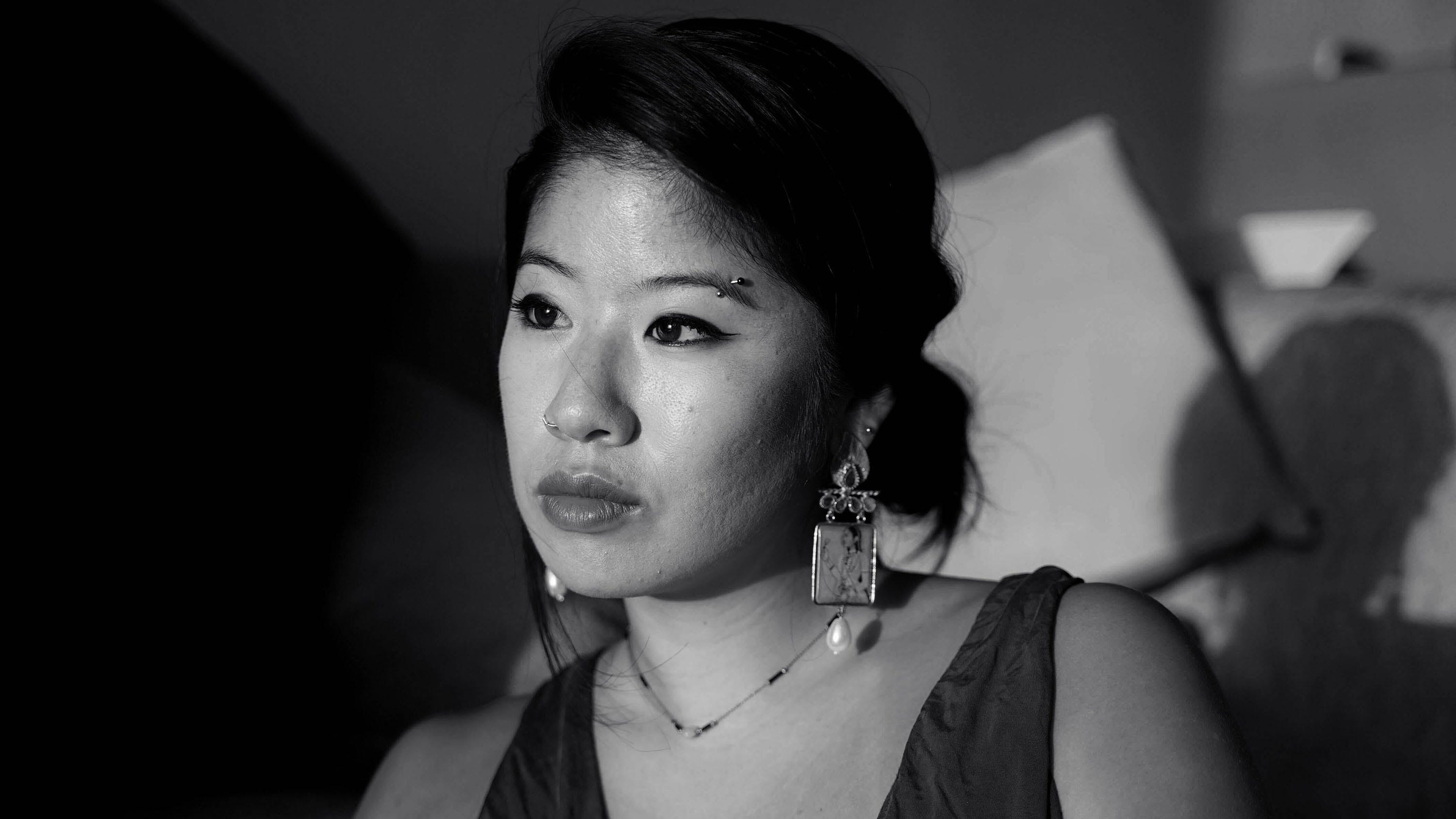
Journalism as “an act of public service”: Joi Lee on the responsibility of reporters to witness and document injustice
The international journalist and documentarian explains how ICE’s Minneapolis surge challenged her “to exercise this American privilege and this American passport.”
It had been 14 years since Joi Lee lived full time in the United States. Though she grew up in the U.S., the journalist and documentarian has lived all over the globe. She was based in Doha, Qatar while working for outlets including Al Jazeera, followed by a stint in Seoul, and later in London as head of editorial for Earthrise Studio. She has always covered the big stories, from “the refugee crisis to just generally stories of how different communities around the world are impacted by various forces like economic or food insecurity,” says Lee.
While in London, Lee focused on connecting climate issues to human stories. But when U.S. Immigration and Customs Enforcement (ICE) agents went into Minneapolis, Lee knew it was time to return stateside.
Lee’s portfolio of work spans several mediums, including documentaries, 360 video, photography, and podcasting. But her recent work in Minneapolis inspired her to go back to an older form of journalism: writing and reporting.
In this edition of Depth Perception, Lee talks about her past work and what it meant to return to the U.S. to report on the Trump administration’s shift to more aggressive immigration enforcement. This interview has been edited and condensed for clarity. —Jenna Schnuer
Learn from top longform journalists and find the best in-depth reporting. Subscribe to Depth Perception:
You’ve covered stories all over the globe. Why did you decide to return to the U.S.?
I was living in New York when Trump got elected the first time, and I covered his election, his inauguration, and then soon afterwards, I took a job at Al Jazeera in Doha. This time around, when I was watching news from abroad, I had this feeling in my stomach of, “Oh, my god. If my job is to be part of this industry that is meant to document and to act as witnesses, then what is my responsibility as an American?”
I’m not a person who’s ever had a sense of patriotism. [To be] totally honest, I’ve been deeply critical of a lot of … the American project, seeing how things are so quickly sliding, and seeing also the fear that I had, or that fear of my friends and colleagues or journalists in the U.S. who don’t have American passports. This is a time when I feel like it is important to exercise this American privilege and this American passport.
What was your plan for covering what’s happening in the U.S.?
I didn’t have a plan for it. I didn’t have any idea what was going to happen. I just wanted to be here to see if I could be of use in any way. I was in Minneapolis for New Year’s Eve and then I left, and like, two days later, Renée Good was killed. I just knew in my gut that this was a huge and pivotal moment in time. And it took me about a week before I decided, “Okay, you know what, I’m going to come back out here.”
The first few days were really intense, pitching furiously, but also trying to get my lay of the land, making connections, making relationships. I was going to a lot of mutual aid groups and a lot of cafes, and just sitting and striking up conversations and slowly building networks and relationships on the story front. Then in terms of the pitching, I used to work at Al Jazeera so I was speaking to a lot of people there. As I started to uncover more stories and to kind of build those relationships, it was about pairing them with the right publishers.
I’d been publishing on social media in terms of the daily kind of stuff that I was on the ground, and I wasn’t waiting for publishers for that because I wanted to be really responsive and quick in the way that I was covering things. But then on the back burner I was also doing slower forms of storytelling. Social media is like digital fast food, but my heart is in more sustainable slower forms of storytelling. So I worked on a few short videos for AJ+, which is following an Ecuadorian family that has been deeply impacted by the ICE raids here in Minneapolis, and they’ve been sheltering in place.
And then the other thing I’m working on is a larger, 25-minute documentary following a Native American lawyer here, who is actually from South Dakota, [but came to Minneapolis] once he heard that ICE was also targeting Native Americans and the layers of irony there. So I’ve been following his story and what it looks like from the Native American resistance front, which has been integral to the community here in Minneapolis in organizing and providing mutual aid against Operation Metro Surge.
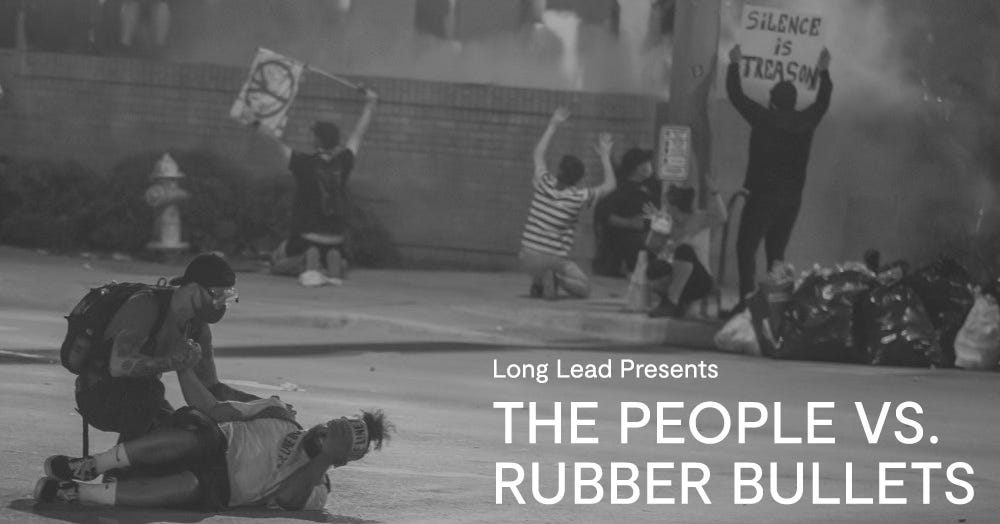
“Less lethal” means “still deadly”
Tyree Talley lies in front of the Austin Police Department headquarters, after being shot by police officers with less-lethal weapons while protesting the death of George Floyd in May 2020. Ricardo B. Brazziell / Austin American-Statesman / Associated Press
For decades, police have championed less-lethal munitions as life-saving alternatives to deadly force. Their history, however, tells a different story — one of imprecise science, unmeasured usage, untrained police forces, death, and disfigurement.
With revelatory reporting by Linda Rodriguez McRobbie, stunning original and historical photography, and a captivating multimedia design, The People vs. Rubber Bullets tells the full, brutal story of kinetic impact projectiles and their usage, from rubber bullets’ invention in 1970s Northern Ireland all the way through the 2020 Black Lives Matter protests.
This award-winning, six-part, longform feature examines law enforcement’s use of these weapons in crowd control, chronicling a number of less-lethal victims and their struggle for justice. Read the stories of those whose lives were irrevocably changed.
You do not apologize for, at times, having a strong point of view in your work. You don’t “both sides” things. Why is that your approach?
I constantly have this conversation with other journalists. Because, as you know, it is a very existential question: How much do you bring [your] personal viewpoint into things, and what is objectiveness? What is neutral in the profession that we do? There’s always a viewpoint that exists in our work, whether or not we acknowledge it.
I think of journalism as very much an act of public service. You can describe that as the service of the pursuit of truth, or the service of helping communities make better informed decisions about what they need and what they want. That is the kind of journalism I want to do. There’s a very clear aim with that journalism, which is this act of public service.
I don’t want to be hiding that behind something, because I also want people to have an idea of what’s informing the way that I see the world and how I’m contributing to this dialog of whatever. And that’s not for everyone. I just don’t want to pretend like that isn’t informing the way that I shape or tell stories.
You work across a lot of platforms. How do you choose the media you’re going to use to report out a story?
It’s changed throughout time. For example, [my reporting over] the last four years has been very heavily on social media to communicate complex stories through digital media. Very short form, because we were targeting young people who were what we called “climate curious.” You know, it’s like understanding who your audience is, what you know, who you’re trying to speak to, and what language, what visual or storytelling language do they understand best? But yes, it’s definitely also just a balance of understanding what is the best medium to tell the right story.
What I’m writing on Instagram is this kind of strange mix between where the professional and the personal boundaries lie. But then I also do other kinds of documentaries and video reporting, which occupy a very different space where there’s a lot of time to sink into the nuance of things.
I have very strong political opinions and views, but at the same time, in terms of professional personal integrity, it’s really important for me to give space to the kind of gray zones in between, because that’s where the meat of human existence lies. Most of us actually live in this gray space, but that’s not necessarily the stuff that is easy to portray on social media.
“Social media is like digital fast food, but my heart is in more sustainable slower forms of storytelling.” —Joi Lee
Using all of those platforms requires a wide range of skills. How have you learned to put all of those media to work for your reporting?
I like to understand how things work from a big picture perspective, and be able to know enough to work within several different types of parameters. But I also think this is, in many ways, the nature of the kind of digital media landscape of journalism today. You need to be adept at several types of visual languages in order to be able to survive how quickly things evolve in today’s digital landscape.
That, being said, I definitely was, from the very beginning, more in that digital landscape. I have the deepest respect for people who have that kind of connection to a singular craft or technical craft. For me, it’s just been a mix of personality, being very hungry to explore different mediums, and to experiment. But also my career has always necessitated that you kind of have to know a bit of everything.
Since returning to the U.S. and, specifically, reporting from Minneapolis, you’ve added more written pieces to your reporting mix. But the writing feels more personal, more vulnerable. Can you talk about that?
I have always written but not necessarily in the sense of using my voice in an article format. I know the people at ShadoMagazine, and I think they do really incredible work. I wanted to write for them because I love the angles and perspectives that they take with political issues. They’re based in the U.K. and I was interested in trying to reach different audiences who might not have a personal connection.
They want more of a personal voice, and so I found myself adapting a bit to that. It’s not natural to me to bring my own personal voice necessarily into things. And I’ve actually been very intentional over this last month in Minneapolis to have a sense of, like, “Yes, this is the person who’s doing the reporting, so you have an idea of where this is coming from.” And to me, that’s an important part of the accountability and transparency process.
But I’m also very cautious and trying to not center myself too much in storytelling. I personally grapple with this kind of influencer model that has come out in the media landscape. So for me, I’m trying to bring in my personal voice when it is useful as a bridge, but I don’t want to make that [my] default form of communication.
How are you doing after spending so much time covering ICE in Minnesota? This is all a lot to witness and report on.
I think this place is experiencing a lot of collective trauma. Everyone who’s been here the past month or two months, we’re all grappling with various levels of intensity. I was spending a lot of time with a journalist who has covered so many different war zones around the world. That’s what his experience has been for the last 20 years. And we were discussing why Minneapolis hits just a bit differently. I think it is the expectation that you have of what it’s meant to be in the U.S., where freedom of speech is such a bastion of American democracy and all the fluffy language we like to use that is deeply embedded in our mythology of the U.S.
But we never expected to see this American Midwest city to suddenly have these images of violence transposed on it. You’re in the mix of that, and so many bodies are being violated, being assaulted, being murdered. It’s been really, really intense.
I think now that we're coming off the tail end of that, a lot of people are in this process of trying to process this. You know, the images of seeing your neighbors abducted, people dragged screaming from their cars. The day of Alex Pretti's murder, so many of us were on that scene and being shot at with non-lethal munitions. I'm doing okay, but I just know that there's going to be a lot of scars here that people have to heal from and tend with. And you know, this is also building off of George Floyd five years ago too, where that trauma is still present.