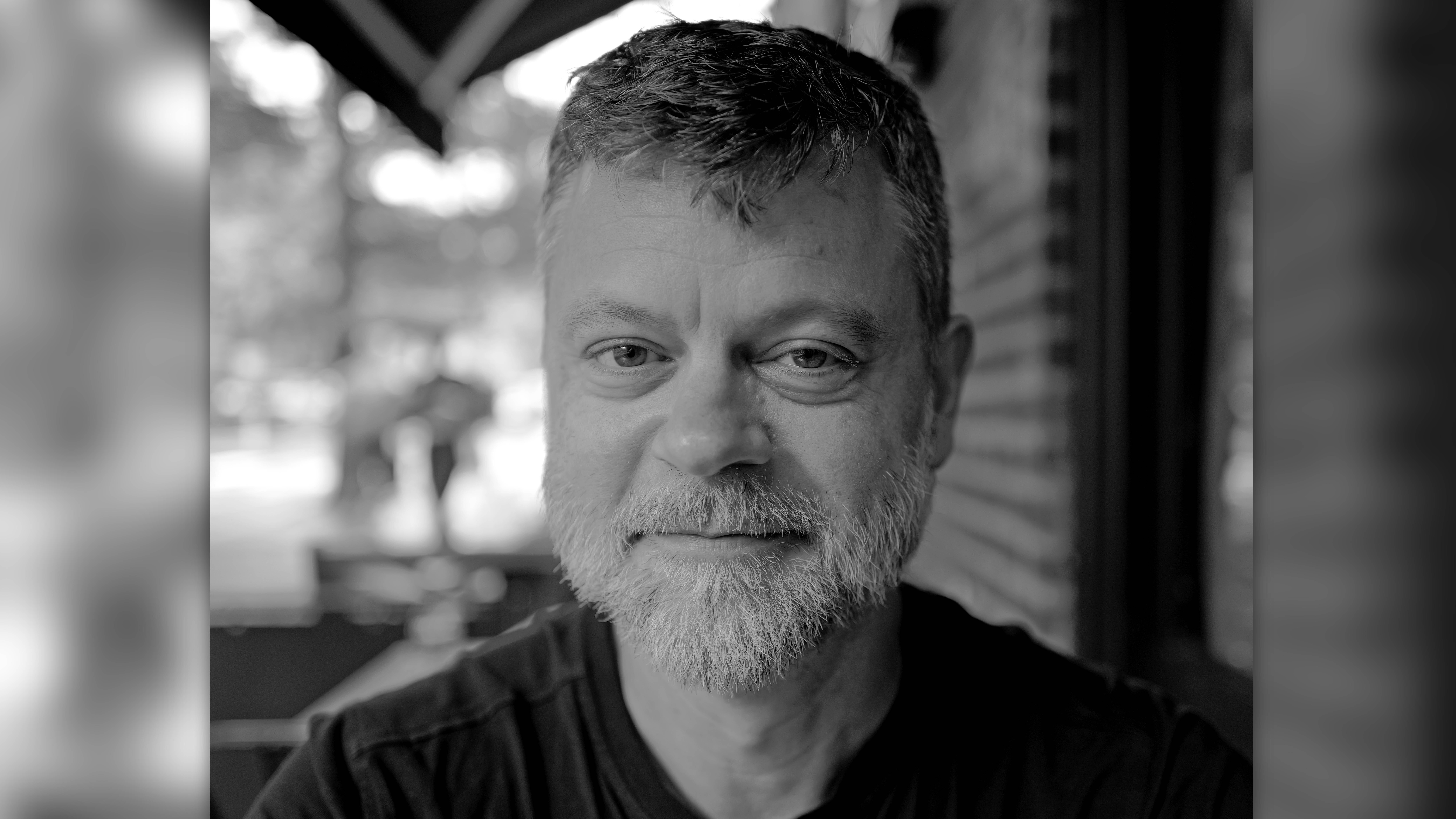
David Roberts has been a journalist for over 20 years and he’s largely spent that time reporting on solutions to the monumental problem of climate change. He joined the environmental news organization Grist in 2004 and spent the first decade of his career there before moving to Vox in 2015.
Roberts eventually decided to strike out on his own in 2020 with his newsletter, Volts. It quickly became one of the most influential climate-focused newsletters in the United States, with nearly 100,000 subscribers, and he’s been plugging away at it ever since. He also hosts a podcast by the same name that serves as an extension of his chosen area of coverage.
“The only way to [succeed] is to find your fellow freaks and get their loyalty. You have to build on that or else you’re screwed,” Roberts says.
Getting readers to take an interest in climate-related issues can be difficult. Researchers have found that climate news has actually been decreasing in recent years because of this. A lot of this work doesn’t drive major traffic.
“I don’t know why everybody else makes it boring, but it’s interesting to me. Maybe that comes across,” Roberts says.
In this edition of Depth Perception, we ask Roberts how his newsletter first took off, what resonates most with readers about climate coverage today, and where independent journalism is heading. —Thor Benson
Learn from top longform journalists and find the best in-depth reporting. Subscribe to Depth Perception:
Climate journalism often has a hard time getting attention. What do you think has made your newsletter work? Do you think it’s that people already knew who you were, and they were just ready to sign up for whatever you were doing? Or do you think it’s the way you’re covering climate?
Well, I would say both. I mean, the proximate reason it got off the ground is that I came to it with the audience already. I had already been at it for 15 years. But I think the reason I had that audience with me was that I covered these things somewhat differently than they’re normally covered.
I don’t know what it is about climate — I mean, I could speculate — but you are absolutely correct that most of the journalism it produces is boring, which is crazy to me. I think the reason [Volts] is popular is that, despite everyone always calling me a climate journalist, I rarely actually do any journalism about climate change. I haven’t written an article about climate change in years. I just take it for granted. I’m talking about the solutions [and] what we’re doing about it.
People are doing all kinds of crazy, interesting tech innovations and business things. There’s good state policy being passed. The world of decarbonization is vast and filled with activity. It’s the most fascinating thing going on right now, [and] it’s arguably the most important thing going on right now, with apologies to AI.
It’s incredibly hopeful. It’s like a hopeful story of technological advancement and good-willed people pushing back against bloated incumbents who are trying to stifle it. It’s just a fascinating story. So I don’t know why everybody else makes it boring, but it’s interesting to me. Maybe that comes across.
With the Iran war, for instance, you can’t understand the Iran War without understanding energy dynamics and the fact that we now have a bunch of technologies that are alternatives to fossil fuels. [That’s] poised to give us an alternative to the endless fossil fuel wars. This stuff is not a niche, liberal thing now. It’s world events. It is news. Heatmap has come along. It’s really good. Canary has come along. It’s really good.
Do you have a sense of what your readership is like? Are these people who have always been really interested in climate solutions and they’re coming to you for it? Or is it a more general audience?
I mean, any Substacker is mostly guessing about their audience. I don’t get a ton of information about them, so it’s mostly just through meeting them and interacting with them that I draw conclusions. But it is, as far as I can tell, roughly the audience I was aiming for, which is that the core of it is professionals who are involved in this stuff.
State policymakers and energy committee aides, I know they read it. I know they listen to the podcast. I did a [podcast episode] on this new campaign for better grid utilization. We’re using about 50% of the capacity of the grid today. A lot of people say that before we build a bunch of new shit, we should better utilize the grid we’ve already built. The guy I did the interview with, I heard from him that a couple of days later — the head of the Montana Energy Committee in the Montana Senate had contacted him.
They were like, “Hey, I heard the podcast. We want to put together a bill on this. Come present to us.” So the professionals who have their hands on [policy] listen. It’s also just people who are interested and who might be pondering a career change. I try to make it accessible for a generalist audience. Although, I will say as a media note, I spent the early part of my career battling with editors who told me, “You can’t get that in-depth. That will bore people.” What I have found consistently over and over again is that audiences are not children. They’re adults, and they’re not scared off by encountering material they might not immediately understand.
I’ve had numerous people say, “I listened to the podcast. I understood about 80% of it, but I liked that. I liked the feeling that there are people out there going deep on this.” There’s this weird idea that editors have that readers are just clicking on things that make them feel dopamine. It’s just infantilizing. I’ve cultivated an audience of people who like and want to be challenged and want to go deeper.
Maybe you can’t get to a million readers that way, but you can easily get an audience that can sustain one dude. There’s barely a monoculture anymore. There is barely a main signal anymore. It’s all niches. The only way to [succeed] is to find your fellow freaks and get their loyalty. You have to build on that or else you’re screwed.
The big picture: Documenting Mexico City’s water crisis
A water seller carts empty bottles through Mexico City’s streets, which are buckling and warping because of dry ground underneath, May 26, 2024. Photo by Jérôme Sessini
In the near future, Mexico City may run out of drinking water. As the parched megalopolis struggles to quench its thirst, scenes from one of the world’s largest and most populated cities show how water scarcity could one day impact people around the globe.
In the Long Lead feature The Last Drops of Mexico City, produced in collaboration with Magnum Photos, photographer Jérôme Sessini documents the megalopolis’s diminished drinking water supply, fixing his lens on the people impacted most by this arid new reality.
A 2026 merit winner for “Best Original Digital Photography” from the Society of Publication Designers, The Last Drops of Mexico City, was cited by the Anthem Awards for Best Sustainability, Environment and Climate Awareness News and Journalism. Read it today at mexicocitywater.longlead.com.
I’ve noticed more people talking about electric vehicles (EVs) since gas prices have gone way up. Have you noticed increased interest in renewables and EVs lately?
Oh, for sure. This is one area where I think we are not getting a clear view of things. We are an oil importer, despite what you often hear. We do import oil. We do pay the global price for oil. So when oil goes up, it screws us just like it screws everybody else. But we’re also the world’s number one oil producer. There are a lot of very powerful people in the U.S., some of whom have a lot of influence over the media, who do not want the public to see this and draw the obvious conclusion, which is that being hooked on fossil fuels sucks.
Wouldn’t it be nice to get away from being yanked around like this? And that is the conclusion that other countries are drawing. It’s obvious. EV sales are up. I think they climbed by 50% just in March in the EU. People are doubling down on solar. They’re doubling down on battery storage.
They are seeing, illustrated in extremely visceral terms, that you do not want your fate tied to a bunch of petro-authoritarians. You don’t want your fate tied to a particular narrow strait that petro-oligarchs are fighting over. The fact is that we are experiencing the greatest oil supply shock in history and the effects of that have only just begun.
When you listen to oil analysts, they’re like, “If the Strait [of Hormuz] isn’t opened ... that simply can’t happen. The world economy would [fall] apart. It simply can’t happen.” But, it’s happening. It’s still closed. Everybody in the U.S. is just walking around like there’s not a meteor fucking heading our way. I guess that’s just how we are now. It’s just kind of the American vibe now, but it’s insane.
Long story short, people are now much more interested in heat pumps to replace their furnaces. Renewables are getting a surge of new energy and new investment. It’s not really making U.S. headlines, but the rest of the world is receiving the obvious message from all of this.
The other big news story that you already mentioned is AI. It seems like there’s a lot of anger with the environmental impacts of AI. Do you think that’s going to play out in interesting or impactful ways?
It’s in a very interesting spot right now. Initially, you had these data center guys making these ludicrous growth projections. They assumed that they could just bully and disrupt and force their way through the energy industry the same way they bullied everybody else: “We need a bunch of new power to run all these data centers, and we’re just going to roll over utilities and demand a bunch of big nuclear plants. We’re going to build a bunch of big nuclear plants, because we’re big, manly guys.”
These guys are all on fucking ketamine. They’re all in weird private chats together. They’re all pumping each other up. It’s just a bunch of weirdos and they’re all into this masculine energy. They want a bunch of nuclear plants and they’ve banged their heads against the energy industry. You can’t get U.S. utilities to move fast. They don’t move fast and break things. They are the opposite. Their overriding social mandate is, “Don’t fucking break anything.” I’ve watched these fucking Silicon Valley dipshit cowboys kind of bang their heads against this.
They can’t get enough power online fast enough because the utilities won’t hook it up. They’re like, “Fine, we’ll just build it behind the meter.” That’s what they’re all trying to do now is just build natural gas plants right next to the data center. They won’t even hook up to the grid. It displays such ignorance of how energy works. But as my interview with Jigar Shah the other day went over, in some detail, it’s utterly impractical to do this. They won’t be able to do it, so already they’re running up against limits. These data centers consume the electricity of a small city. You’re trying to build a small city grid. It turns out that’s hard. You can’t just cowboy into it.
You can get solar and batteries on the grid quickly. The AI people are being forced, by the logic of the situation, to embrace distributed solar and batteries. There’s no other solution. They don’t like it. Solar and batteries are the obvious answer to all of our data center woes and all of our AI woes. That’s just physics and economics.
Hurricane season is looming over the Gulf Coast and wildfire season is intensifying across North America, making journalist Colleen Hagerty’s reporting on natural disasters more urgent than ever.
You got a head start on a lot of people when it comes to the newsletter thing. How are you feeling about how things are today with the growth of newsletters? And how do you feel about people pivoting to video?
I definitely feel the pressure to pivot to video and anybody who looks at the numbers will tell you to pivot to video. I do not get that. The appeal of watching two floating heads on the screen talking to one another utterly escapes me. But you can’t fight the numbers.
YouTube is a bigger podcast platform than Spotify [or] Apple. I don’t know. I see media people fumbling around trying to look for new business models, and they’re all kind of groping around the subscription model one way or another. We have got to find a new way to pay for everything. Ads aren’t going to pay for it. People will have to pay for it directly.
When you got the paper, you got sports and you got the politics and you got news. It was difficult to distinguish what exactly the public wants and is reading. When all that broke apart, sports became its own thing. Politics became its own thing. Hard news became its own thing. We got a much better sense of what the public wants. It doesn’t really seem like the public wants hard, reliable investigative reporting. It really doesn’t seem like that kind of good journalism is a viable market product on a mass scale. It basically requires some kind of subsidy.
I don’t know what that is, whether it’s public or you just find a friendly billionaire. That seems to be what most people are trying to do. I don’t know how that lasts, but it’s clear that the logic of consumer capitalism has subsumed everything else. The message to a young American these days is you are a consumer, which means you are always right. That means you are owed little dopamine hits. You are owed just the entertainment you want. Everything is going to be algorithmically designed for you to make you feel good and to flatter your prejudices.