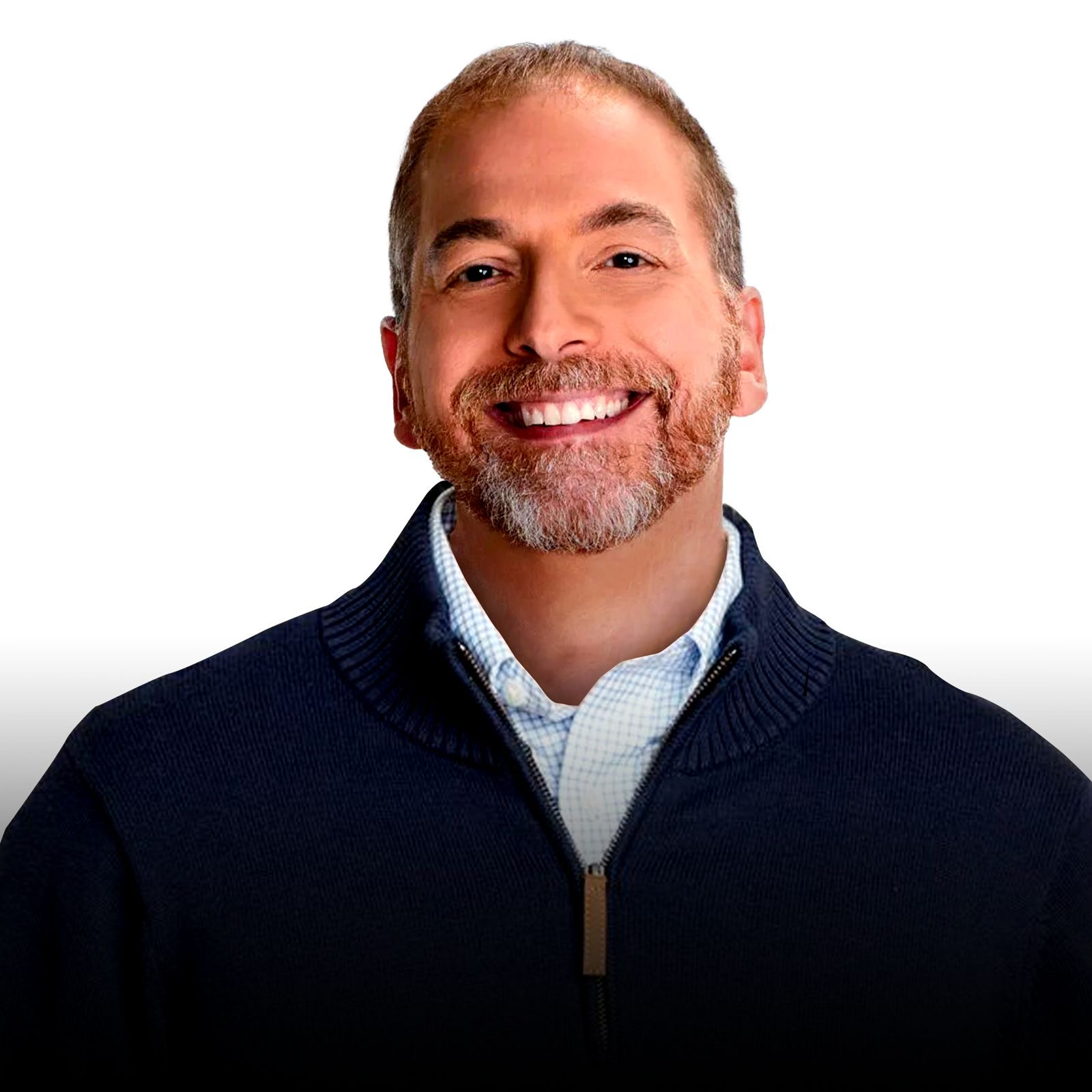
When Chuck Todd stepped down from Meet the Press in September 2023 after nine years as moderator, he left behind a complicated legacy — one that perfectly encapsulates the challenges of political journalism in an era when the rules kept changing faster than anyone could adapt. Now, having departed NBC entirely earlier this year, Todd is building something new while watching his former industry grapple with threats that once seemed unimaginable.
These days, Todd is everywhere and nowhere at once — running a podcast, investing in a Substack-like platform called Noosphere, and working on a local news project focused on service journalism. It's the kind of entrepreneurial pivot that many journalists dream about but few actually attempt, especially after spending nearly two decades at one of the most prestigious perches in television news.
When we spoke last week, the timing felt particularly urgent. ABC had just indefinitely pulled Jimmy Kimmel Live! after FCC Chair Brendan Carr threatened the network's broadcast license over Kimmel's comments — the kind of government pressure on media that would have been unthinkable for most of American broadcasting history. Todd's reaction was immediate: “Sadness. Because the law is on the side of the media companies, and they just don't want to use it.”
Subscribe to Depth Perception to learn from top longform journalists and find the best in-depth reporting.
Our conversation ranged from his unexpected career path (from political operative to data nerd at The Hotline to Meet the Press) to his most memorable interviews — including a surprisingly respectful encounter with Dick Cheney about torture that he still considers his best work. Todd was candid about the criticism he's faced, defending his approach while acknowledging key moments he'd handle differently today, particularly around platform decisions after January 6th.
What emerged was a portrait of someone still deeply invested in journalism's future, even as he questions some of its fundamental structures. His prescription for media companies? Either use your constitutional protections to fight government pressure, or sell to independent owners who will. It's a bold stance from someone who once embodied the establishment media's approach to political coverage.
“I'm desperate to prove that there is a space in the information world that accepts the premise that our politics are messy,” Todd tells Depth Perception, describing his current projects. After years of trying to hold the center on Sunday mornings, he's still searching for that space — just from a very different vantage point. — Parker Molloy
Tell me a bit about what you're up to these days.
I've reinvigorated my podcast and I'm trying to build what I hope becomes a podcasting network or media network of folks that are not captured by the ideologies of the left and right. Not saying that everybody — I always say we're all born with original bias, meaning where you're born, who you're born to, all of those things — but those that accept the premise of reality, with different levels of expertise. I'm desperate to prove that there is a space in the information world that accepts the premise that our politics are messy.
I'm an investor and participant in a company called Noosphere. The simplest way to describe it is that it's sort of like a Substack alternative, but it's one subscription and you get all of these journalists. It was started by a longtime foreign correspondent for NewsHour who thought all these laid-off foreign correspondents have great information but don't have outlets anymore. I describe this as if The Atlantic met The International Herald Tribune had a 21st century baby.
I'm also working on another project trying to rebuild and scale local news, but thinking of it less as news and more as information to help people live their lives locally. That would mean coverage of youth sports, doing a better job covering cost of living issues. Over time, if you rebuild trust locally that way through service-oriented journalism, that's how you can knit communities back together. Then they'll believe you when you tell them their city councilman's corrupt.
Why did you become a journalist?
I stumbled into it. I went to George Washington University, and if you had asked me in 1990 why I went to school in DC, I'd say I wanted to be in Washington. I thought I wanted to work in politics. An 18-year-old Chuck Todd thought of himself as a future campaign manager for a presidential candidate. I had a cousin who worked on campaigns, and I just found it intoxicating.
I ended up getting an internship in 1992 with this upstart digital publication, before anybody knew what digital publications were, called The Hotline. It essentially aggregated political news, but it turned out it was doing more than aggregating because nobody else was doing this. It created this daily newsletter on key political campaigns.
I became an information junkie. That's what I realized I was. And if you're an information junkie, what better place to go than journalism? I want to know more, and I don't want one side's argument. I like to know all sides of a plot, not just one person's point of view.
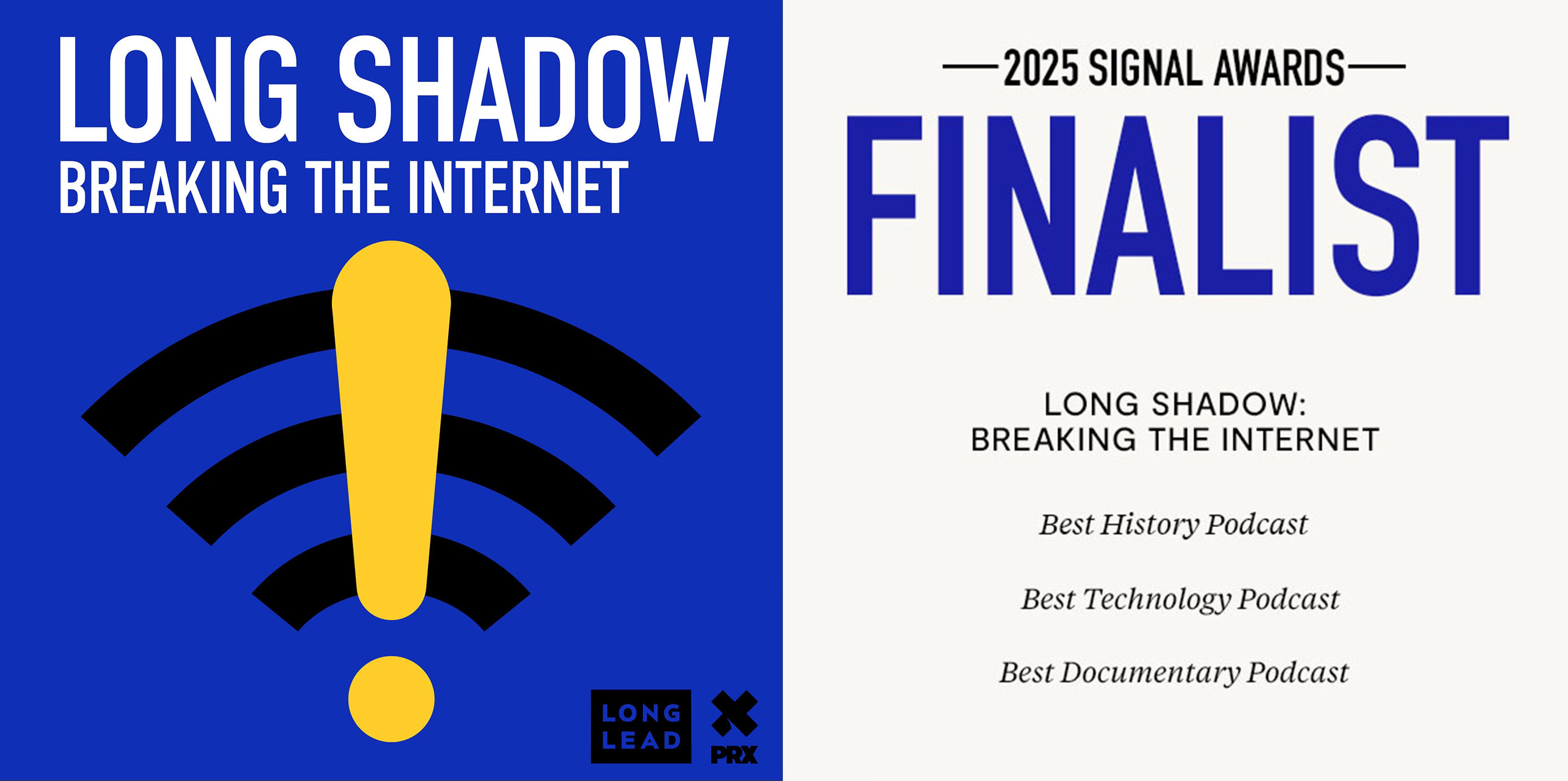
Signaling Excellence: Long Shadow is a Signal Awards finalist
Through three seasons of Long Shadow, the Garrett Graff-helmed podcast has won five Signal Awards. With the release of season four, a sixth Signal would be good — but eight would be great.
Yesterday the Signal Awards announced Long Shadow: Breaking the Internet is a finalist in three categories. And through October 9, listeners can propel the show to titles by voting for the podcast here:
The podcast retraces 30 years of web history — a tangle of GIFs, blogs, apps, and hashtags — to answer the bewildering question many ask when they go online today: "How did we get here?" Long Shadow: Breaking the Internet is the story of mankind's greatest invention, a tool that gave everyone access to all the world's information and unlocked democracy across the globe. But it's also about the biggest crisis facing society today: how the web's unlimited feed of data morphed into a firehose of hoaxes, conspiracy theories, and lies that divided Americans over things we once agreed on, like science, diversity, and even democracy itself.
Catch up on Long Shadow: Breaking the Internet wherever you get your podcasts, check back in on October 15, when winners of the Signal Awards will be announced.
You left NBC just as we're entering what might be the most consequential period for press freedom in modern American history. This week alone, we saw Jimmy Kimmel's show get pulled indefinitely after FCC threats. As someone who's been both inside the machine and now observing it somewhat from outside, what's your gut reaction to watching this unfold?
Sadness. Because the law is on the side of the media companies, and they just don't want to use it. The Constitution's on their side.
Five years ago, I might have argued that I would defend corporate ownership of media. When Richard Engel was kidnapped, there's nothing like having the power of Comcast and NBC to work the State Department. The difference between a major news organization versus being a freelancer when a journalist is kidnapped — it's night and day. It's life and death, actually.
I used to defend the idea that NBC News and ABC News and CBS are so deep-rooted legacy-wise, they're almost too big to bury, too big to ignore. You could talk to everybody. You had the ability to convene in a way.
But what is happening now is this government has weaponized its power to influence the owners of these news organizations. So now I just wish they would sell them. Let them all go independent. If the business interests of Disney are going to get in the way of the journalism of ABC News, that's not good for the democracy. Therefore, they shouldn't be allowed to own a news division. The right thing for the country at this point is to shut it down or sell it.
When you were at NBC, did you ever feel pressure from regulatory bodies like the FCC that influenced editorial decisions?
I'd like to say no. But [I] did every once in a while, you know. You had to round the edges of things?
On election night 2016, I was the person at the board. I realized what was happening, and I said be very careful looking like you're sad. Half the country's ecstatic, and half the country's upset. But to me, that was pressure I created on myself wanting to speak to the broadest possible audience.
Now, here's how you would have self-induced pressure: If I'm too hard on this person, then another entity can't book them for their show. When you're in that shared environment, you realize that can have an impact. There was somebody on the left that refused to ever do NBC because they were mad about something that happened on my show. They would hold everybody responsible. It was a coercion thing.
I think one of the worst moments for journalism before this period was when there was this collective push to de-platform anybody that didn't certify the election. I think that was a gigantic mistake. I've interviewed the president of Iran. He does not share any of our values. Why should I interview him? We know it's a good thing to interview these people. You're telling me you're not going to interview the Speaker of the House? You may not want to platform these folks, but half the country did. You're supposed to be covering what that is.
If I could go back in time and change one thing, de-platforming Donald Trump from Twitter and Facebook was a mistake. There's an entire new ecosystem that exists that's created their own reality. And this is now the damage that we're all facing.
The Onion and Trevor Noah poked fun at you for being light on follow-up questions. But how do you come up with good follow-up questions in the middle of an interview?
That's what uninformed media critics do. Most media criticism is done by partisans. What Trevor Noah doesn't want to admit is he didn't like the follow-up question because I didn't share his point of view in the follow-up question. When I get criticism from the right, it would be I didn't share their point of view. Most people criticize the media not for the journalist's bias, but for their own.
The Sunday show interview should be — there should be no interview under 20 minutes. The tyranny of time, the filibustering — that's why the Sunday shows are losing their effectiveness.
I've always said the most important questions are the follow-ups, not the first questions you ask. I think this is the difference between a journalist and a partisan. A partisan wants to show you how they're right and they're wrong. A journalist is leading the horse to water. You decide whether you're going to drink it or not. I treated my audience as if they were pretty bright.
“De-platforming Donald Trump from Twitter and Facebook was a mistake. There's an entire new ecosystem that exists that's created their own reality. And this is now the damage that we're all facing.” —Chuck Todd
Beyond the Sunday show interviews, what's a story or investigation from your time at NBC that you're most proud of?
I did quite a bit on guns. We started something called Meet the Press Reports. How can we have a different conversation about guns that isn't about the weapon, but it's about the impact on society?
One of the shows we did that I was really proud of — we told three different stories of mass shootings. One was from the perspective of a bar owner who had to witness and deal with somebody who came in and gunned down people. One was from the point of view of a mortician and what it takes to put a body back together for loved ones to mourn. And one was about somebody who survived a mass shooting at a bank in Kentucky.
We were trying to tell the story not in my voice, but in the voices of those that had to experience the incident. Going back to the scene six months later, which we always say we're going to do in the news media, and we never actually do. Why hasn't anybody put a mortician on before about what it's like to deal with gunshot deaths?
We did an entire half hour on why black mothers are more likely to die in childbirth than white mothers. Just focusing on this issue and realizing that a little more attention to this might actually create some action.
There's one story I wanted to do but couldn't commandeer the resources for. Back in 2013, I wanted to audit the 2012 presidential election. It was the first billion-dollar election where both Romney and Obama spent a billion dollars each. Where did that money go besides TV stations? I wanted to showcase where the money goes. We always spend so much time on who gives the money. Who's enriching themselves on politics? That, to me, is a better dive and a better story.
Okay, it’s time for our lightning round: What's the worst journalistic career advice you've ever received?
I'll give you an example of a piece of advice that was both good and bad, which is “start local,” which would certainly be better for society, but it actually would have been a career mistake.
Who was the Meet the Press guest who most surprised you in a good way?
Dick Cheney. The toughest interview I ever prepared for and the most I ever sweated was with Dick Cheney. We were doing the so-called torture report, and he agreed to come on and basically defend his position.
He accepted the premise that his position wasn't universal. He defended what he did. He sat there and took every very detailed, gruesome question. It was respectful. He never attacked me to avoid a question. He viewed the press as, you're supposed to push us, and we're going to push back. He accepted the premise of what our job was.
You realize the Cheney family has principles, and they have respect for institutions, including the press. Which is more than you can say about a lot of politicians.
What's the biggest threat to journalism right now?
The fact that we don't control our distribution. Our distribution is in the hands of four or five tech companies. I look at the story of The Daily Caller, who built an entire business based on understanding the Facebook algorithm. Then one day, Mark Zuckerberg gets up and says, “No, we're going to change it.”
The ability to essentially starve an organization from potential readers because you can manipulate an algorithm — that's dangerous. If you criticize tech, good luck seeing your tweet getting seen by the normal number of people. It's no different than if you promote Taiwan on TikTok.
We have concentrated the distribution of information in America into the hands of a guy who couldn’t get — among these people are a couple of people who couldn’t get dates in college and decided they needed an algorithm to find a date. Sorry, I know that's a snarky way to go, but I sit here and, like, Mark Zuckerberg couldn't look a girl in the eye, yada, yada, yada — Donald Trump is president.
What's the political story you think everyone's sleeping on right now?
The self-enrichment of the cabinet. I don't hear anything about that. The worst scandal in American political history is not Watergate, in my opinion. It's Teapot Dome. Because this was about literally self-dealing.
I think we're seeing the biggest self-enrichment. We're creating a financial instrument based on government coercion. Whatever you think of crypto and Bitcoin, essentially, this fledgling industry had investments that may or may not be legitimate that they decided to buy off one side of the political aisle. There's so much money in the big media companies and so much money in crypto that you can't even count on a trial lawyer coming in and trying to hold them accountable.
Further reading, listening, and viewing from Chuck Todd:


Thank you for this interview, I thoroughly enjoyed it. 💜
Screw Chuck Todd. He lost his job because he was terrible at it.