


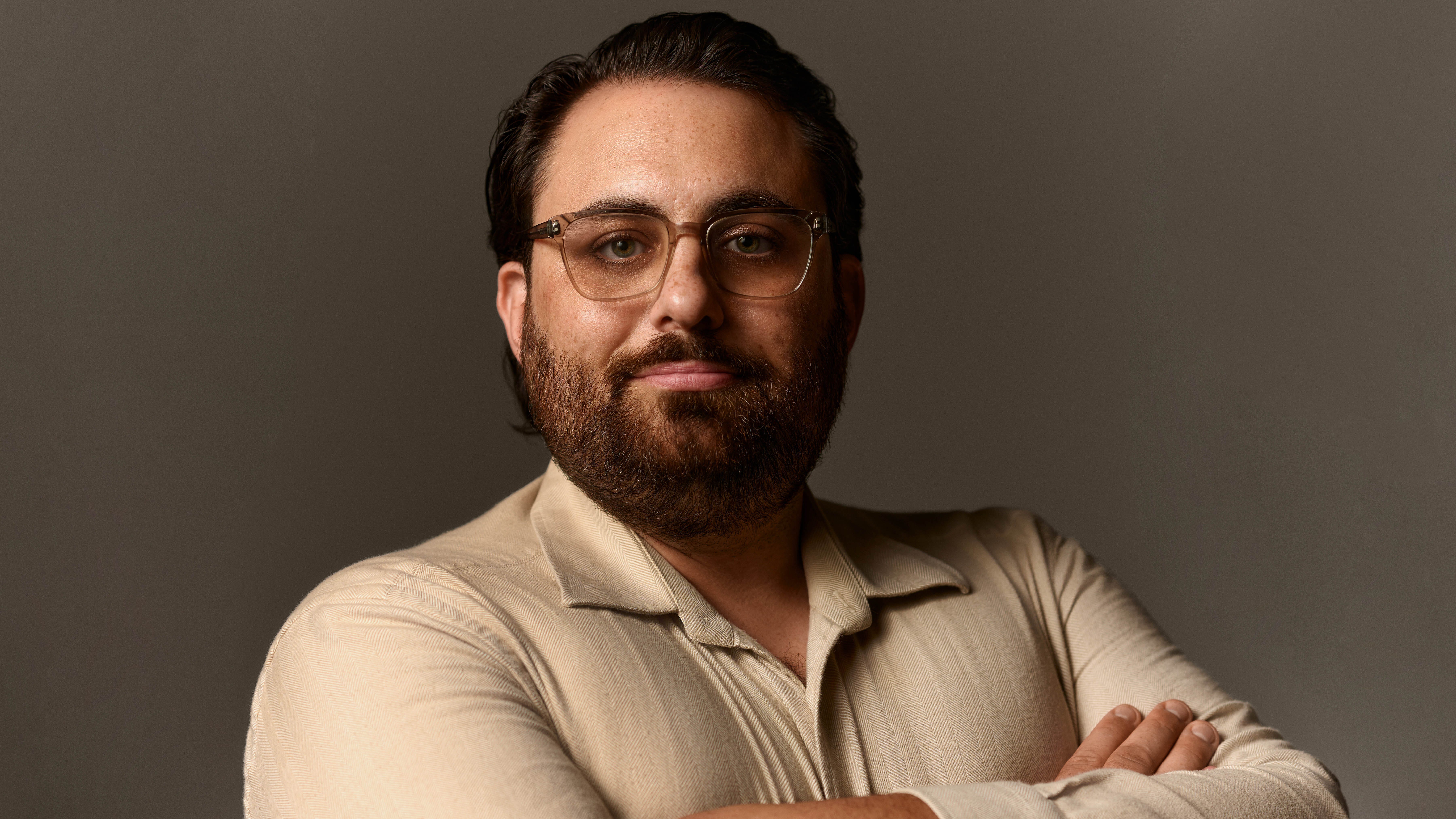
When Brian Reed spent three years reporting what would become S-Town, he thought he was investigating a murder in rural Alabama. What emerged instead was something harder to categorize — a piece of audio storytelling so literary that The New Yorker called it a work of art, yet so controversial it sparked lawsuits and fierce debates about journalism ethics. That tension between what journalism is and what it could be has come to define Reed's career, culminating in his latest project: Question Everything.
More than a podcast, Question Everything turns the lens inward on journalism itself at what Reed considers to be the perfect time. Launched in September 2024, the show arrives at a moment when trust in media has cratered, local news is vanishing, and everyone from tech billionaires to politicians claims the authority to define what “real” is. Rather than defending the profession or joining the pile-on, Reed is asking more fundamental questions: What exactly is journalism? What should it be? And why can't we agree on either answer?
In this edition of Depth Perception, we speak with Reed about that fundamental disconnect, the exhaustion of our information ecosystem, and why he believes journalism's future requires more than just tinkering at the edges. —Parker Molloy
What prompted you to become a journalist? Was there a specific moment or story that made you think, “This is what I want to do”?
The story that comes to mind — I don't think I left it thinking “I want to be a journalist,” but it was really my first formative experience with journalism. I was on my high school paper for two years and was co-editor-in-chief my senior year.
I wrote a satirical column called “Rebel Without a Cause” where I'd skewer something stupid the administration was doing. Near the end of one year, our superintendent visited the school, walked into a bathroom, and found kids smoking cigarettes. He gave the headmaster a dressing down, and the headmaster's response was to close all the bathrooms in the school except for maybe one of each gender. This was in May, and he acted shocked that students were smoking in bathrooms — as if he hadn't known all year.
He was a very reclusive headmaster; you rarely saw him. But he came over the loudspeaker to announce this bathroom closure. So I wrote this column referring to him as “the voice” we'd never seen all year, and I described the dystopian hellscape that ensued — people urinating in hallways, standing in lines, needing hall passes just to use the bathroom.
After we published it, I remember seeing teachers reading it quietly together in corners. My high school journalism teacher, who's still a friend and mentor, lived in a different town and heard someone talking about it at a bar there. It felt really good to be able to poke at someone powerful in my own community and be protected doing it, and to have it resonate with people. That was an early hit that stayed with me. It made me realize journalism isn't just about reporting what happened at the football game. You can really take a stab at people and problems.
Was there a piece of journalism that made you think, “Oh, this is what journalism can do”?
Random Family by Adrian Nicole LeBlanc comes to mind. It's a classic of creative nonfiction, long-form, embedded reporting. I read it in a writing class in college. She writes in the third person and really inhabits these real people — this family and extended family in the Bronx — as if they're fictional characters. She knows them so well she can speak to their frame of mind and their relationships. That was revelatory to me.
When she spoke to our class, I learned she spent 10 years embedded with that family. The relationship between reporting and the final literary product became apparent to me through that book. It's such an amazing craft because reporting and writing are so different — they're not innately for the same personality. But sometimes you get people who are built to do both, and the result is something like Random Family.
Long Shadow podcast: A history of the web, from Y2K to AI
When was the last time you felt good about the internet? Today’s online landscape is a harrowing one. Back in the day, the web gave power to the people, and going online could actually be fun.
Chronicling innovations, revolutions, cyber attacks, and meltdowns, Long Shadow: Breaking the Internet untangles the web in a way you’ve never considered before. Across seven episodes, it retraces 30 years of web history — a tangle of GIFs, blogs, apps, and hashtags — to answer the bewildering question many ask when they go online today: “How did we get here?”
The full season of Long Shadow: Breaking the Internet is out now. It follows the Peabody Finalist, RFK Human Rights Award-winning third season, Long Shadow: In Guns We Trust, the Edward R. Murrow Award-winning second season, Long Shadow: Rise of the American Far Right, and the #1-charting, Signal Award-winning Long Shadow: 9/11’s Lingering Questions. Listen and subscribe wherever you get your podcasts.
Question Everything launched just as we headed into the 2024 election cycle and as AI began scrambling how we think about information. Was that timing intentional?
I'd argue that our way of thinking about information was being scrambled before AI — though AI is certainly scrambling it further. The timing wasn't strategic; it was just when we were able to make it happen. This has been an idea I've had for years.
Starting in 2018, I got sued for S-Town. The process lasted a couple years, and the people suing me were claiming it wasn't journalism, legally. So I was put in this headspace of having to really consider: What is journalism exactly? Do you genuinely think this isn't it? Because I certainly thought I was doing journalism — I'd been a journalist for about 10 years at that point.
It was disorienting, having to make legal arguments to a judge about why something I did was journalism. I realized we actually don't agree on what journalism is, and I think that's true writ large. Whether you say we don't agree on what journalism is, or what facts are, or what truth or reality is — it's all related.
A lot of responsibility for that disconnect rests on journalists and the industry, but also on other bad actors, tech companies, various forces. It got to the point where I couldn't just keep doing journalism and putting it out into this environment as if everything was normal. There was a fundamental, first-principles question we weren't addressing head-on. I couldn't imagine living out the rest of a career in journalism without addressing this personally.
You've described Question Everything as exploring what journalism is and what it should be. Have you found those two things moving further apart or closer together?
It's hard to think of it as linear. It feels more chaotic — lines crossing here, zagging there.… I definitely don't think journalism overall is trending in a positive direction. But that has to do with not just journalism, but the relationship between journalists and everybody else — the trust there. That's related to the bigger problems we're facing in the country: our feelings about each other, not agreeing on how our country should operate. It feels both more profound and more chaotic than some two-dimensional set of converging or diverging lines.
You're examining journalism at a moment when local news is collapsing. Do you think we're witnessing journalism's demise, or is it transforming into something we don't recognize yet?
I definitely think we're witnessing a true demise of local news. Something could fill the gap, but it won't happen passively. It's got to be something that both our industry and the public fight for. That's what I'm trying to take on with the show: What are we fighting for exactly? What would it look like? Do we even agree on the value proposition for journalism and news? I think it could look radically different, and probably should.
The facts are clear — one-third of newspapers have vanished in the country, we lose two a week. The public media funding cuts that just happened are going to atrophy local news further. We don't really understand or appreciate the actual effects this has in a local ecosystem. We have these abstract ideas that an informed community is important, that it builds connections and helps keep power in check, but there's not a ton of research that really helps us understand the impacts.
The research we do have is startling. I read a study from the last year or so where data scientists looked at 60-some communities where newspapers vanished. They found public corruption charges went up 7% in those areas, and they were able to tie it causally to the newspaper's disappearance — not just correlation. And that's just charges that were brought, which is much lower than all the things happening that we never hear about.
“You can come into journalism thinking you're supposed to sound a certain way, that there's a certain type of story that's ‘important.’ But that's a death knell for interesting work. If you're not genuinely interested in something, there's no way your audience will be more interested than you.” —Brian Reed
How do you navigate talking about journalism's failures without feeding the “fake news” narrative that's been weaponized against the press?
It's hard. I haven't solved it. It's an ongoing challenge personally and editorially with the show. What helps anchor me is that people, for the most part, do desire information and true information. They want to feel informed. That's somewhere we can start from. Now, that desire gets preyed upon, co-opted. People's biases lead them in wrong directions. But if we can back up and start there, that's a place to begin a conversation.
I was just in Iowa preparing for the next season, so I spent a day at the Iowa State Fair talking to people about journalism — all sorts of political backgrounds. There were people who really paid attention to what was happening with media and cared about it, and others who were more checked out. But everybody, almost without exception — no matter their political background or engagement level — felt exhausted, worn out, and had felt that way for a while.
When I asked about recent events like cuts to public media or the CBS settlement, nobody engaged. They were just like, “We're so divided, we're at each other's throats, there's nothing good to talk about. I don't know who to trust, and I'm exhausted trying to figure it out.”
There's a desire for it to be better. That was present in everybody [and] perversely heartening that everyone shared that desire, but dispiriting because nobody had a solution. When I'd ask about journalism, people immediately started talking about the state of us as a society. It's a reminder that journalism is a reflection of us. It's bigger than just this industry. It's part of the fabric of what's happening.
What's the question about journalism that you find yourself returning to most often?
Our information ecosystem is so messed up and overwhelming. I get paid to do this… and I'm exhausted trying to track down what's true about something, or trying to stay informed. So I know people who are just trying to do it as citizens are exhausted too.
We've done interesting stories about journalists trying new things, starting newsletters with different approaches, local journalists talking about their process, news influencers online who are connecting with audiences in interesting ways… but they all still feel like nipping at the edges of a much bigger problem.
The question I'm returning to as we come back from our summer break is: Are there big moves we can make to deal with this systemically?
Looking back, what story from early in your career taught you the most about what kind of journalist you wanted — or didn't want — to become?
What comes to mind isn't a story I ultimately did. When I was a producer at This American Life, we'd get pitches from outside contributors all the time. I remember getting one from someone at NPR about some important topic — immigration or something — and thinking, “I don't find this that exciting, but it seems important.”
I was pretty early in my career and unsure, so I gut-checked with Julie Snyder, the senior producer at the time. She said, “You're absolutely right. This is an example of a reporter doing a story they think they're supposed to do, rather than a story they actually have a reason to do and are in touch with the reason why.”
That's been central to me ever since, and it's advice I pass on when I talk at journalism schools. You can come into journalism thinking you're supposed to sound a certain way, that there's a certain type of story that's “important.” But that's a death knell for interesting work. If you're not genuinely interested in something, there's no way your audience will be more interested than you. You need to have a reason to tell it, a genuine question for yourself.
Further listening from Brian Reed:
Question Everything with Brian Reed (KCRW, 2024)
The Trojan Horse Affair (Serial Productions, Feb. 2022)
“Random Acts of History” (This American Life, April 2018)
“Fear and Loathing in Homer and Rockville” (This American Life, July 2017)
S-Town (Serial and This American Life, 2017)


Interesting and well-intended, but I wish people were more straightforward about the dynamics of journalism in this country. Besides all of the technological disruption — which is obviously significant — there has been a 30-plus-year concerted, well-funded and profitable assault on American journalism from the right-wing media. One big reason people feel so divided and don't know "who to trust" is that a big chunk of the population willingly checked out of consuming actual journalism as soon as an alternative big media came along and promised to cater to their every prejudice and negative impulse without ever challenging anything about their worldview. I don't know the answer to that, but it's not just better or more engaged work by actual journalists.